Staking is the act of locking up your cryptocurrency in service of a project for a period of time and getting a reward in return. It’s a relatively safe way to earn passive income. But the ever-churning innovation mill that is decentralized finance (DeFI) has come up with a way to have your cake and eat it too – liquid staking.
https://www.scribd.com/document/610738228/Coinbase-Case-Study#fullscreen=1
With liquid staking, your tokens retain their liquidity despite being staked. It accomplishes this by tokenizing your stake – you get a staked-ETH token (stETH) for each ETH staked. If you want out, just trade your stETH back for the original token. In DeFi, liquidity is king and this approach has a number of benefits:
- Users can unstake instantly for a nominal fee, which is not possible when staking directly with validators. This makes proof-of-stake assets more liquid, giving users more financial flexibility.
- This makes staking more attractive, which contributes to decentralization and security of the blockchain in question.
- The staking derivatives allow greater composability and can be used as collateral in other DeFi applications to earn additional yield.
As with anything in DeFi, there are also risks:
- There is always a chance of a smart contract flaw or vulnerability that can lead to loss of funds and the best protocols offer bug bounties to reduce the risk of a breach.
- In case of a system or security failure, validators can suffer penalties where they lose some of their staked funds in a process known as slashing. Making sure you are staking with reputable operators is one way to hedge this risk, another is with slashing insurance.
- During a severe market downturn, the fiat-value of your staked tokens may decline significantly, so any borrowing using the corresponding derivatives as collateral may fall below a loan-to-collateralization threshold. You can be required to provide more capital or risk your assets getting liquidated.
While derivative tokens and the underlying assets are mapped 1:1, there is often a price difference. Unlike with stablecoin pegs, the gap is natural and shouldn’t normally be a cause for concern. The price spread reflects the amount of time assets are locked for and rewards they can earn.
SlideShare
This is content from SlideShare. It only loads after you allow advertising cookies.
Coinbase Case Study.pdf from TanmayPatange
One way to make sure your staked tokens are safe is to pick a protocol with a proven track record. Here are some of the options when it comes to liquid staking of Polygon’s native MATIC token:
Lido
- Lido, the largest liquid staking protocol, launched support for MATIC in conjunction with Shard Labs in March 2022.
- Derivative: stMATIC
- Withdrawal: waiting period is around 3-4 days
- Fees: 10% of a user’s staking rewards
- Total staked (as of 7/5/22): 22M+ MATIC
- Stakers: 591
- APY: 8.676%
ClayStack
- Claystack, a decentralized platform which operates one of the oldest validators for the Polygon network, went live on the mainnet in March 2022.
- Derivative: csMATIC
- Withdrawal: several days or instant (given sufficient liquidity) with a 0.5% fee
- Fees: up to 10% a user’s staking rewards (not including 3rd party validator fees)
- Total staked (as of 7/5/22): 1.5M MATIC
- APY: 9.53%
Ankr
- Ankr, a decentralized protocol for Web3 infrastructure, that launched on Polygon in March 2022.
- Derivative: aMATICb (reward earning, 1 aMATICb = 1 MATIC), aAMTICc (reward bearing, 1 aAMTICc = 1.0735 MATIC)
- Withdrawal: waiting period is around 3-4 days
- Fees: user pays a fee in ANKR that starts from 100 ANKR, typical range is 500–3,500 ANKR.
- Total staked (as of 7/5/22): 1.4M MATIC
- Stakers: 689
- APY: 9.55%
Stader
- Stader Labs offers liquid staking of MATIC on both Ethereum and Polygon mainnets.
- Derivative: MaticX
- Withdrawal: waiting period is around up to 3 days
- Fees: 10% of a user’s staking rewards
- Total staked (as of 7/5/22): 12.4M MATIC
- APY: 8.5%
Flipsnack
This is content from Flipsnack. It only loads after you allow advertising cookies.
With more than 19,000 dApps running on Polygon there is a lot more to explore, so be sure to check out our ecosystem page. Tune into our blog for the latest on Polygon. And let’s bring the world to Ethereum!
Website | Twitter | Ecosystem Twitter| Developer Twitter | Enterprise Twitter | Studios Twitter | Telegram | Reddit | Discord| Instagram | Facebook | LinkedIn
Moving Money Confidentially with Private Mempool on Polygon: What That Means for Every Use Case
Hold Dollars in Polygon's Open Money Stack. Convert to Stablecoins the Moment You're Ready.
Get Unlimited Embedded Wallets Free, With Crosschain Routing Included
Polygon Labs Joins NOBO Finance and Dun & Bradstreet in Phase 2 of the Bank of England's Digital Pound Lab
Custodial vs. Non-Custodial Wallets: Which One Should Your Platform Build?
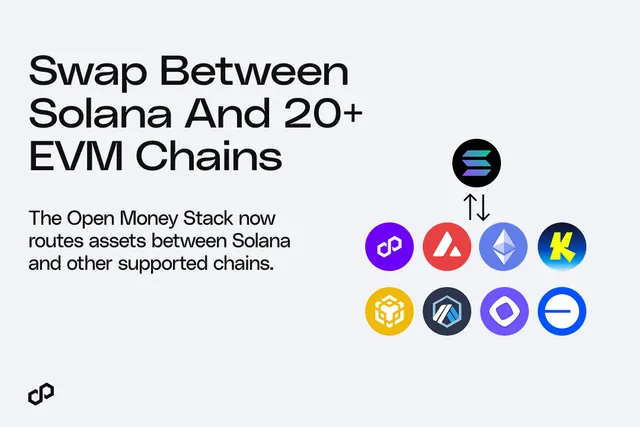
Move Money Between Solana and Polygon, Ethereum, Base + more EVM Chains with Polygon OMS
.CXtdIGFA_Z2ODqj.webp)
Ithaca Upgrade Is Live: Payments on Polygon Chain Are More Reliable Than Ever
Kansai Electric Power's Rewards Arm Turns Loyalty Points Into Real Stablecoin Payments on Polygon Chain
Mento Protocol Launches on Polygon for Local Currency Stablecoin Payments