“Japan is back, again.” That’s how the country’s ruling party opened its April whitepaper calling for domestic policies to promote Web3 development. “Back from where?” an observant reader may ask.
Hard as it is to look back through the mists of time, in 2011 Japan was at the very center of what is now called Web3. That year, Tokyo-based MtGox exchange, which at the time accounted for nearly 70% of all Bitcoin transactions, blew up. The unprecedented (at the time) hack made headlines around the world, for the first time introducing many people to the very existence of cryptocurrencies.
A decade after that rough start, Japan is one of the few countries with beginnings of sensible crypto regulations, a population that is open to the new technology and major corporations actively exploring the space. Trading volume on Japan centralized exchanges alone exceeded $14 billion in March with nearly 4 million active accounts, according to data from the Japan Virtual and Crypto assets Exchanges Association.
There are also signs of broad-based and varied adoption. A small town in central Japan is using NFTs to attract digital residents and fight depopulation, the country’s biggest messenger service and its largest home-grown ecommerce platform both operate NFT marketplaces, and its top mobile carrier is investing $4 billion in Web3 infrastructure and services. Polygon Labs is there on the ground, helping large corporations as well as blockchain startups enter Web3. Here are just some of the most interesting Japanese projects running on the Polygon protocol.
KDDI
Telecom giant KDDI in March launched αU, a metaverse and Web3 service aimed at users who “ effortlessly move between the real and virtual worlds.” The company created digital versions of Shibuya and Osaka where users can navigate with avatars to interact with each other using voice communications and enjoy events, including 360-degree live performances. αU market and αU wallet, both powered by the Polygon network, allow users to buy digital artworks and other items. Way to raise the bar for wireless carriers everywhere, KDDI!
Captain Tsubasa
“Captain Tsubasa,” a comic book series which sold more than 70 million copies in Japan and inspired several generations of football fans, made its Web3 debut as a blockchain-based game in January. In “Captain Tsubasa -RIVALS-,” gamers immerse themselves in the fictional world by playing through the original coming-of-age football story and making their own heroic journey by competing with other users.
Twitter/X
This is content from Twitter/X. It only loads after you allow social networking cookies.
https://twitter.com/TsubasaRivalsEN/status/1613385406682222597
Square Enix
In his annual New Year’s letter, Square Enix then-President Yosuke Matsuda squarely put blockchain entertainment at the center of the gaming giant’s new business development. This spring, the game publishing giant launched Symbiogenesis, its first NFT collectible art project.
The 10,000 NFT characters all have unique designs and come in a variety of races and professions. Players unlock individual stories of the characters as well as the virtual world’s mysteries as they progress through missions. Since its launch in March, the collection generated over $72,000 in sales volume with almost 32,000 wallets participating.
Twitter/X
This is content from Twitter/X. It only loads after you allow social networking cookies.
https://twitter.com/symbiogenesisPR/status/1646709869255462913
Phi is an immersive social platform built on Ethereum Name Service that creates stunning visualizations of on-chain identities. Chiba Institute of Technology is issuing academic certificates as soulbound NFTs that comply with Verifiable Credentials standard. And for truly off the beaten track, there is a token-gated tempura shop that lets NFT holders order customized servings of the traditional fritter-cooked dish.
Whether Japanese politicians are channeling Eminem, Terminator or are simply getting lost in translation, Japan is indeed back. There is little doubt that the world’s third-largest economy will be a major hub for Web3 development going forward. Watch this space.
Reach out if your project is based in Japan, tune into the Polygon Labs Blog and our social channels to stay up to date on the latest from the Polygon ecosystem.
Together, we can build an equitable future for all through the mass adoption of Web3!
Website | Twitter | Developer Twitter | Telegram | Reddit | Discord | Instagram | Facebook | LinkedIn
Get Unlimited Embedded Wallets Free, With Crosschain Routing Included
Polygon Labs Joins NOBO Finance and Dun & Bradstreet in Phase 2 of the Bank of England's Digital Pound Lab
Custodial vs. Non-Custodial Wallets: Which One Should Your Platform Build?
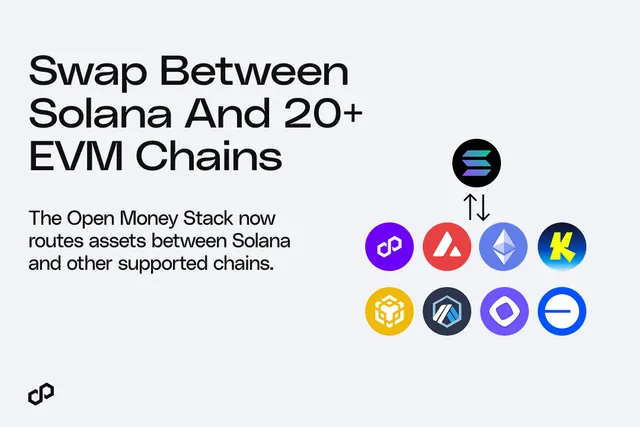
Move Money Between Solana and Polygon, Ethereum, Base + more EVM Chains with Polygon OMS
.CXtdIGFA_Z2ODqj.webp)
Ithaca Upgrade Is Live: Payments on Polygon Chain Are More Reliable Than Ever
Kansai Electric Power's Rewards Arm Turns Loyalty Points Into Real Stablecoin Payments on Polygon Chain
Mento Protocol Launches on Polygon for Local Currency Stablecoin Payments
PayPal USD Lands on Polygon Chain, Enabling Regulated Onchain Dollars to Move Across Borders in One Integration

Credible Races Past $152M Total Payments Volume on Polygon