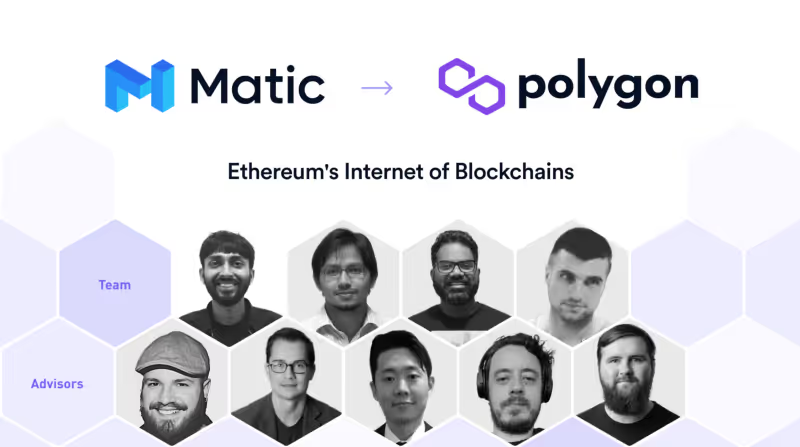
TL;DR: Matic Network is expanding tech scope and mission and becoming Polygon — Ethereum’s Internet of Blockchains. Existing Matic solutions remain functional and high priority. $MATIC token remains critically important for securing and governing the network. Founders and the team all continue to work in an unchanged way, augmented by prominent Ethereum developers, researchers and community members.
Dear Matic Network supporters and beloved crypto community,
Today is a big day for our project, probably the most important one in its relatively short but exciting history! We are proud and excited to announce that we are expanding our mission and tech scope and becoming Polygon, Ethereum’s Internet of Blockchains.
What Is Matic Anyway?
We started Matic Network in 2017 with a vision to help create a better, open world, primarily by improving Ethereum infrastructure. We believe Ethereum is one of the most promising and revolutionary tech projects in the world, and we committed to helping it reach mass adoption. Over the past three years, we have done our best to make that happen:
- We implemented and offered Matic Plasma Chains, a production-ready Ethereum Layer2, predicates-based Plasma implementation;
- We implemented and offered Matic PoS Chain, a permissionless, EVM-compatible, PoS-secured Ethereum sidechain which relies on strong Ethereum security for validator staking and checkpoints;
- Onboarded 80+ amazing applications, including Polymarket, Aavegotchi, Neon District, Skyweaver, Cometh, EasyFi with more being added everyday;
- Powered ~7M transactions for ~200k user addresses, with transaction activity increasing by the day;
- Secured $75M+ of our users’ funds and counting;
- Awarded $1M+ in grants and contracts to developers as on date;
- Sponsored and powered prominent Ethereum conferences, hackathons etc.
Along the way, we also learned a lot and made some important realizations:
- Ethereum scaling is not a winner-takes-it-all game; different projects have different requirements, so multiple scaling and infrastructure solutions will likely coexist in the long term;
- Ethereum scaling ecosystem is vibrant and quite mature; it is mainly the implementation complexities and lack of structure that are hindering wider adoption;
- Faced with the aforementioned challenges, some projects are experimenting with external ecosystems and solutions like Polkadot, Cosmos, Avalanche etc. The upside of these ecosystems is that they are well structured compared to Ethereum’s organic and somewhat chaotic scaling landscape, but their significant downsides are the lack of synergy, security and the network effects that Ethereum has.
To summarize, we concluded that most developers and projects want to build their scaling solutions within the Ethereum ecosystem in order to benefit from its security and network effects. However, they are struggling to navigate its unstructured scaling landscape and to deal with its implementation complexities. This is precisely why we conceptualized and started building Polygon.
So What Is Polygon?
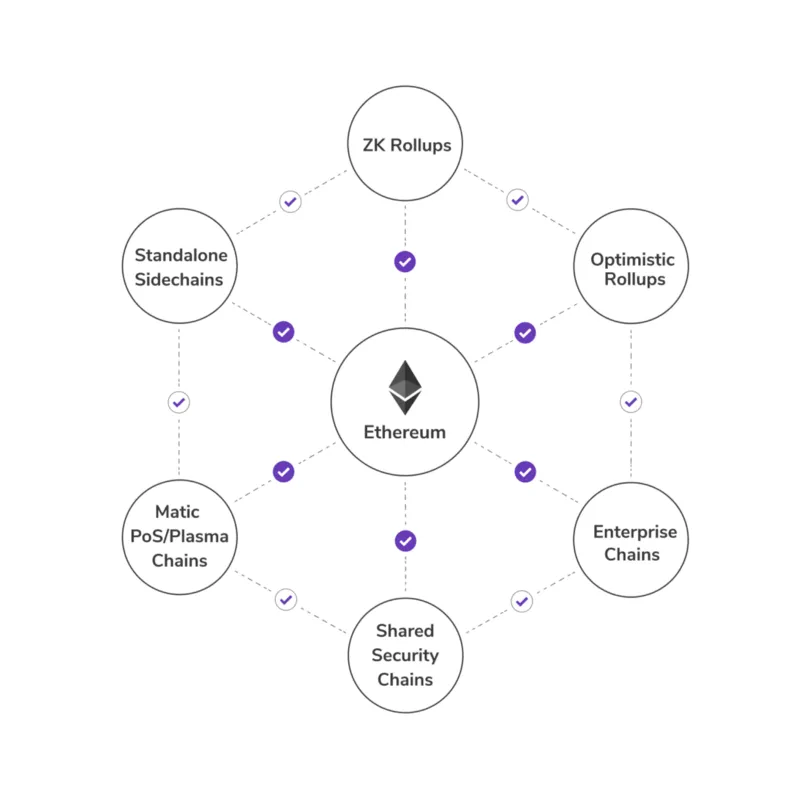
Polygon’s Modular Layer 2 Infrastructure
Polygon is the first well-structured, easy-to-use platform for Ethereum scaling and infrastructure development. Its core component is Polygon SDK, a modular, flexible framework that supports building and connecting two major types of solutions:
- Secured chains (aka Layer 2 chains): Scaling solutions that rely on Ethereum for security instead of establishing their own validator pool. In addition to currently supported Plasma chains, Polygon will support other major Layer 2 solutions such as Optimistic Rollups, zkRollups, Validium etc, thus basically becoming one-of-a-kind “Layer 2 aggregator”. Secured chains are a good fit for (1) applications that require the highest level of security and (2) startups, i.e. young projects and communities (unable to establish a sufficiently decentralized and secure validator pool).
- Stand-alone chains (aka Sidechains): Sovereign Ethereum sidechains, normally fully in charge of their own security, i.e. with their own validator pool. Stand-alone chains offer the highest level of independence and flexibility, with the tradeoff of a normally lower level of decentralization and security. These chains’ architecture can be adjusted so they at least partially inherit security from Ethereum. One good example of such architecture is the aforementioned Matic POS Chain which uses Ethereum for validator staking and periodical finality checkpoints. Stand-alone chains are often a good fit for (1) enterprises, (2) projects that do not require the highest level of security and (3) projects with strong communities (capable of establishing a sufficiently decentralized and secure validator pool).
Additionally, Polygon SDK will support and offer a number of auxiliary solutions and products which will extend Polygon functionalities, improve developer experience and introduce support for specific use cases. Examples of such solutions and products include:
- Inter-chain messaging protocols and modules;
- Data availability services;
- Shared security services;
- Adaptors for external blockchain networks;
- App-specific modules;
- Enterprise modules and products;
- Premium products and solutions etc.
Polygon effectively transforms Ethereum into a full-fledged multi-chain system (aka Internet of Blockchains). This multi-chain system is akin to other ones such as Polkadot, Cosmos, Avalanche etc, but with at least three major upsides:
- It is able to fully benefit from Ethereum’s network effects. This is because it is built as an integral part of the Ethereum ecosystem, while the aforementioned projects are competing ecosystems built from scratch.
- It is inherently more secure. Polygon uses Ethereum, the most secure and battle-tested programmable blockchain in the world, as the economic hub and source of security. In contrast, the competing projects have been built around chains which are largely untested and less expressive compared to Ethereum.
- It is more open and powerful, primarily in terms of the types of architecture it can support. This is because (1) Polygon is built on Ethereum, so it can trivially incorporate any scaling or infrastructure solution from the Ethereum ecosystem and (2) we fully adopt Ethereum’s ethos of open innovation and have designed Polygon with the same goals in mind.
An important and a little known fact to note here is that Ethereum is already the biggest multi-chain system in the world. Its ecosystem organically developed and grew and it currently encompasses:
- 50+ EVM networks (source);
- Hundreds of enterprise chains;
- Dozens of Layer 2 implementations.
With Polygon, we are introducing structure to this organic ecosystem and providing a framework to help it grow further and faster.
And What Happens To Matic?
Keeping everything above in mind, it is very important to stress that all the existing Matic solutions and implementations, primarily Matic PoS Chain and Matic Plasma Chains, REMAIN FULLY FUNCTIONAL and will continue to be developed and grown as very important components of the Polygon ecosystem. These implementations will not be impacted or changed in any way, and NO ACTION IS REQUIRED from developers or end-users. With Polygon we are just expanding the suite of solutions we want to offer to the community, and all the existing solutions and implementations will continue to exist and operate as integral parts of this extended platform.
In this new paradigm, the $MATIC token will continue to exist and will play an increasingly important role, securing the system and enabling governance.
The founders and the Matic Network team will all continue to work in an unchanged way under the new brand. However, we are aware that in order to build Polygon and achieve its powerful vision we will need an even stronger team. We are actively hiring (feel free to reach out to us!) and we will be introducing a number of great additions to the team in the coming period, so stay tuned!
As already stated above, we consider Polygon an integral and important part of the Ethereum ecosystem, and we will always strive to work in the best interest of Ethereum and its amazing community and users. In regard to this, we are excited and humbled to announce that some of the most prominent Ethereum community members have already recognized the potential of Polygon, joined us as advisors and will be helping us with our efforts:
- Hudson Jameson (Ethereum Foundation)
- Ryan Sean Adams (Bankless)
- Anthony Sassano(EthHub)
- John Lilic (ex ConsenSys) and others.
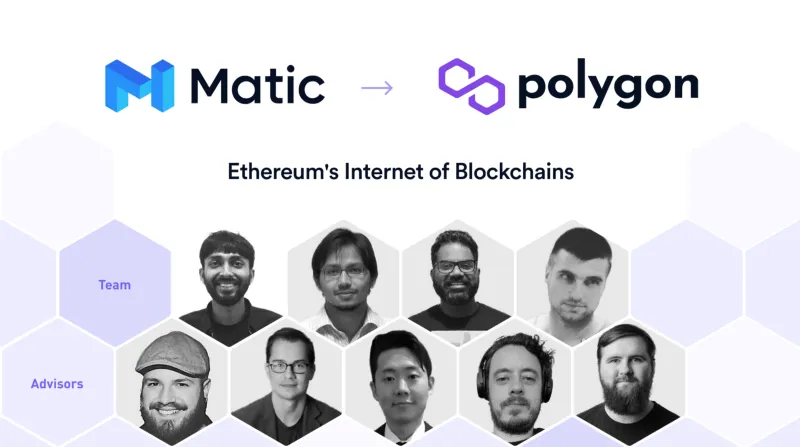
Team and Advisors
Founding and building Matic Network has been an exhilarating and rewarding experience; we have built one of the leading scaling platforms in the Ethereum landscape today. From the beginning, we have had one and only one mission — scale Ethereum for mass adoption. With that mission in mind, we believe we are now ready for the next, even more impactful chapter. With Polygon, we want to enable Ethereum to become a robust, highly-scalable multi-chain environment that acts as the backbone of the Web3 revolution.
I believe the future of crypto is a multi-chain world, but one where individual chains are secured by high value monetary networks like Ethereum. We cannot sacrifice decentralization in pursuit of scalability. This is why the community is rallying around technologies like Polygon. Polygon is the internet of chains vision done right, i.e. built on Ethereum.
We will be sharing more details on the project and the team soon, so please stay tuned and join us on this exciting journey! Let’s bring the world to Ethereum!
Introducing Polygon CDK Besu: Launch a Hyperledger Besu chain connected to other chains and their liquidity

Polygon Open Money Stack is now a U.S.-regulated payments platform with completion of Coinme acquisition
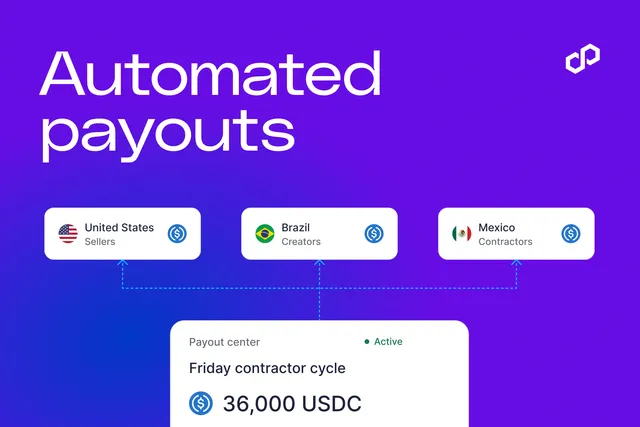
New to Polygon OMS: Automated stablecoin payout runs with rules your team sets
Polygon Open Money Stack now supports TRON
Meet Polygon at Money20/20 USA
Monerium, Frax and Capa connect euro payments to onchain FX markets on Polygon
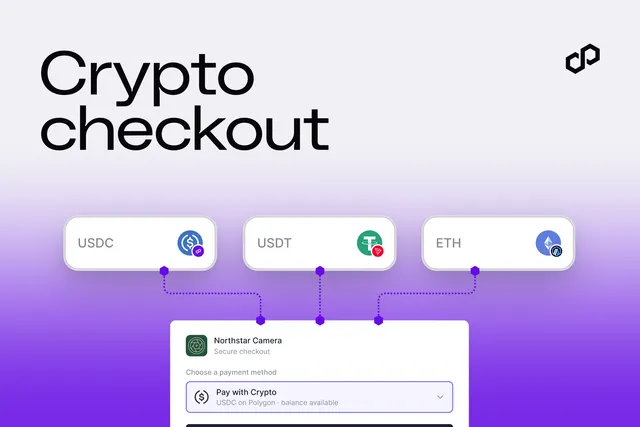
Introducing crypto checkout in Polygon Open Money Stack
Polygon passes $3 trillion in stablecoin transfer volume
Polygon Chain now supports 11 million payments per second