
Polygon’s zero-knowledge (ZK) tech teams have recently unveiled the cutting-edge Polygon zkEVM, as well as open-source licensing for the revolutionary Plonky2 proving system. We are excited to announce yet another milestone: open-source licensing for our PIL toolkit.
We will be licensing the PIL toolkit jointly under the Apache2 and MIT licenses. Developers around the world are now free to use our creation, within the permissive bounds of those licenses.
https://www.youtube.com/watch?v=_G4pQsIBt_I&t=24063s
Our pilcom and pil-stark (PIL) toolkit represent the tools we use to create the algebraic state machines within our zkEVM. In that case, they are used to define the correctness of the EVM computation verification. This toolkit is also used to generate the STARK zero-knowledge proof (ZKP) that validates the computation of arbitrary user transactions.
PIL can do a lot more than what it does for Polygon zkEVM, however. With the PIL suite, we propose a new methodology for computation verification within ZKP tech. PIL moves away from the traditional circuit format to the polynomial identities format–e.g., the state machine within Polygon zkEVM. Polynomial identities provide much more efficient constructions for validation in a STARK. PIL also gives a helping hand to the use of all kinds of standard cryptography in ZKP tech, since it allows developers to build much more complex circuits than is possible with more standard CIRCOM tools.
But there’s also good news for those who are fond of CIRCOM: the PIL suite is complementary and interconnected with existing CIRCOM tooling. For instance, you could create a CIRCOM circuit and create a STARK proof. Or you could write a PIL state machine and verify the STARK created into a SNARK circuit, thus enabling ZKP recursion–as we have implemented in Polygon zkEVM’s zkProver.
All of that is to say, the PIL toolkit is at the heart of how Polygon zkEVM brings the scaling power of ZKPs to the Ethereum Virtual Machine. Much as we’re proud of what we’ve built and how we’ve implemented it in Polygon zkEVM, we are just as excited to see what you do with it elsewhere. Go forth and buidl!
Tune in to the Polygon Blog for the latest on zero-knowledge proofs and let’s bring the world to Ethereum!
Website | Twitter | Telegram | Reddit | Discord| Instagram | Facebook | LinkedIn
Custodial vs. Non-Custodial Wallets: Which One Should Your Platform Build?
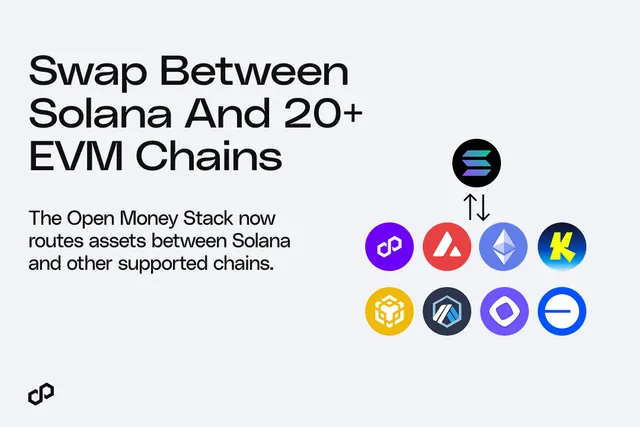
Move Money Between Solana and Polygon, Ethereum, Base + more EVM Chains with Polygon OMS
.CXtdIGFA_Z2ODqj.webp)
Ithaca Upgrade Is Live: Payments on Polygon Chain Are More Reliable Than Ever
Kansai Electric Power's Rewards Arm Turns Loyalty Points Into Real Stablecoin Payments on Polygon Chain
Mento Protocol Launches on Polygon for Local Currency Stablecoin Payments
PayPal USD Lands on Polygon Chain, Enabling Regulated Onchain Dollars to Move Across Borders in One Integration
Credible Races Past $152M Total Payments Volume on Polygon
We Built the Best Blockchain for Payments. Now We’re Bringing the World’s Enterprises Onchain

Uquid Integrates Polygon's Open Money Stack for 1-Click Crypto Checkout Across 178M+ Products
.Cfn0LZ0R_2iwkGz.webp)