Ever since we first unveiled Polygon, we have been constantly inspired by Ethereum and its values. We are grateful for all the support and feedback that we have received from the Ethereum community so far, it helped us evolve the project while not losing focus on our goals and vision. To continue in the same manner - the one of open innovation and collaboration with the community - we are today announcing the Polygon zkEVM Public Testnet. We’re thrilled for the community to try it out, share feedback and help us improve it. Let’s deliver the Holy Grail of scaling together!
Announcing Polygon zkEVM in July was a groundbreaking moment for us at Polygon, but also a big milestone for Ethereum and the whole industry. We proposed to scale Ethereum with performant zero-knowledge (ZK) proofs within an Ethereum Virtual Machine-equivalent environment; This was a major step towards the seamless scaling solution that the community had long been hoping for.
Today’s release of the Public Testnet achieves that vision, and we’re proud to say we’re the first zkEVM to reach public testnet with a source code available ZK proving system.
We’re excited for you to start testing, and you’ll be in great company. Some of the biggest EVM-based DeFi platforms — including Aave and Uniswap, as well as Web3 social platform Lens and gaming studio Midnight Society — will be amongst the first protocols to deploy on the zkEVM Testnet, with more joining soon.
To get started, check out the documentation and start building on the testnet today, and read on for all the details.
The First Source Code Available zkEVM Proving System in Testnet
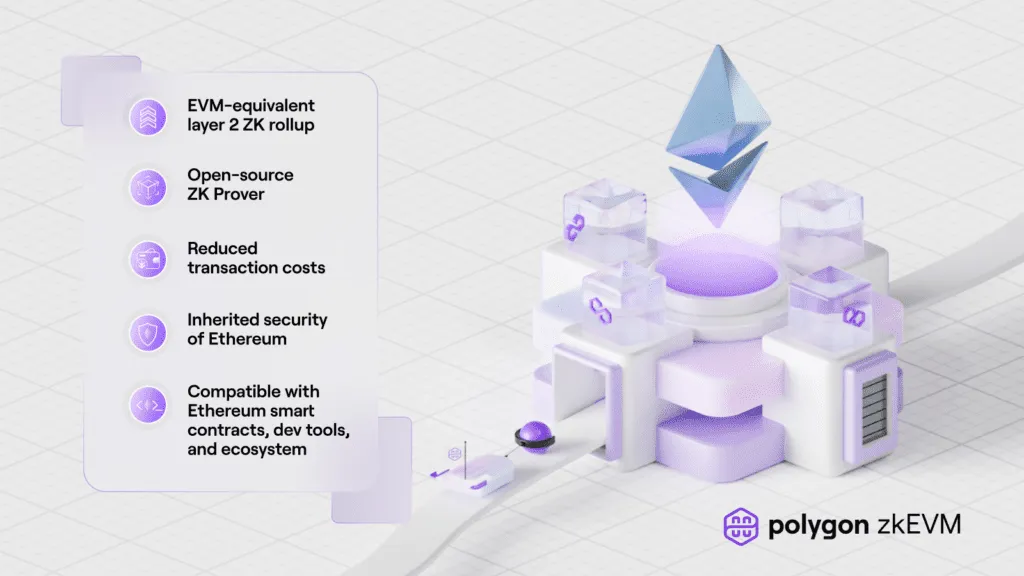
The main challenge in building a zkEVM is to find a way to harness the power of ZK proofs within an environment that is compatible with the EVM. As Vitalik has laid out, this is an intricate technical dilemma which always requires some degree of balance and compromise. The better a zkEVM is at generating ZK proofs, the more it will test the limits of its equivalence with Ethereum. As we prepared for testnet, our goal was to finish our source code available ZK proving system and implement it while striving for maximum EVM-equivalence.
We are proud to say that we have achieved an important goal. Polygon zkEVM is now the first zkEVM to reach a major milestone: We are entering our testnet with a complete, source code available ZK proving system. That means we can demonstrate that we’re generating ZK proofs within our EVM-equivalent environment, using our own purpose-built proving system.
This is a significant breakthrough for zkEVM development and for Ethereum itself.
Help Us Battle-Test Polygon zkEVM
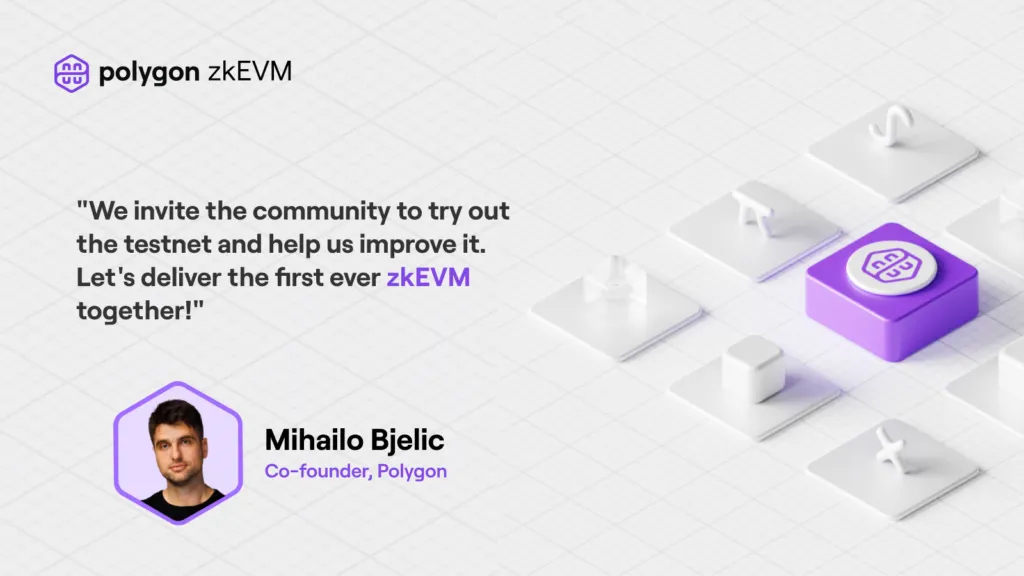
Polygon zkEVM is the next step for Ethereum, but we have to push it to its limits before it can fulfill its potential. We’re moving towards giving our users the full benefits of a working zkEVM: Scalability without compromise. We have some work to do before we fully achieve those goals, and we’re eager to find out exactly what needs improvement. That’s why we’re inviting you to help us battle-test the testnet version of Polygon zkEVM.
The Journey to Type 2 EVM-Equivalence
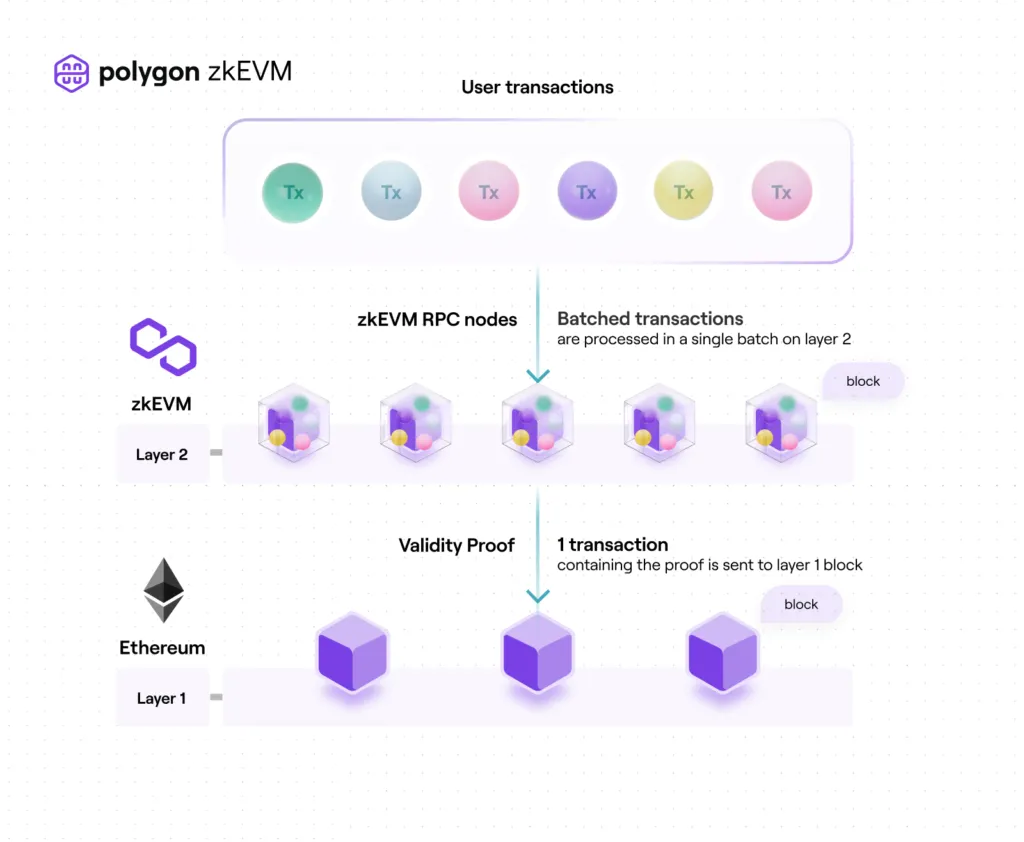
Our goal is to give the Ethereum community everything we love about Ethereum, but with the scaling power of ZK proofs. To get there, we need to shore up Polygon zkEVM’s level of equivalence with Ethereum.
EVM-equivalence is a spectrum, and the testnet version of Polygon zkEVM is not yet everything we want it to become. Vitalik’s framework currently puts our zkEVM in the “Type 3” category of protocols, which are “almost EVM-equivalent, but make a few sacrifices to exact equivalence to further improve prover times and make the EVM easier to develop.” Our goal is to become a Type 2, meaning Polygon zkEVM will eventually “look exactly like Ethereum ‘from within.’” The testnet will help us accelerate towards Type 2 compatibility.
\Read more: [Polygon zkEVM Within Vitalik’s Framework: Gaining Clarity and Looking Ahead]
The testnet version of Polygon zkEVM also has limited throughput capacity, which means it’s far from its final form as an optimized scaling machine. It has a long way to go, and we invite you to travel that distance with us. We’re moving to testnet now so that we can show the Ethereum community what we’ve already built, and so that we can debug, stabilize, and prepare for audits en route to mainnet. Help us push the testnet version of Polygon zkEVM to its absolute limits, so that the final version will take Ethereum itself to another level.
What we have today is the first source code implementation of a ZK proving system in a Type 3 zkEVM. Letting users tinker with what we’ve built in a testnet is how we get to where we’re going: A Type 2 zkEVM, with EVM-equivalence and performant ZK proof generation that will scale Ethereum beyond anything we’ve seen so far.
Celebrating a Milestone And Looking Ahead
We’re building Polygon zkEVM for the entire Ethereum community. Because Ethereum sets the standard for Web3 in every sense that matters, from the number of users to the quality of developers and the values it promotes, we know that we have to take our best shot at scaling Ethereum and clearing a path for the next billion users.
Our teams have been working for years to harness ZK tech to bring out the boundless potential of Ethereum. They’ve burned the midnight oil, hunted bugs, and sweated the intricacies of balancing equivalence with performance, all in service of the mission of scaling Ethereum.
But Polygon’s ZK teams can’t unleash the power of Ethereum all by themselves. They need your help! It’s your turn to help us push our ZK innovations to their limits. Start building today to help us–and the entire Ethereum community–take the next step. Join our Public Testnet and be the first to get your hands on the future of Ethereum.
Learn more about Polygon zkEVM, check out the source code on Github and tune into our blog for the latest from the Polygon ecosystem.
Let’s bring the world to Ethereum!
Website | Twitter | Telegram | Reddit | Discord| Instagram | Facebook | LinkedIn
Polygon Open Money Stack now supports TRON
Meet Polygon at Money20/20 USA
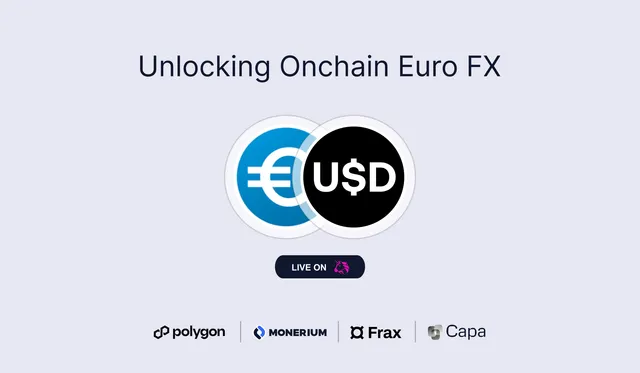
Monerium, Frax and Capa connect euro payments to onchain FX markets on Polygon
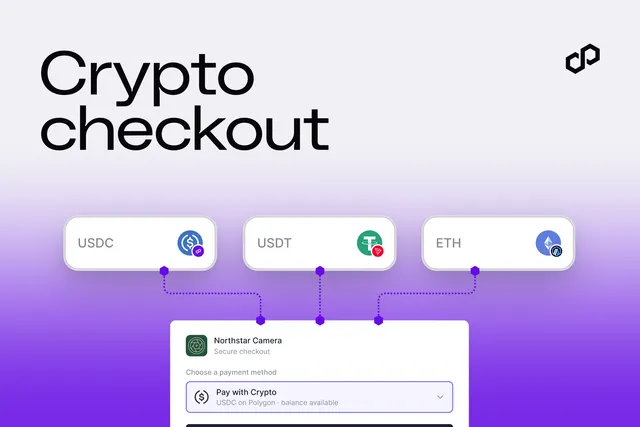
Introducing crypto checkout in Polygon Open Money Stack
Polygon passes $3 trillion in stablecoin transfer volume
Polygon Chain now supports 11 million payments per second
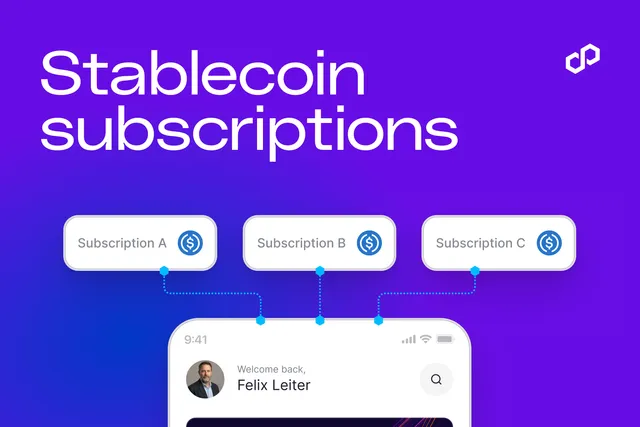
New to Polygon OMS: Recurring Stablecoin Subscriptions With One Customer Approval
Stable.com Adds Polygon for Direct-to-Bank Stablecoin Transfers
One API for Any Payment: Inside Polygon Open Money Stack