
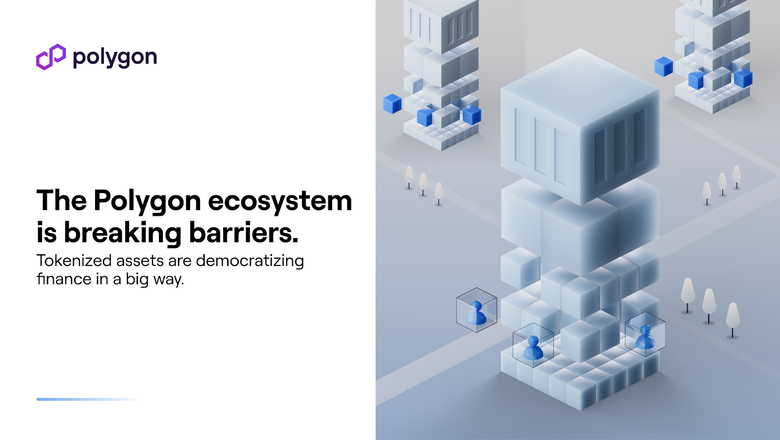
Traditional finance has been inundated with new ways of thinking over the past decade.
Bleeding-edge blockchain technologies are sparking the imagination of people across the world. New investors and new kinds of investments challenge old economic models centralized around power and extractive capital. The economies of tomorrow will leverage the tools of decentralized finance (DeFi) being built today.
As this new financial future begins to take shape, Polygon Labs believes asset tokenization will play an important role.
Tokenized assets have the ability to democratize finance, increase transparency, disrupt fee-extracting intermediaries, and forge peer-to-peer transactions among investors. Converting an asset into a digital, tradable token means opening up investments to more people, while also increasing pools of liquidity.
But the promises of a future centered around tokenized assets and a robust DeFi ecosystem requires infrastructure.
The Polygon PoS chain is becoming a robust, decentralized, peer-to-peer network already finding adoption. Last month, for instance, Hamilton Lane opened its $2.1 billion fund to individual investors through Securitize, all powered by Polygon.
And this is just the beginning.
In this post, we’ll walk you through what asset tokenization is, why it’s important, and how scaling solutions like Polygon PoS and Polygon zkEVM will be the perfect environment for all things tokenization.
Abstracting Assets: What even IS Tokenization, and why is it important?
All assets exist in two places at the same time.
They are the financial equivalent of a photon, both wave and particle–physical things that, when coded by law, are converted into capital. Capital is by definition an abstraction. When a house, stuff inside a house, land, or even immaterial objects like intellectual property or shares in a company are “owned” by someone, these assets are transformed by codes of legal jurisdictions into value for an owner.
Asset owners suddenly own more than a mere thing–they have capital.
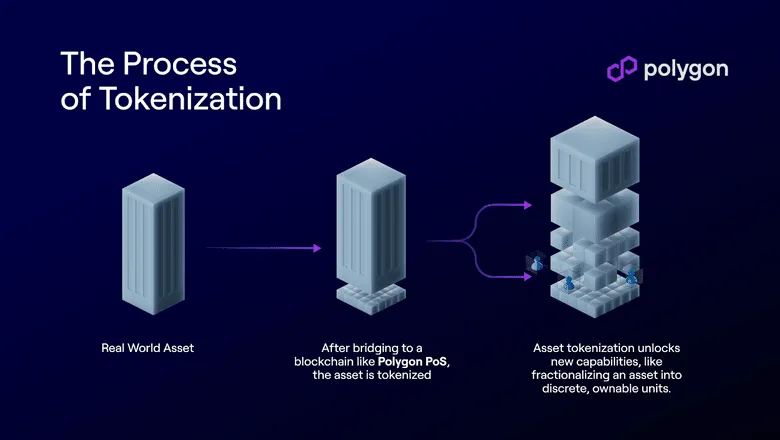
A tokenized asset experiences a similar transformation, except the process occurs on a decentralized, immutable blockchain–Polygon zkEVM or Polygon PoS, say.
A tokenized asset is the token representative of some real world asset. The implications for this are profound. Ownership of a house, for instance, might be tokenized and subsequently fractionalized. Fractionalization divides expensive assets into smaller units of value, so that, say, multiple people can simultaneously share ownership over a single property that would have, individually, been impossible to own.
Other financial vehicles, like private equity and hedge funds, have been traditionally accessible only to entities with deep capital.
Tokenization changes this. Smaller investors can gain exposure to these types of assets because tokenization cuts out expensive intermediaries, takes advantage of fractionalization, and helps mitigate counterparty risk. And because tokenized assets live on a transparent, public blockchain, investors have increased visibility into the market in which they’re participating.
With nearly instantaneous settlement times, tokenized assets are more nimble and less extractive. DeFi investors can avoid the value leakage that occurs with broker or transaction fees. This means that an entire new crop of people who may have traditionally been iced out of lucrative financial products now have the ability to participate.
Such access also creates new pools of users, which is good for fund managers. By removing privatized gatekeeping that exists in many lucrative markets, these managers suddenly have access to new pools of liquidity for otherwise illiquid assets.
Tokenization is a win-win.
Tokenization and the Polygon Ecosystem
The Polygon PoS ecosystem is a thriving nucleus of DeFi activity; the soon-to-be-launched Polygon zkEVM Mainnet Beta will have the throughput to handle a massive influx of transactions. All in all, the Polygon ecosystem looks incredibly bright. Researchers at Polygon Labs are helping build the foundation for a robust protocol used by billions of people across the world.
Right now, asset managers and others interested in tokenization rely on reasons why the Polygon ecosystem has attracted so much interest from traditional finance, major brands, and Web3 startups alike: low fees, fast transaction times, and security.
Businesses building within the Polygon ecosystem have the potential to help democratize financial access and revolutionize the financial world.
Interested in learning more about tokenization? Have thoughts about the industry-shattering technology? Tune into our blog for the latest updates, or reach out to our socials.
Together, we can build an equitable future for all through mass adoption of Web3!
Website | Twitter | Developer Twitter | Blog | Telegram | Reddit | Discord | Instagram | Facebook | LinkedIn
Custodial vs. Non-Custodial Wallets: Which One Should Your Platform Build?
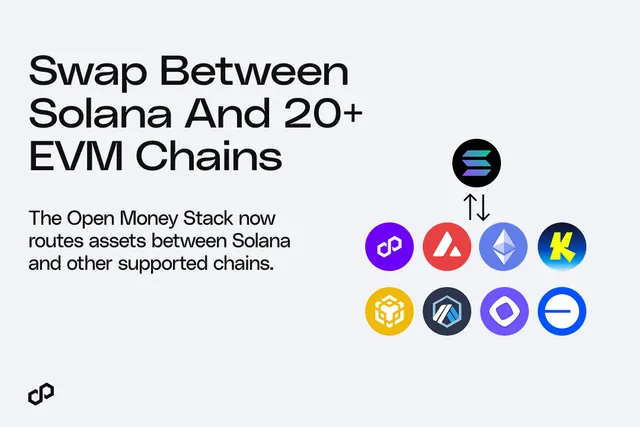
Move Money Between Solana and Polygon, Ethereum, Base + more EVM Chains with Polygon OMS
.CXtdIGFA_Z2ODqj.webp)
Ithaca Upgrade Is Live: Payments on Polygon Chain Are More Reliable Than Ever
Kansai Electric Power's Rewards Arm Turns Loyalty Points Into Real Stablecoin Payments on Polygon Chain
Mento Protocol Launches on Polygon for Local Currency Stablecoin Payments
PayPal USD Lands on Polygon Chain, Enabling Regulated Onchain Dollars to Move Across Borders in One Integration
Credible Races Past $152M Total Payments Volume on Polygon
We Built the Best Blockchain for Payments. Now We’re Bringing the World’s Enterprises Onchain
Uquid Integrates Polygon's Open Money Stack for 1-Click Crypto Checkout Across 178M+ Products
.Cfn0LZ0R_2iwkGz.webp)