

The trends on Polygon zkEVM Mainnet Beta have continued throughout April, with +300% growth in many key metrics:
📈TVL, the number of contracts deployed, and total users are all up
📉Compared to Ethereum Mainnet, the average daily gas is 7X cheaper on Polygon zkEVM
As mentioned, Polygon Labs’ blog will have regular updates of what’s happening on Polygon zkEVM Mainnet Beta. This post will cover key metrics on gas fees versus Ethereum’s Mainnet, transactions, total value locked (TVL), net value bridged (NVB), and developer activity.
Users
As of April 24, there were nearly 50k unique active wallet addresses on Polygon zkEVM Mainnet Beta. That’s +300% growth over the month of April. This figure omits contract addresses to give a narrower picture of usage and users.
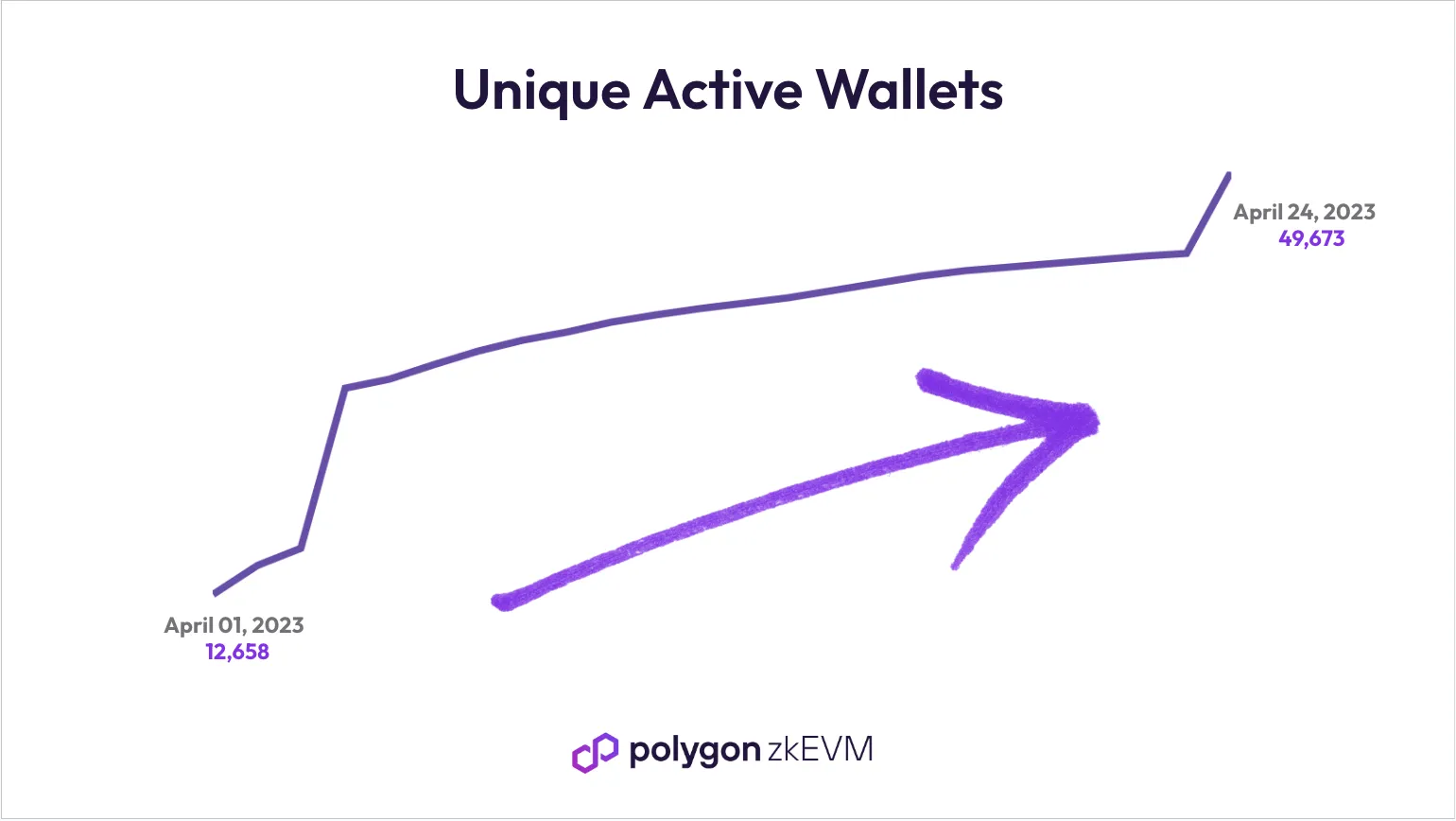
Source: internal data sets constructed from on-chain data
Transactions & Activity
How have transactions grown and what do costs look like for users relative to Ethereum Mainnet?
The total number of transactions continues the trend of +300% growth since the start of the month. This data set includes only successful transactions (unsuccessful transactions are fairly minimal), with 168k transactions as of April 24. These transactions have generated 95.25 ETH (approximately $177K) in fees.
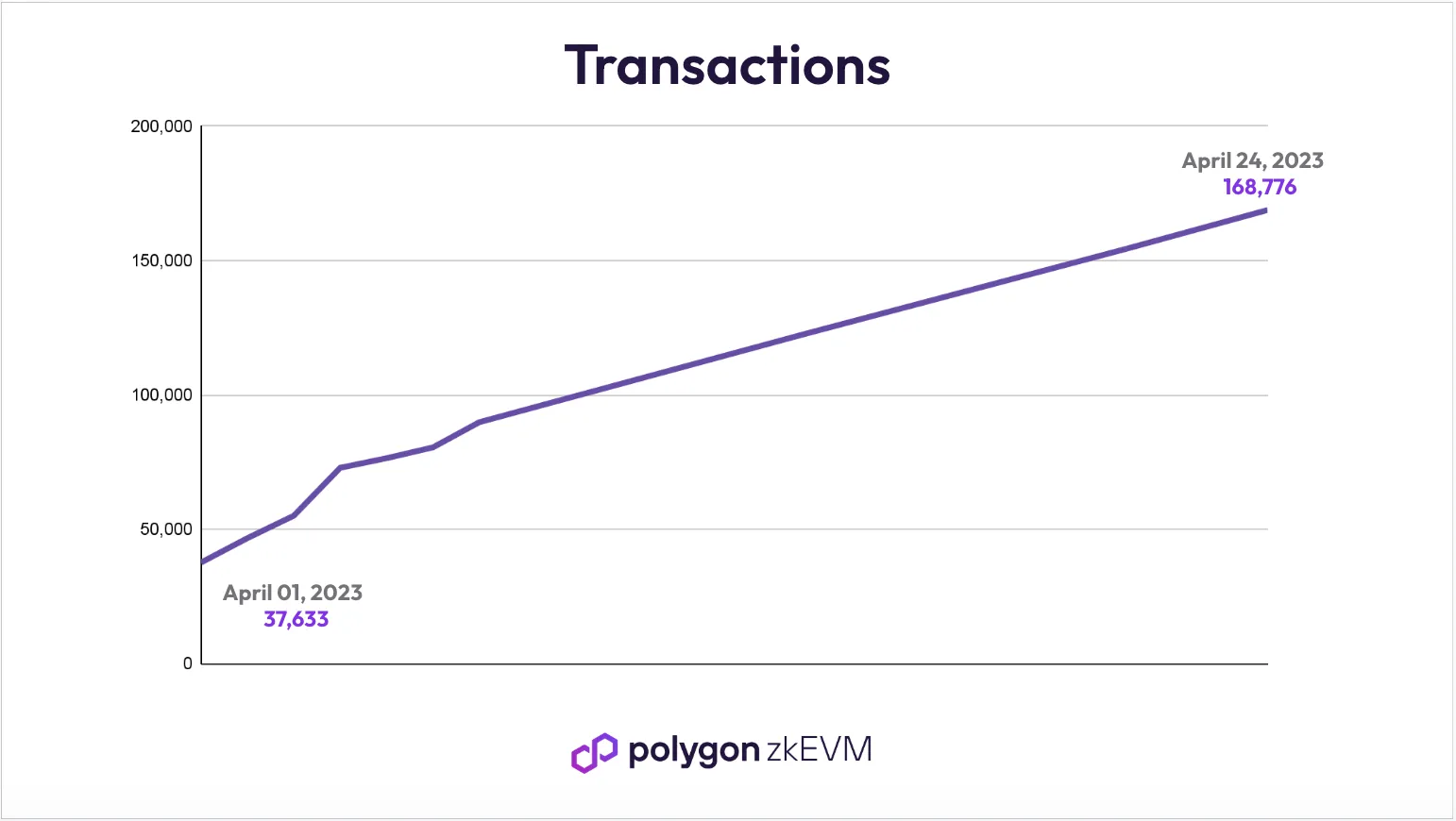
Source: internal data sets constructed from on-chain data
And what are users paying for those transactions? While a more complete view of transaction costs is in the works, the avg daily gas fee (in gwei) shows that Polygon zkEVM Mainnet Beta is 7X cheaper compared to Ethereum Mainnet over the same time period.
Predictably, these two metrics also move in tandem, as posting proofs and transaction data to Ethereum exposes the rollup to the same network load.
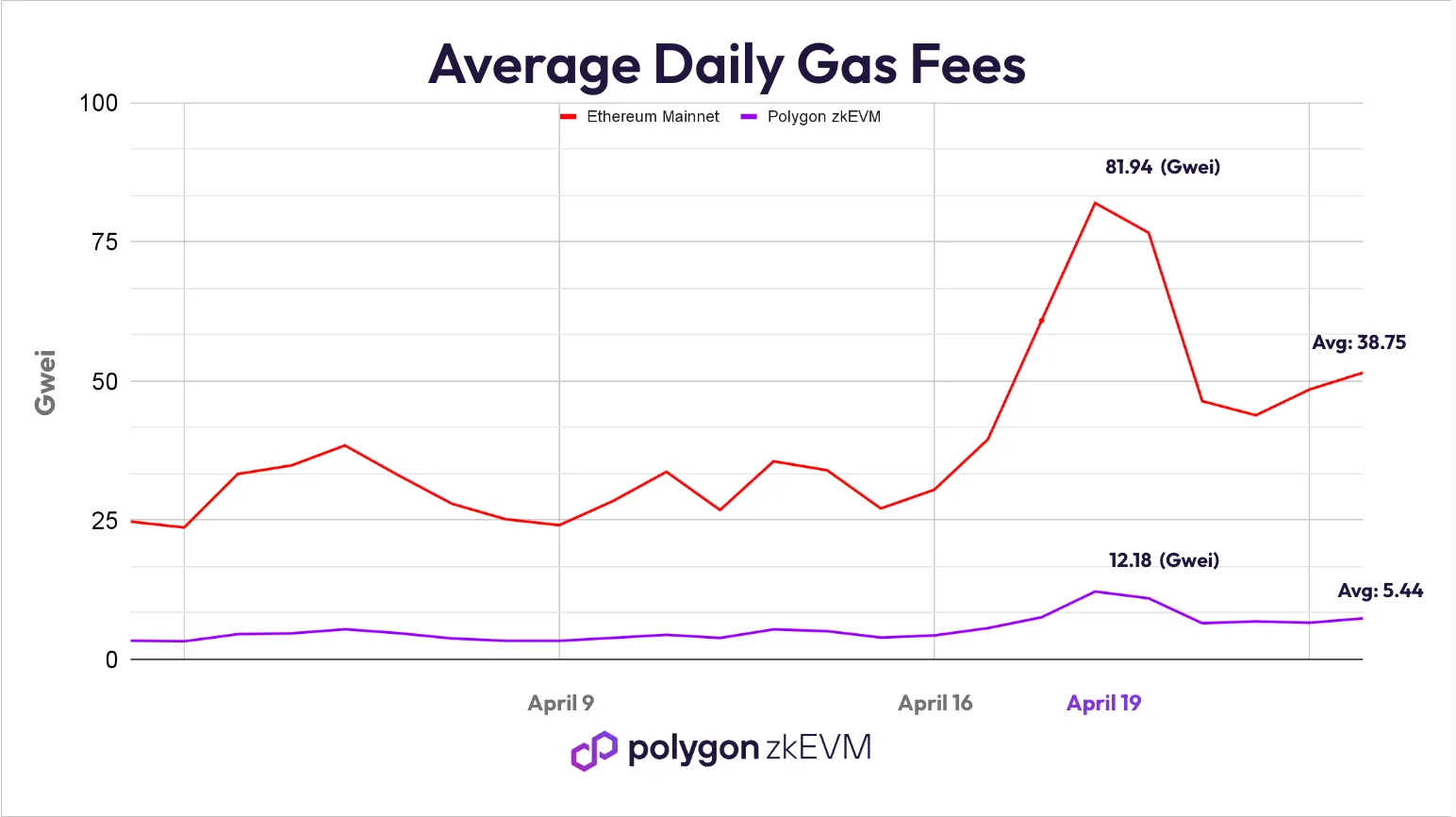
Source: zkevm.polygonscan and Etherscan
Insight into developer activity also shows robust growth. The number of contracts deployed on-chain nearly doubled, from 540 at the start of the month to more than 1,000.
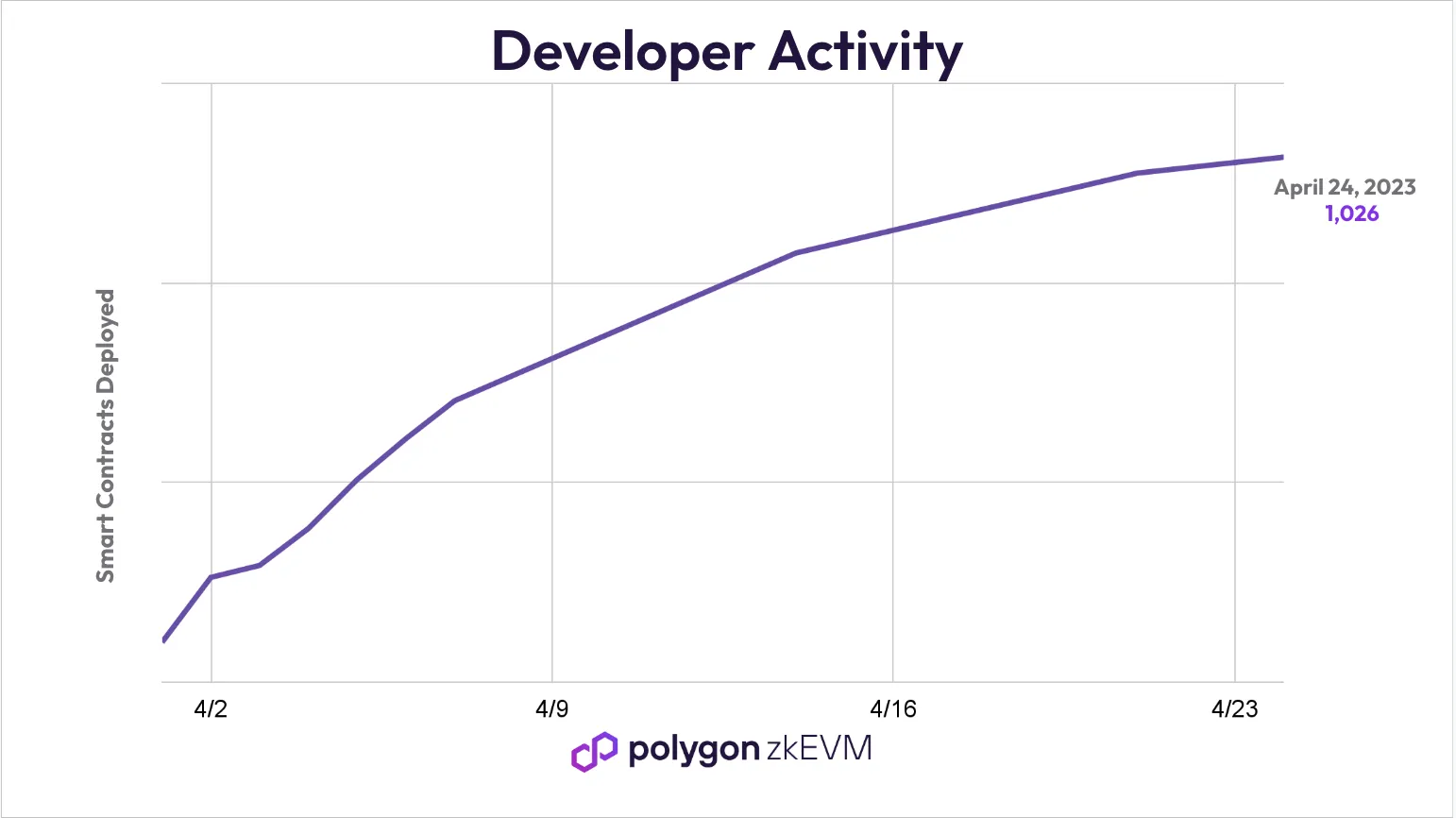
Source: internal internal data sets constructed from on-chain data
TVL & Net Value Bridged
The total assets on Polygon zkEVM Mainnet Beta also continue the trend, with +300% growth in total value locked.
While TVL is a popular metric, it isn’t complete. For one, TVL is commonly measured in USD, and so it reflects movement in the price of ETH as much as it reflects the day-to-day growth (or shrinkage) of a protocol.
There are two ways of looking at the total assets on Polygon zkEVM Mainnet Beta:
- Total value locked (TVL)
- Net value bridged (NVB)
In the strictest view, TVL represents those assets that have been tied to some protocol on the network, such as a DEX or a lending service. Assets counted towards TVL could be considered stickier than those not tied to a DeFi protocol.
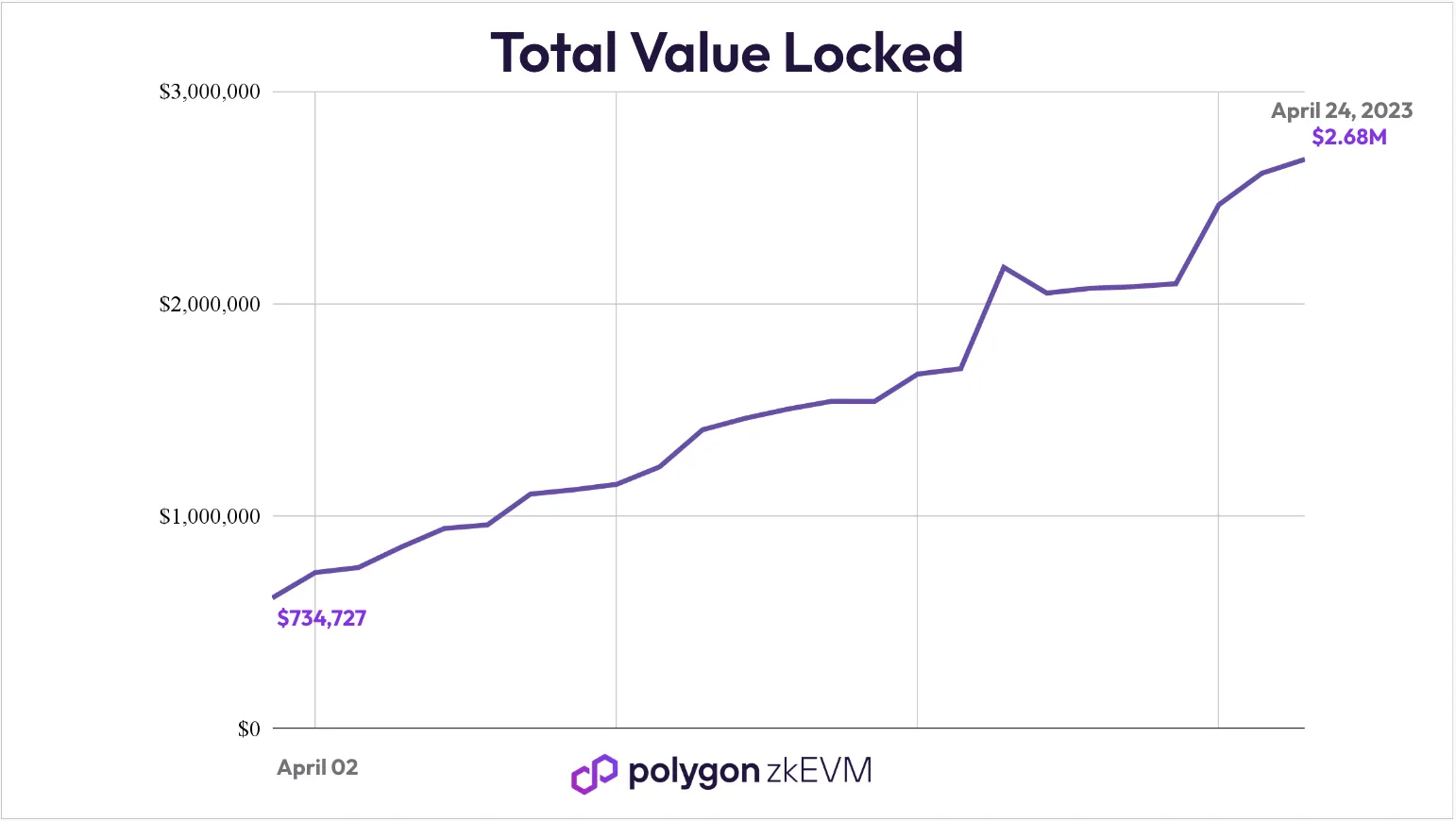
Source: DeFiLlama
For the purposes of this update, let’s use NVB to describe a larger number referring to all the assets that have been bridged to the network minus those assets that have been bridged back to Ethereum Mainnet.
In the future, we may have NVB alongside total value bridged (TVB) to show how users are making use of the easy, no-delay bridging that is a central feature of ZK rollups. As of April 24, TVB is approximately $8.5M, for a Δ of ~$3.4M.
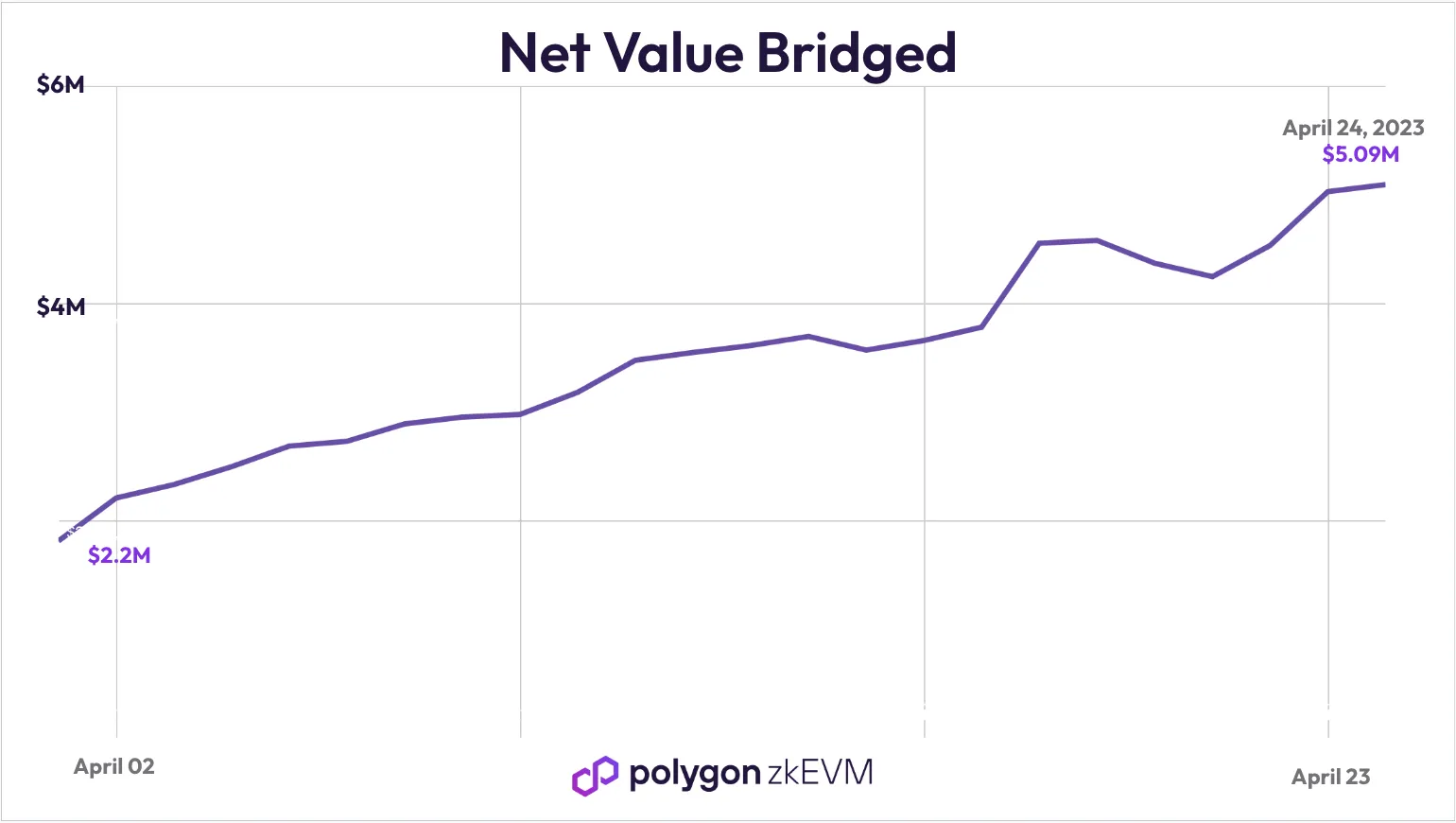
Source: L2Beat
While both TVL and NVB are snapshots of the health of Polygon zkEVM Mainnet Beta, it’s likely that total value locked provides a higher resolution image of the utility of the network.
If there are any metrics you’d like to see, reach out to the dedicated protocol handle, 0xPolygon.
Tune into the Polygon Labs blog and the social channels to stay up to date on the latest from the Polygon ecosystem.
Together, we can build an equitable future for all through the mass adoption of Web3!
Website | Twitter | Developer Twitter | Telegram | Reddit | Discord | Instagram | Facebook | LinkedIn
Custodial vs. Non-Custodial Wallets: Which One Should Your Platform Build?
Move Money Between Solana and Polygon, Ethereum, Base + more EVM Chains with Polygon OMS
.CXtdIGFA_Z2ODqj.webp)
Ithaca Upgrade Is Live: Payments on Polygon Chain Are More Reliable Than Ever
Kansai Electric Power's Rewards Arm Turns Loyalty Points Into Real Stablecoin Payments on Polygon Chain
Mento Protocol Launches on Polygon for Local Currency Stablecoin Payments
PayPal USD Lands on Polygon Chain, Enabling Regulated Onchain Dollars to Move Across Borders in One Integration
Credible Races Past $152M Total Payments Volume on Polygon
We Built the Best Blockchain for Payments. Now We’re Bringing the World’s Enterprises Onchain
Uquid Integrates Polygon's Open Money Stack for 1-Click Crypto Checkout Across 178M+ Products
.Cfn0LZ0R_2iwkGz.webp)