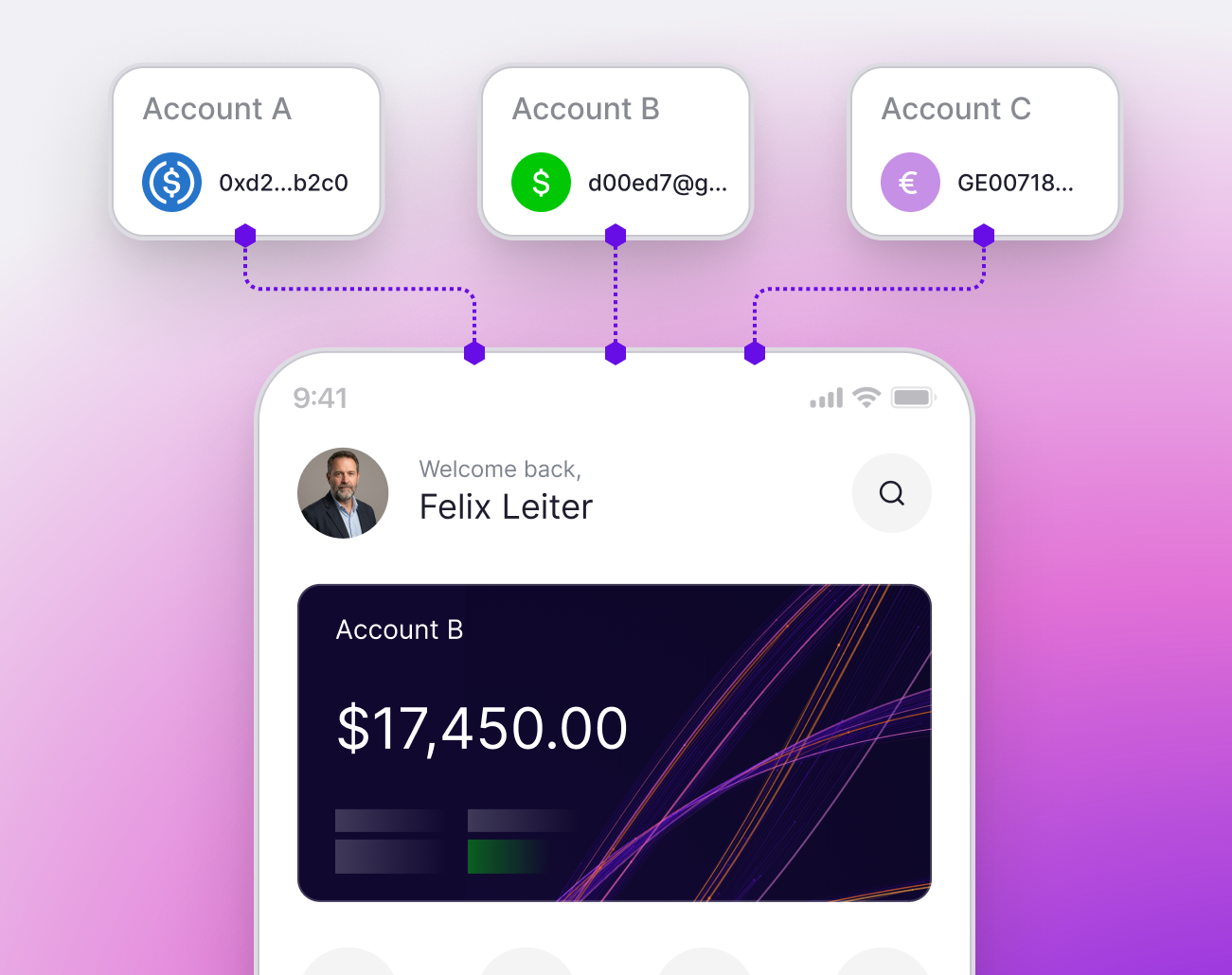
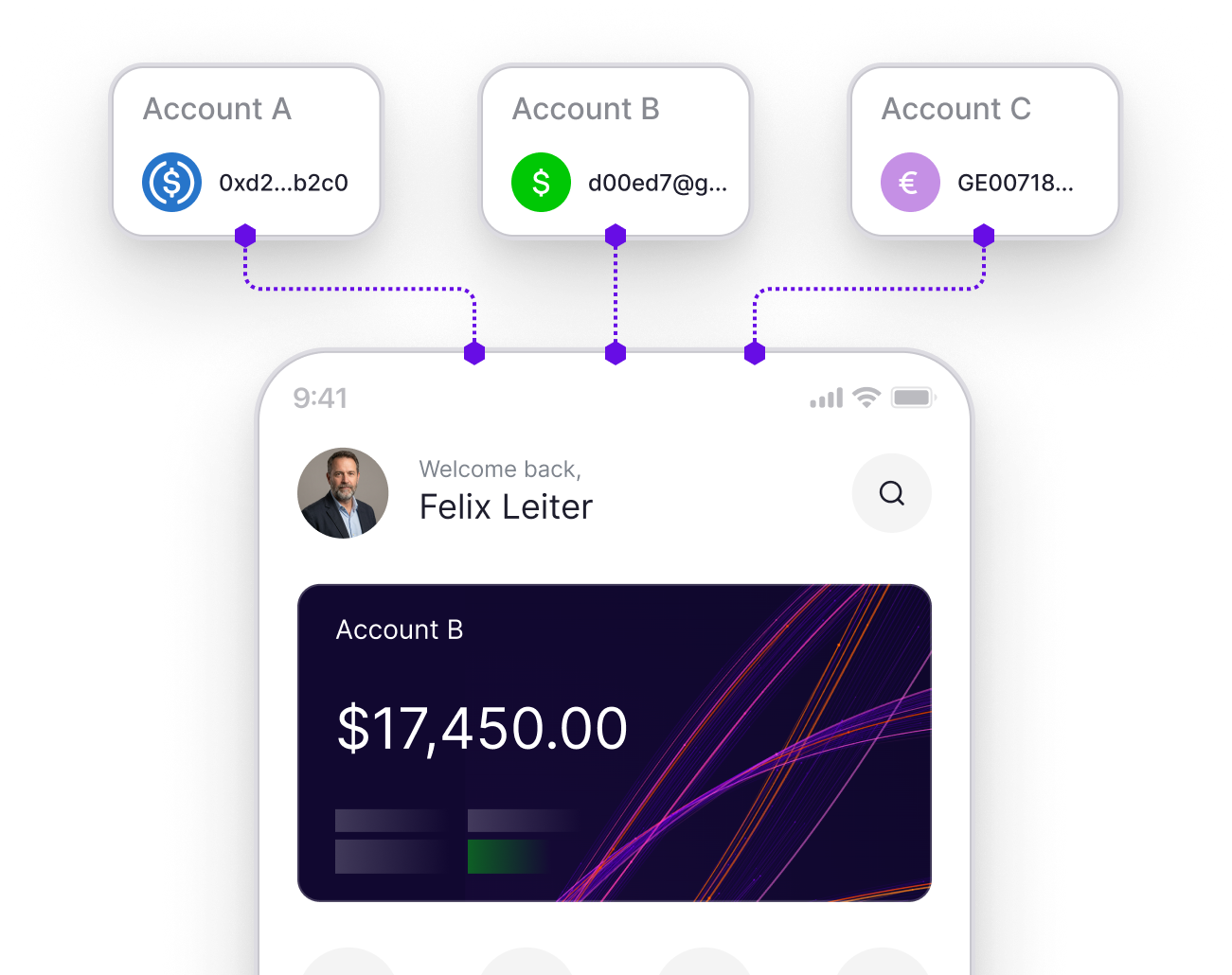
Turn bank deposits into programmable stablecoin balances
Use dedicated account details for your own funding flows or for your users. Every deposit is identified, reconciled, and ready for stablecoin payments.
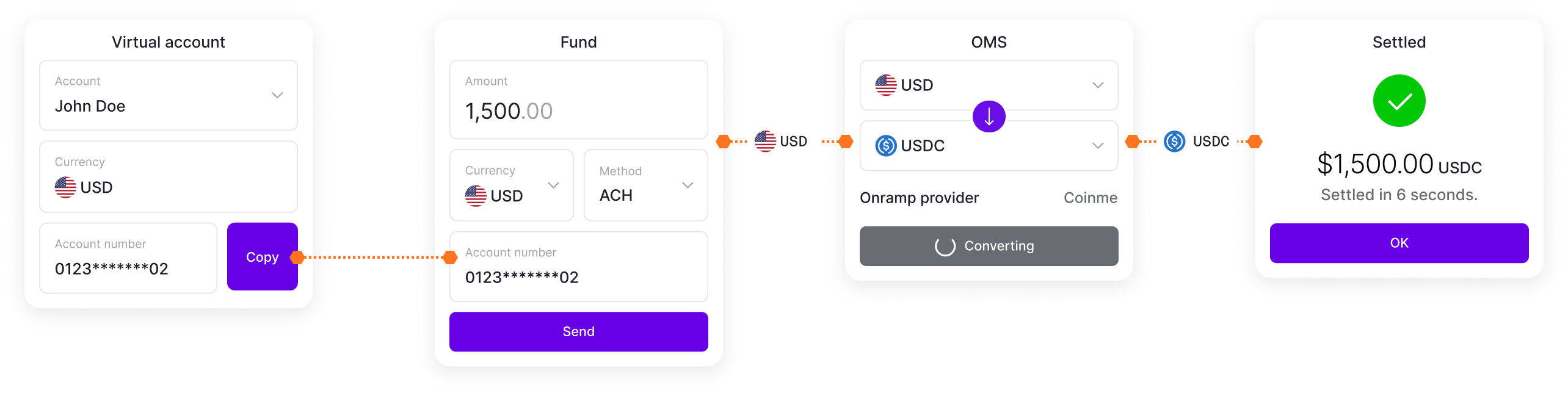
Step 01
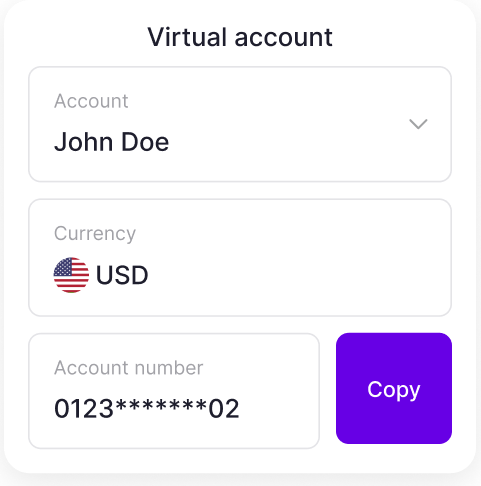
Issue a VA
A dedicated bank account number, one per customer.
Step 02
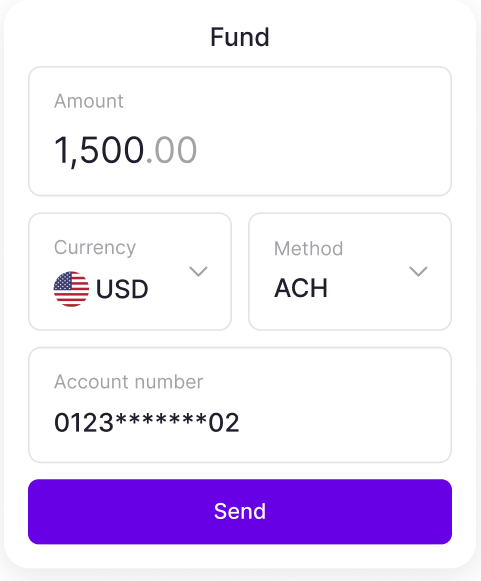
Fiat arrives
Your customer sends a bank transfer to their own number.
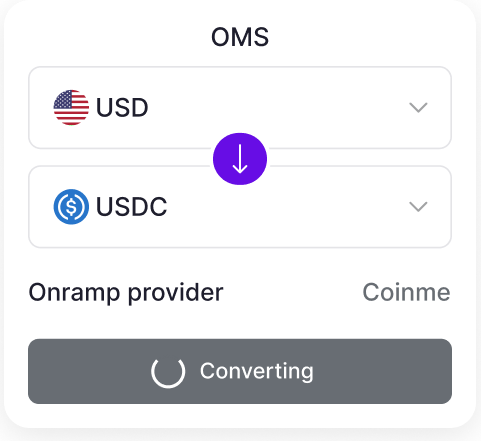
Step 03
Convert
Incoming funds can remain in fiat or convert to stablecoins on arrival.
Step 04
Settles
Stablecoins land in that customer's balance.

What you get
01
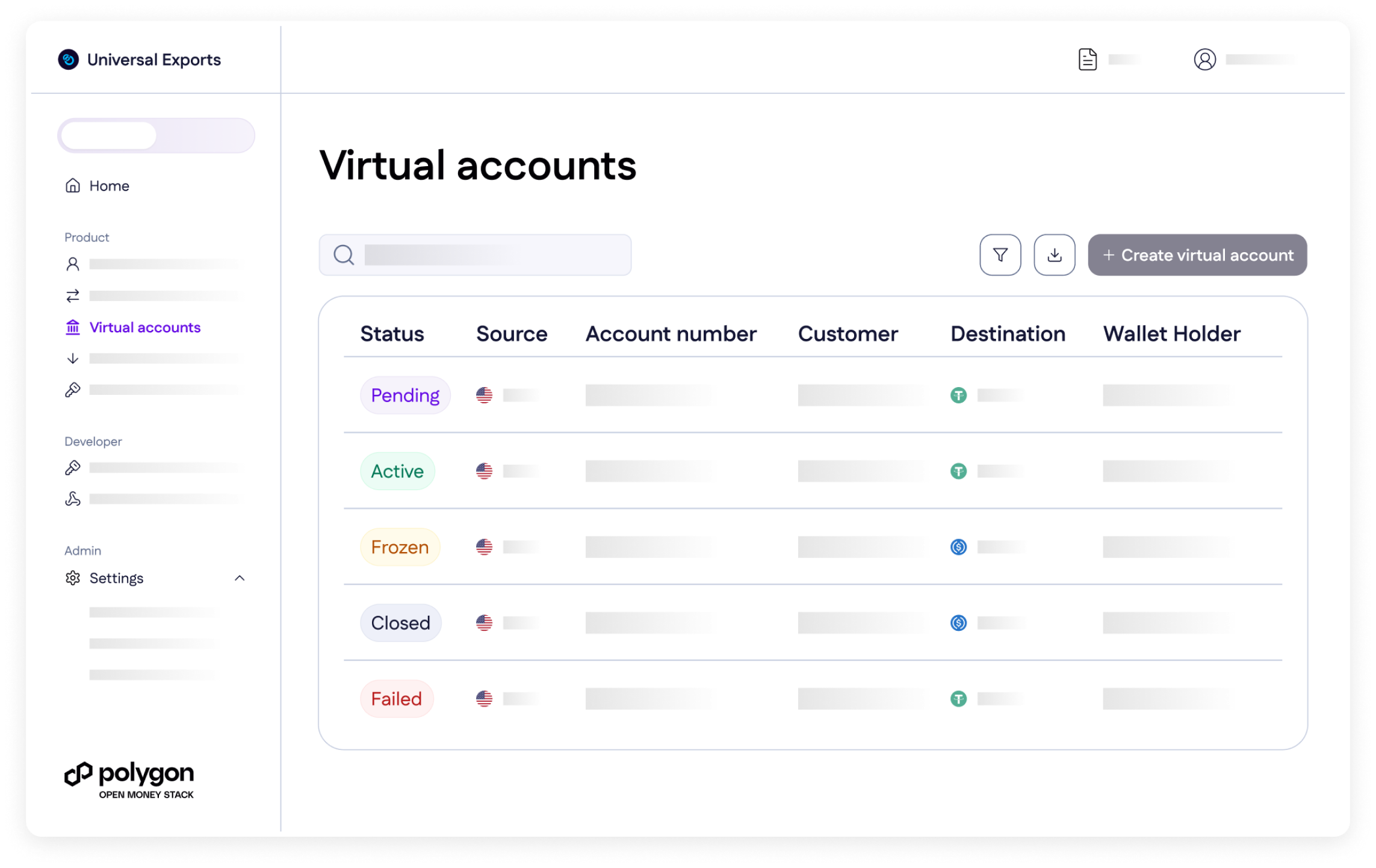
A virtual account per customer
Issue a dedicated bank account number tied to one customer. Hold in fiat or stablecoins.
02
Fiat in, stablecoins out
Money sent to the account can convert to stablecoins or be held in fiat, and settles to that customer's balance. No code, no checkout, no manual step.
03
Reconciled by customer
Every deposit is mapped to the account's owner, so your books match themselves instead of you matching them.
Built for money that arrives, again and again
Issue an account to each of your customers, or keep one for your own operations. A one-off invoice or a deposit that lands every week, payroll or treasury inflows: when the bank payment arrives, the virtual account turns it into settled stablecoins on its own.
Talk to our team+FREQUENTLY ASKED QUESTIONS:
01
A virtual account is a dedicated bank account number tied to one customer, or kept for your own operations. When a bank payment arrives, it is mapped to the account's owner. The funds can then be held in fiat or converted to stablecoins and settled to that customer's balance.
02
Virtual accounts accept ACH, Fedwire, and SWIFT deposits today. A business virtual account can take those deposits from any external bank, whether or not the customer owns it. Every deposit is identified and reconciled by customer, so it is ready for stablecoin payments as soon as it lands.
03
No. Polygon Open Money Stack runs on regulated partner banks underneath the API. You issue accounts to your customers, and the bank rail, compliance, and reconciliation work runs underneath. Each customer who instructs a payment is still onboarded, with KYB for businesses and KYC for individuals.
04
Every customer that instructs a payment has to be onboarded. Businesses go through KYB, and individuals go through KYC. Polygon is rolling out reliance KYB, so you can pass through verification you have already done on your customers, starting with US businesses.
05
Yes, for business customers. A business virtual account can accept ACH, Fedwire, or SWIFT deposits from any external bank, whether the customer owns it or not. Every deposit is mapped to the account's owner, so your books match themselves instead of you matching them.
06
You issue a virtual account, and your customer sends a bank transfer to their own number. Incoming funds can stay in fiat or convert to stablecoins on arrival, and stablecoins land in that customer's balance. There is no checkout and no manual step in between.
One open stack