
Greenhouse gasses are the frontline in the fight against climate change. One in three of carbon dioxide molecules in the Earth’s atmosphere ended up there as a result of human activity. With global CO2 emissions still climbing, it is an all-hands-on-deck problem.
The only two ways to tackle it is to emit less and remove the CO2 that’s already out there. Carbon markets have emerged as a promising vehicle to make the polluters pay and channel the money to green projects. But the process of buying and retiring carbon credits, known as offsetting, can be complicated, opaque and fraught with middlemen.
A number of projects on Polygon are offering solutions that leverage the power of blockchain technology. Below are some notable examples.
Carbon Offsetting On-Chain
KlimaDAO and its partners Moss, the Toucan Protocol, and C3 have developed the infrastructure to tokenize carbon credits and make them available on Polygon where they can be integrated with decentralized finance. The on-chain carbon markets are fully transparent, allow for dramatically lower fees and make instant purchases possible. All which makes carbon offsetting equally accessible to a large corporation with a footprint in thousands of tonnes and an individual canceling out the impact of a flight.
As with all markets, liquidity is a major factor. KlimaDAO provides liquidity across pools of tokenized carbon credits using the KLIMA token, which is backed by at least one tonne of carbon. KLIMA is the main asset used for tokenized carbon trading pairs and can be used to offset emissions or staked to become a yield-bearing asset that grows along with KlimaDAO’s treasury of carbon assets.
In just over six months, over 25 million tonnes worth credits have been tokenized. That’s about 5% of what’s available for sale in the Verra registry, the largest off-chain pool of carbon credits. Toucan’s Base Carbon Tonne goes for about $2.5 with the forestry-focused Nature Carbon Tonne selling for just over $5. Moss Carbon Credits, which specifically target the Amazon rainforest, go for just under $6.5.
Carbon Credit JPEGs
Another approach to bringing carbon credits on-chain is to make use of the existing market infrastructure for buying and selling of non-fungible tokens (NFTs). DeepMarkit is building a platform for minting credits into NFTs which generate royalties every time they are re-sold or traded. The company earlier this month carried out a successful test on Polygon, minting carbon credit NFTs originating from a landfill in the United States, a wind power farm in India and a renewable energy project in Brazil.
Sequestration on the Farm
As opposed to reducing or avoiding emissions, Nori is focused on carbon removal by working with farmers to encourage carbon-negative practices that involve soil carbon sequestration. Users can buy Nori Carbon Removal Tonnes on its marketplace and the proceeds generate additional income for farmers. With around 20 participating projects, Nori has retired close to 86,000 tonnes of carbon and distributed over $1 million to the farmers.
Earlier this year, the team raised $7 million from venture capital funds including M13, Toyota Ventures Climate Fund and Placeholder. Originally built on the Ethereum blockchain, Nori is moving its operations to Polygon where it can enjoy lower transaction fees and faster transaction speeds with just a fraction of the carbon footprint from network operations.
It’s only fitting that the chain hosting these efforts is itself green and sustainable. That’s why Polygon is eliminating all of the network’s carbon debt going back to inception and then going carbon negative in 2022. The core team has joined with KlimaDAO to buy $400,000 worth of carbon credits and also pledged $20 million in funding to community initiatives and technology projects that combat climate change.
You can read more about how we plan to accomplish this here, check out our Green Manifesto and tune into our blog for the latest from the Polyon ecosystem.
Let’s make meaningful change in the world!
Website | Twitter | Ecosystem Twitter | Developer Twitter | Studios Twitter | Telegram | Reddit | Discord | Instagram | Facebook | LinkedIn
Custodial vs. Non-Custodial Wallets: Which One Should Your Platform Build?
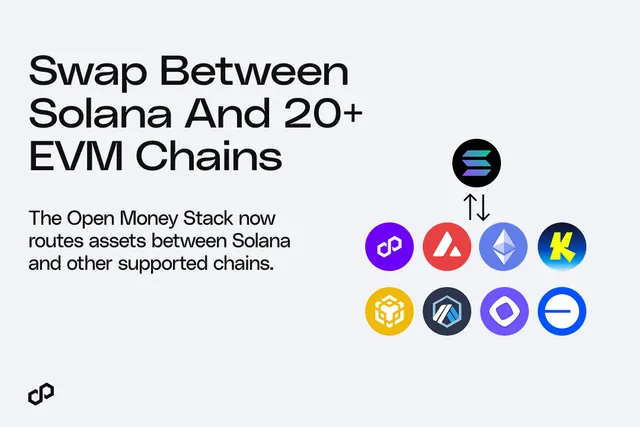
Move Money Between Solana and Polygon, Ethereum, Base + more EVM Chains with Polygon OMS
.CXtdIGFA_Z2ODqj.webp)
Ithaca Upgrade Is Live: Payments on Polygon Chain Are More Reliable Than Ever

Kansai Electric Power's Rewards Arm Turns Loyalty Points Into Real Stablecoin Payments on Polygon Chain
Mento Protocol Launches on Polygon for Local Currency Stablecoin Payments
PayPal USD Lands on Polygon Chain, Enabling Regulated Onchain Dollars to Move Across Borders in One Integration

Credible Races Past $152M Total Payments Volume on Polygon
We Built the Best Blockchain for Payments. Now We’re Bringing the World’s Enterprises Onchain

Uquid Integrates Polygon's Open Money Stack for 1-Click Crypto Checkout Across 178M+ Products
.Cfn0LZ0R_2iwkGz.webp)