Polygon Labs, in collaboration with Crypto Carbon Ratings Institute (CCRI), launched a sustainability dashboard to provide an unprecedented level of transparency of climate and environmental impacts of the Polygon blockchain infrastructure.
The Polygon Network Sustainability Dashboard displays key metrics such as electricity consumption and carbon emissions, as well as sustainability indicators aligned with the proposals in the upcoming Markets in Crypto Assets Regulation (MiCA) regulation. The dashboard, designed and developed with support from CCRI, also improves upon the existing Polygon PoS methodology and expands tracking to Polygon zkEVM.
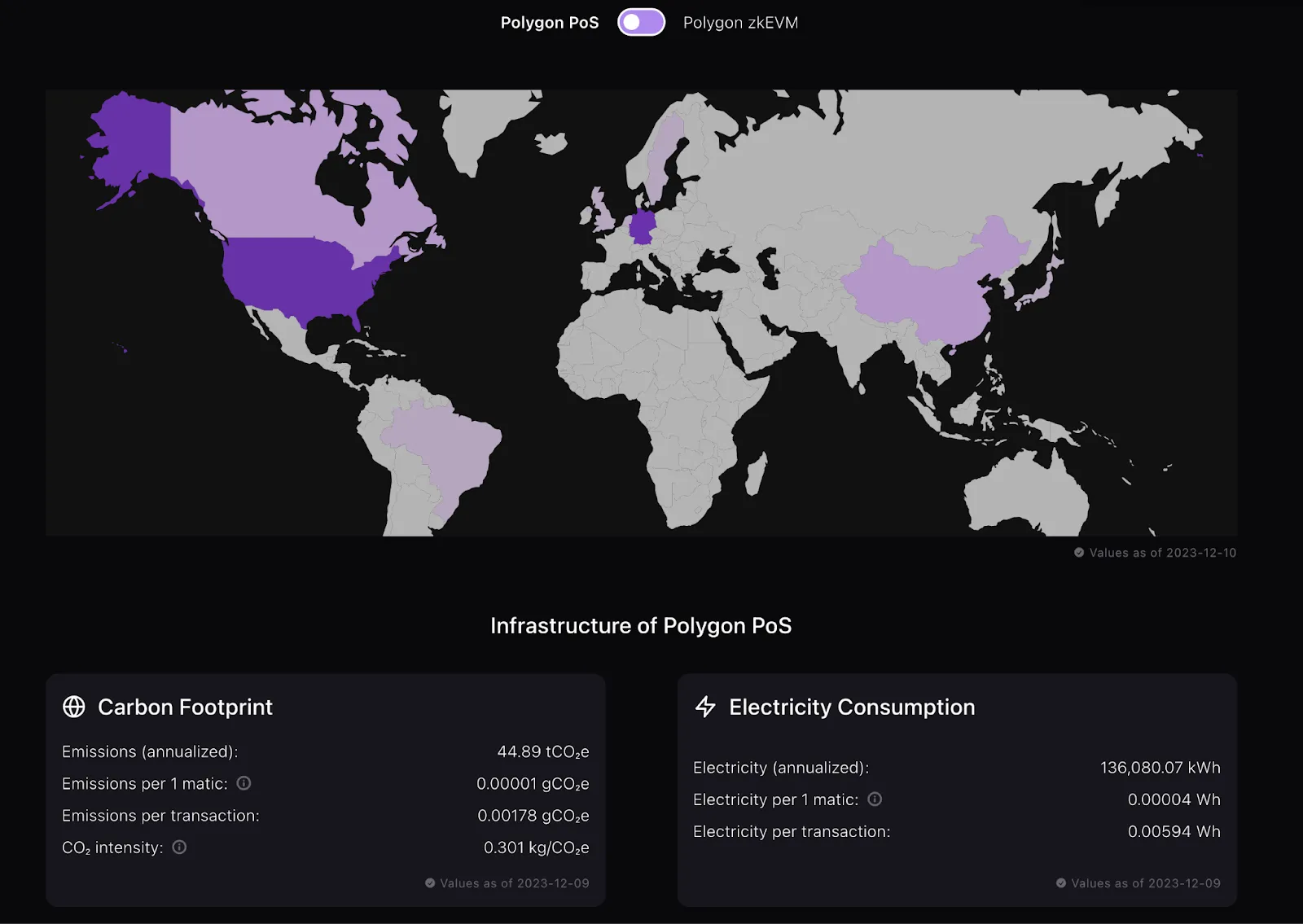
This is the latest in the series of sustainability efforts at Polygon Labs dating back to the Green Manifesto in April 2022. With the launch of the Polygon Network Sustainability Dashboard, Polygon Labs continues to demonstrate its commitment to sustainability by including a number of pioneering features in sustainability disclosure:
- Statistics displaying the climate impact of Layer 2 and base-layer (L1) activities, including the emissions caused on Ethereum via activities such as coin holdings and transactions;
- An address-specific emissions calculator which provides a tool for users to enter their wallet addresses and automatically collect their holding and transaction data and calculate the associated carbon emissions with daily granularity;
- An updated methodology, including GHG Protocol aligned location-based and market-based carbon accounting;
- Providing values for the pending MiCA indicators as proposed by the European Securities and Markets Authority (ESMA) in its Second Consultation Package;
- The ability to switch between infrastructure components to provide insights into the sustainability performance of Polygon PoS and Polygon zkEVM.
Accelerating climate action and preserving our planet for future generations is among the key priorities at Polygon Labs. The dashboard’s launch is a step toward creating the base layer for collaboration between climate action leaders, technologists, scientists, and the Polygon community.
Dashboard Improvements Ahead
The dashboard will continue to evolve alongside the Polygon protocols to include infrastructure solutions such as Polygon Miden and Polygon CDK. One of the biggest improvements will center on arriving at a more granular understanding of the sources of the electricity that feeds the Polygon infrastructure.
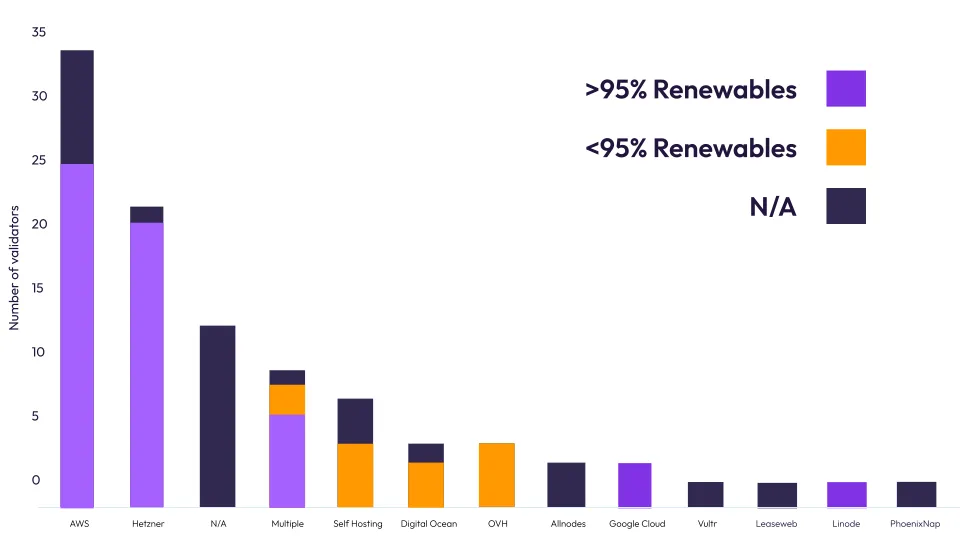
An initial analysis of Polygon PoS validators shows that 35% exclusively use cloud services from AWS and 22% use Hetzner (38% and 28% respectively, if we consider also those that use multiple providers). According to AWS, 90% of their electricity consumed was attributable to renewable energy sources in 2022, targeting 100% by 2025. Hetzner already uses 100% hydropower.
The GHG Protocol, the most widely used carbon-accounting standard, recommends that two approaches to accounting for emissions from purchased electricity are used in parallel: location-based and market-based.
The Polygon Network Sustainability Dashboard uses the location-based approach, which requires reporting emissions associated with the delivered electricity and typically corresponds to the average emissions intensity of the local grid. The dashboard relies on location-specific carbon emissions factors from the International Energy Agency.
The market-based approach requires reporting emissions associated with purchased electricity, which may reflect contractual instruments, such as power purchase agreements, supplier-specific contracts, or energy attribute certificates. Global initiatives, such as RE100, provide definitions of renewable electricity sources and requirements for companies to possess the relevant attribute certificates.
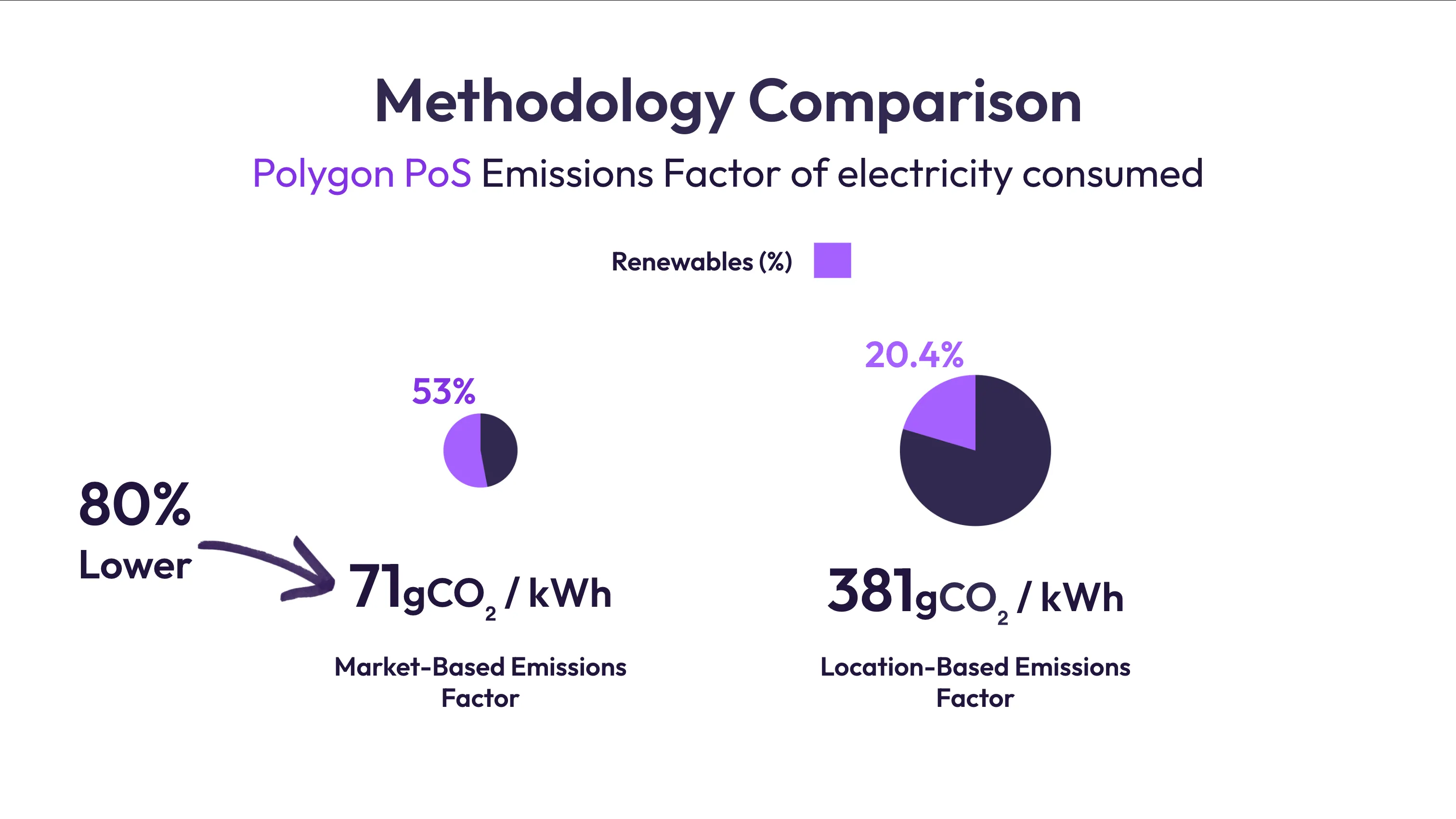
Using the market-based approach results in the calculation of the carbon footprint for Polygon PoS that is 80% lower, or about 71 g/kWh of electricity consumed versus 381 g/kWh under the location-based approach. This analysis also concludes that 53% of the validator set is running on 100% renewables.
The proper application of the market-based approach requires confidence in the renewable energy usage claims. That’s why Polygon Labs is actively working on gathering the required input data and plans to extend the dashboard accordingly, as soon as data is available in sufficient granularity. An action plan is also being developed to assist validators to transition to renewable energy.
Find out more about sustainability efforts at Polygon Labs, tune into the blog and our social channels to keep up with updates about the Polygon ecosystem.
Together, we can build an equitable future for all through the mass adoption of Web3.
Website | Twitter | Developer Twitter | Forum | Telegram | Reddit | Discord | Instagram | Facebook | LinkedIn

Hold Dollars in Polygon's Open Money Stack. Convert to Stablecoins the Moment You're Ready.
Get Unlimited Embedded Wallets Free, With Crosschain Routing Included

Polygon Labs Joins NOBO Finance and Dun & Bradstreet in Phase 2 of the Bank of England's Digital Pound Lab

Custodial vs. Non-Custodial Wallets: Which One Should Your Platform Build?
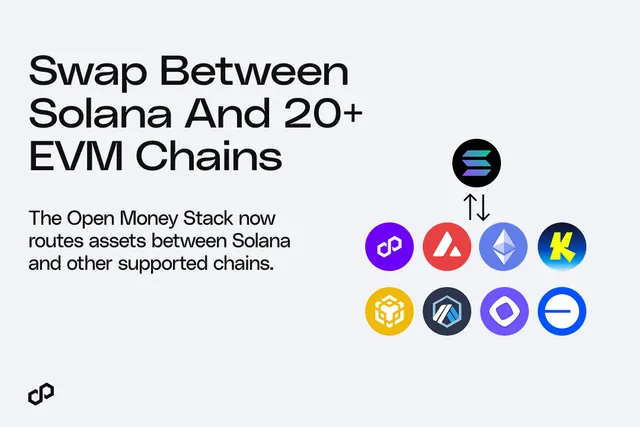
Move Money Between Solana and Polygon, Ethereum, Base + more EVM Chains with Polygon OMS
.CXtdIGFA_Z2ODqj.webp)
Ithaca Upgrade Is Live: Payments on Polygon Chain Are More Reliable Than Ever

Kansai Electric Power's Rewards Arm Turns Loyalty Points Into Real Stablecoin Payments on Polygon Chain
Mento Protocol Launches on Polygon for Local Currency Stablecoin Payments
PayPal USD Lands on Polygon Chain, Enabling Regulated Onchain Dollars to Move Across Borders in One Integration