.-iw77rTp.png)
tl;dr
- Polygon’s latest upgrade activates a $1 million gas subsidy for agent-to-agent transactions, including x402, lowering costs for early-stage agent payments
- Lisovo enables controlled fee adjustments without requiring future disruptive hardforks
- The network now offers more predictable settlement economics for stablecoin payments
- Security and wallet compatibility improvements further strengthen Polygon’s production payment infrastructure
- The upgrade aligns Polygon with Ethereum’s latest security standards, strengthening validation and resilience
Today, Polygon successfully executed a payments-grade infrastructure upgrade that subsidizes agent-native commerce with one million in gas incentives and makes settlement economics more predictable. It also aligns Polygon with Ethereum’s latest security standards, strengthening validation and resilience across the network.
There was no downtime and no interruption to stablecoin settlement.
For fintechs, payment service providers, institutions, and developers building programmable commerce, Lisovo lowers the cost barrier for agent payments and enables safer, more controlled fee behavior as network demand grows.
Lisovo hardfork breakdown: Gas subsidies, more predictable fees, stronger rails
Lisovo introduces three concrete improvements to Polygon’s production payment rails.
First, through recently approved governance, Polygon will refund 100% of gas costs, up to $1 million in gas, for transactions routed through the Polygon x402 facilitators. This lowers the barrier for early-stage agent-native payments, where AI systems pay APIs, data feeds, and services in stablecoins.
Second, the upgrade allows validators to adjust fee behavior within defined safety bounds without requiring another protocol upgrade. Previously, modifying how fees respond to sustained demand required a coordinated hardfork. Now, fee responsiveness can be tuned gradually and safely as usage grows.
Third, Lisovo incorporates Ethereum-aligned security updates and improved support for modern cryptographic standards used in passkey-based and embedded wallet experiences.
Each change reinforces Polygon’s positioning as infrastructure built for real money movement.
Why the $1M Gas Subsidy Matters
Machine-to-machine payments are emerging quickly.
Agents are beginning to:
- Pay for API access
- Settle usage-based data
- Execute conditional payments
- Trigger automated cross-border transfers
If every interaction requires managing native gas tokens or absorbing unpredictable fees, adoption slows.
The $1 million gas incentive removes that friction. Developers can experiment with agent-native commerce without worrying about gas economics, and early payment flows can scale before cost sensitivity becomes a constraint.
Subsidizing infrastructure at this stage is strategic. It accelerates the development of programmable payment systems while keeping the underlying settlement secure and production-ready.
Why Controlled Fee Adjustments Matter
Payment operators care deeply about fee predictability.
If you are pricing stablecoin transfers, managing B2B settlement flows, or modeling treasury operations, sudden shifts in fee mechanics generate uncertainty.
Lisovo enables Polygon validators to fine-tune fee responsiveness within strict boundaries without forcing another network-wide upgrade. That reduces operational risk for enterprises and ensures settlement economics can evolve alongside real-world demand.
Ethereum Alignment and Wallet Infrastructure Maturity
Lisovo also incorporates updates aligned with Ethereum’s latest security standards.
For institutions deploying real volume, this matters. Alignment reduces fragmentation, strengthens validation rules, and ensures Polygon continues to inherit improvements from the broader Ethereum ecosystem.
Specifically, Lisovo provides expanded support for modern wallet login methods, including passkeys and hardware-backed authentication. As more payment apps move toward passwordless sign-in and embedded wallets, this ensures those experiences work smoothly and securely on Polygon, fully aligned with Ethereum’s latest standards.
Lisovo also improves how nodes propagate pending transactions and strengthens block verification through additional peer confirmation, reducing the risk of stuck transactions and improving RPC stability for payment applications operating at scale.
For fintechs and enterprises deploying smart contract wallets, this improves compatibility with passkey-based and device-native authentication without requiring custom workarounds. It ensures that Polygon remains aligned with emerging wallet standards as payment experiences move toward account abstraction and embedded custody.
While not visible to end users, these improvements reduce execution risk for modern wallet flows and reinforce Polygon’s readiness for mainstream, secure onboarding.
Combined with recent upgrades that increased throughput, reduced finality times, and eliminated reorg risk, Lisovo reinforces a clear trajectory: Polygon continues to cement itself as enterprise-ready payment infrastructure.
Introducing Polygon CDK Besu: Launch a Hyperledger Besu chain connected to other chains and their liquidity
Polygon Open Money Stack is now a U.S.-regulated payments platform with completion of Coinme acquisition
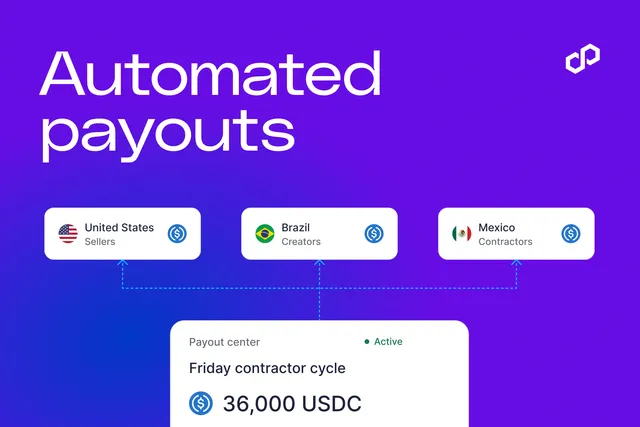
New to Polygon OMS: Automated stablecoin payout runs with rules your team sets
Polygon Open Money Stack now supports TRON
Meet Polygon at Money20/20 USA
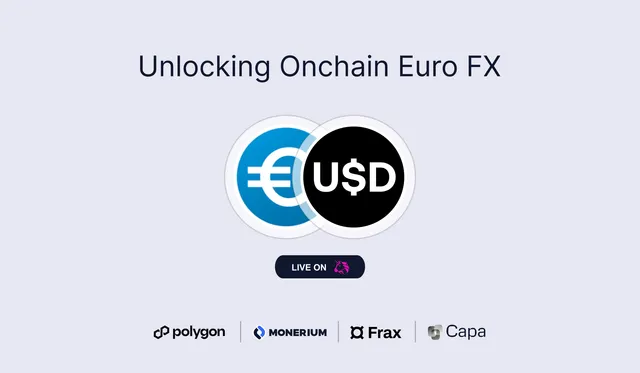
Monerium, Frax and Capa connect euro payments to onchain FX markets on Polygon
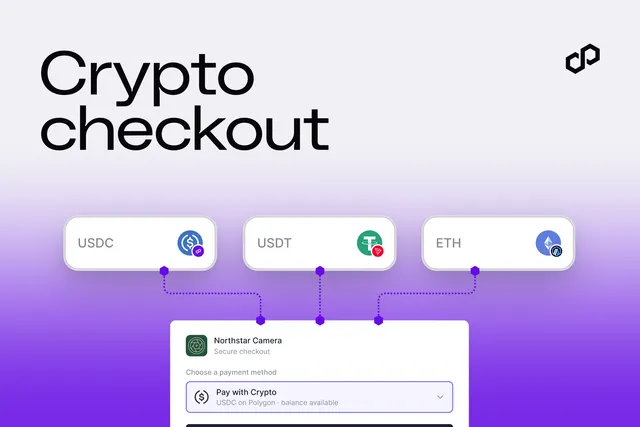
Introducing crypto checkout in Polygon Open Money Stack
Polygon passes $3 trillion in stablecoin transfer volume
Polygon Chain now supports 11 million payments per second