tl;dr
- The Open Money Stack has processed $205M in cross-chain intents across 110k successful transactions since general availability of the intents engine, Trails, in February
- Trails handles pay, swap, fund, and earn flows across any token and any chain
- Integration is a single SDK: teams go from zero to live cross-chain payments in under five minutes
- Prediction markets, DeFi vaults, neobanks, and chain ecosystems are all live on it today
Cross-chain used to mean five problems. Now it’s one integration.
Building cross-chain payment flows used to mean owning the whole stack.
It required routing logic, bridge selection, token swaps, gas abstraction, and contract execution.
Every piece required a new integration. Each integration introduced a new surface area for failure. Product teams were asked to ship infrastructure, not product.
The Open Money Stack changes that equation.
Polygon Labs built the OMS so that institutions, neobanks, and app developers connect once and get the full payment stack: fiat and card onramps, cross-chain routing, stablecoin orchestration, and execution, all with a single API.
Trails is the intent layer that makes cross-chain transactions work. It is an intent-powered orchestration layer that aggregates a user’s full balance across every chain and every token, then routes, swaps, bridges, and executes in a single confirmation. Users specify the outcome: pay this address 10 USDC on Base, fund this vault, enter this position. Trails handles everything underneath.
The integration is an npm install and a handful of lines. Teams that previously spent weeks on custom bridge and routing logic are live in an afternoon.
$205M in processed volume across 112,000 transactions is evidence of the ease of adoption. Teams ship faster because the OMS is easy to integrate and go.
Users decide what to do. The OMS figures out how.
The OMS works backward from the outcome a user wants: fund an account, enter a position, deposit into a vault, move stablecoins from one chain to another. Once the intent is defined, it handles the path with Trails: which route, which bridge, which swap, which chain, what gas.
The user sees one step. The product team writes one integration. Everything between those two facts is the OMS.
For a neobank or fintech, this matters operationally.
Deposit flows fragmented across USDC on Ethereum, USDT on Tron, exchange balances, and card rails are a treasury problem and a user experience problem at the same time. The OMS consolidates that into a single orchestration layer, so the engineering team builds once and the operations team stops managing handoffs manually.
Prediction markets, vaults, neobanks, and new chains: all the same problem
Prediction markets and gaming apps use the OMS to close the funding drop-off gap. Users arrive ready to participate, cannot get money into the right position fast enough, and leave. One-click funding from any wallet, exchange, or card keeps them in the flow.
DeFi protocols and vaults use it because cross-chain deposits used to fail at the routing step. Bridge, swap, and deposit used to require custom contract work for every new source chain. The OMS handles that composition.
Stablecoin-native fintechs and neobanks can use it for treasury orchestration. Moving USDC and USDT across chains and custody providers manually is an operations cost. The OMS makes it a product feature.
Chain ecosystems use it as a front door. When a new chain launches, users arrive with funds on Base, Arbitrum, Solana, or a centralized exchange. The OMS routes them in from wherever they are.
What comes next
The $205M reflects what Trails handles today. The roadmap extends that coverage further, with an upgrade coming soon.
If your product loses users before they complete a funding step, or your cross-chain deposit flow is still a set of manual handoffs, we want to show you what one integration actually looks like.
Polygon Open Money Stack now supports TRON
Meet Polygon at Money20/20 USA

Monerium, Frax and Capa connect euro payments to onchain FX markets on Polygon
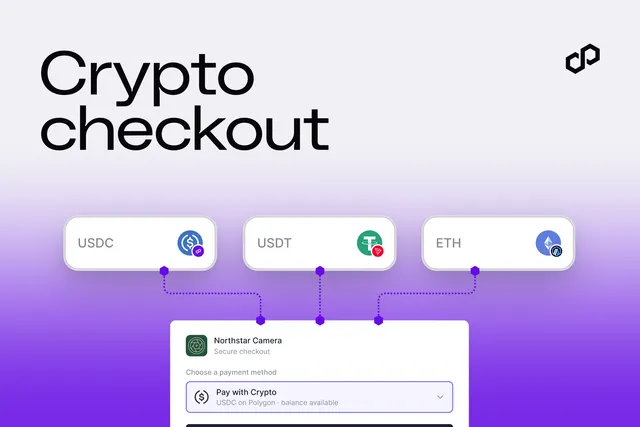
Introducing crypto checkout in Polygon Open Money Stack
Polygon passes $3 trillion in stablecoin transfer volume
Polygon Chain now supports 11 million payments per second
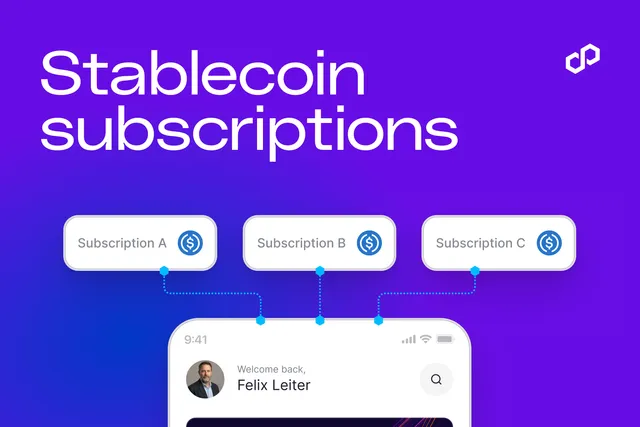
New to Polygon OMS: Recurring Stablecoin Subscriptions With One Customer Approval
Stable.com Adds Polygon for Direct-to-Bank Stablecoin Transfers
One API for Any Payment: Inside Polygon Open Money Stack