tl;dr:
- Launch a sovereign, ZK-secured blockchain with configurable privacy controls and native access to global crypto liquidity
- Gateway and Conduit manage production deployments with enterprise SLAs
- Whether you’re migrating off Hyperledger, replacing another permissioned stack, or launching a new chain entirely, Polygon’s software is built for institutions ready to move settlement, payments, and real-world assets onchain
- Private data availability, private RPC, private block explorers, access control lists, role-based permissioning, and identity tooling (SSO/KYC). You configure the combination your regulatory environment requires
- 20,000 TPS, under $0.008 per transaction. Already in production
Financial institutions move trillions of dollars on infrastructure they don’t own.
Value leaks to intermediaries and systems operate on someone else’s schedule.
By deploying a sovereign blockchain, you can change this equation. But until recently, institutions who wanted the upside of blockchain faced two bad options:
- Permissioned chains, which offer compliance and control but cut institutions off from global crypto markets and liquidity
- Public chains, which offer liquidity and interoperability but didn’t meet basic regulatory requirements
Neither was built for what financial institutions actually need: private infrastructure with secure connection to the global crypto liquidity.
With the Open Money Stack, this is a solved problem.
We give institutions the ability to build a sovereign, ZK-secured chain through Polygon CDK that is private however they need it to be and connected to global crypto liquidity from day one. No ecosystem lock-in, no walled gardens. The model is public but permissioned: configurable privacy controls on your chain, with native access to liquidity flowing across crypto through Agglayer, the cross-chain aggregation layer that unifies liquidity across connected chains.
And we already have proof we know what we’re doing.
Apex Group committed $100 billion in tokenized assets to a blockchain built with Polygon CDK, T-REX Ledger, the first chain custom-built for compliant tokenized real-world assets.
We got our start by launching one of the first chains to scale Ethereum years ago. In the time since, Polygon has processed $2.4 trillion in stablecoin volume across 7 billion transactions, servicing financial institutions and neobanks such as BlackRock, Apollo, Revolut, Stripe, and many more.
That operational foundation gave us the chain-specific knowledge for building bespoke environments for institutions with Polygon CDK. Production throughput reaches 20,000 TPS at under $0.003 per transaction. That is Visa-scale performance with ZK security.
Our custom blockchain service brings cross-chain settlement through the Agglayer. Institutions can design fully customizable gas tokens without facing a protocol tax or interop fee. The codebase is fully open source, with no commercial license tied to a third-party token.
For institutions evaluating infrastructure on five and ten year time horizons, the distinction between open source and token-gated access changes the procurement conversation entirely.
Gateway and Conduit manage production deployments with enterprise SLAs, 24/7. This is not a DIY toolkit. It is bespoke chain-as-as-ervice: managed infrastructure operated at institutional scale, with security, DevOps, and ecosystem introductions included.
Privacy as a configurable spectrum
Most enterprise chains treat privacy as a toggle: on or off. We treat it as a spectrum. Institutions design the right combination of controls for their regulatory environment and use case.
Private data availability. Conduit provides private DA, so the underlying data layer is not exposed beyond authorized parties. Only ZK proofs and cryptographic commitments are submitted to Ethereum, never raw transaction data.
Private RPC and block explorers. Gateway’s permissioned RPC gives you IAM-grade access control over every participant, transaction, and contract. Block explorers show users only the transactions relevant to them, not the full chain state.
Access control lists and role-based permissioning. ACLs define granular permissions: issuance desks can mint and redeem, investors can view balances, auditors get read-only access to event logs. This is traditional enterprise SaaS-style access management applied to blockchain infrastructure.
Identity tooling. SSO integration with Microsoft Entra and AWS IAM. KYC handled out of the box. Company logins map directly to on-chain roles.
Selective disclosure. For sensitive flows like card authorizations, payroll, or high-value payouts, privacy paths keep amounts and counterparties hidden from node operators while enabling selective revelation for disputes, suspicious activity reports, and regulatory reviews.
The combination matters. Privacy without compliance is useless to regulated institutions. Compliance without connectivity is a faster version of the same dead end enterprises have been stuck in for years.
A multistack architecture
We designed the Open Money Stack to be modular, not locked. So if you’re designing your own blockchain, you can choose from different clients:
CDK Erigon is the production stack today. High-performance, stress-tested, audited, and available in three modes: zkRollup, Validium, and Sovereign. This is the client that delivers 20,000 TPS at under $0.008 per transaction.
CDK op-geth is built on the OP Stack’s op-geth, the most widely adopted L2 execution client by market share. It supports Validium mode for enterprise privacy, and it is shipped with Succinct and Conduit.
CDK op-reth is a Rust-based execution client offering higher raw performance for throughput-intensive use cases like high-volume payment chains.
Institutions should have the option to launch a chain on any stack and connect to any network. L1, L2, OP Stack, ZK stacks, it doesn’t matter. We give you options without lock-in.
We’re currently expanding support for clients, networks, and tooling with the goal of letting institutions access all of crypto’s global liquidity, from anywhere, anytime.
Where Polygon CDK deploys
Financial services. A financial services company can configure ACLs so treasury and risk can mint program funds, set velocity limits, and freeze or unfreeze wallets. Customer ops can view balances and initiate refunds. Auditors have read-only access to event logs. Personally identifiable information and transaction details live off-chain in the company’s own ledger, with data-free ZK proofs posted to Ethereum as a tamper-proof commitment to balances, policy checks, and state transitions.
Real-world assets. A bank issuing tokenized securities can ensure that only their issuance desks mint and redeem, investors view their balances, and auditors maintain read-only access. Transaction data is stored off-chain, with ZK proofs acting as a tamper-proof hash on Ethereum. For sensitive information, amounts and counterparties are hidden even from node operators but can be selectively revealed under audit.
Supply chain. IP-based allow-lists plus ACLs can be configured so that only approved wallets call smart contracts tracking part numbers, lots, and quality events like inspections and approvals. SSO maps company logins to on-chain roles for plant staff. A private block explorer ensures logs and data are always verifiable to auditors.
Migration paths that work
Many institutions evaluating new blockchain infrastructure are already running a chain in an existing execution environment. Hyperledger Besu is the most common, but it is not the only one.
Whether you are migrating off Besu, upgrading another permissioned stack, or launching a new chain entirely, you have support. Two proven migration paths from Besu are available: a fast snapshot approach or a full-history migration with zero downtime. Transaction history is fully preserved. Gateway.fm, who co-developed CDK Enterprise, have turned Palm Network’s migration into the reference case: 7 million NFTs, 1.7 million wallets, complete transaction history, no downtime.
Gateway and Conduit provide white-glove support for the migration process, including security, DevOps, and ecosystem introductions.
Connected to everything that matters
The part that gets underweighted in early infrastructure conversations is what connectivity actually unlocks downstream.
Every chain built with Polygon CDK is part of the Open Money Stack, meaning out-of-the-box wallet abstraction, access to on-/off-ramps, cross-chain orchestration, and global crypto liquidity the Agglayer. No protocol tax. No seven-day withdrawal window.
Your chain connects to whatever networks your counterparties are on.
That connectivity means a tokenized asset issued on your chain can reach secondary liquidity on public markets. It means a stablecoin payment initiated on your chain settles against counterparties on other networks. It means the institution’s private chain is not a dead end.
That is the difference between Polygon CDK and every other enterprise toolkit that asks you to trade real liquidity for privacy.
Build your chain
We designed the Open Money Stack so institutions no longer have to choose between privacy, performance, cost, and connectivity.
Evaluate Polygon CDK. Explore the developer docs at docs.polygon.technology/cdk.
Scope your deployment in weeks, not quarters.
Introducing Polygon CDK Besu: Launch a Hyperledger Besu chain connected to other chains and their liquidity
Polygon Open Money Stack is now a U.S.-regulated payments platform with completion of Coinme acquisition
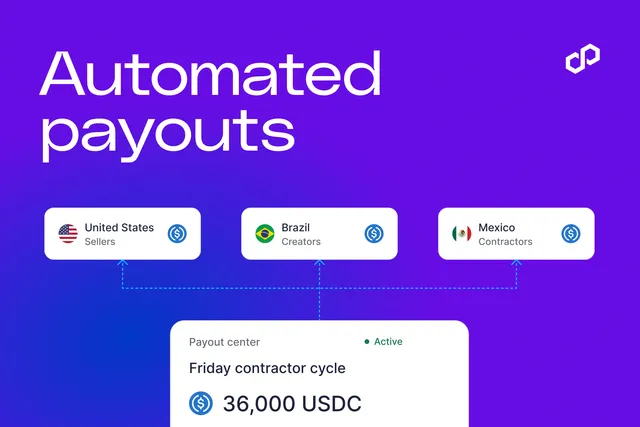
New to Polygon OMS: Automated stablecoin payout runs with rules your team sets
Polygon Open Money Stack now supports TRON
Meet Polygon at Money20/20 USA
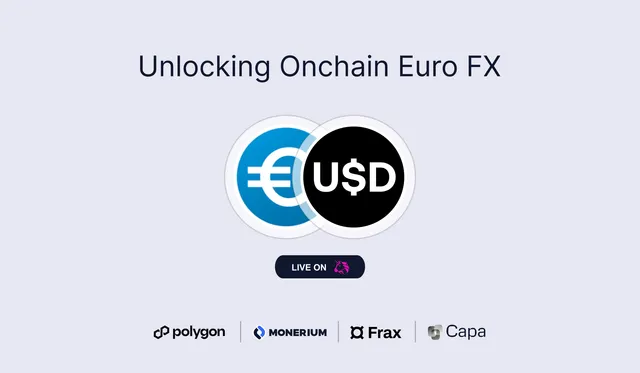
Monerium, Frax and Capa connect euro payments to onchain FX markets on Polygon
Introducing crypto checkout in Polygon Open Money Stack
Polygon passes $3 trillion in stablecoin transfer volume
Polygon Chain now supports 11 million payments per second