tl;dr
- Meta now offers USDC payouts to select creators in Colombia and the Philippines, with support for payouts on Polygon and Solana.
- Earlier this month, Polygon processed about 54% of all USDC transfers globally, more than all other chains combined
- Meta’s program uses on Polygon, the settlement layer of the Open Money Stack, Polygon Labs’ end-to-end solution for global stablecoin payments.
- Polygon leads globally in non-USD stablecoin activity, with more than 50 stablecoins and over 50% of non-USD stablecoin market cap.
Today, Meta announced USDC payouts for select Facebook creators, with Polygon named as one of two supported blockchain networks.
Select creators in Colombia and the Philippines can now receive USDC directly to their compatible crypto wallet. The program supports payouts over both Polygon and Solana. Creators who receive USDC on Polygon can then use supported wallets and exchanges to convert funds into local currency, where available, giving them a faster payment method and access to dollar-denominated assets without waiting on traditional cross-border rails.
Meta paid creators nearly $3 billion across Facebook monetization programs in 2025; as stablecoin payouts expand, those flows represent billions more in payments that can move through Polygon’s already-trillion-dollar settlement network. Polygon offers off-ramps in 150+ countries, while Meta expects to expand stablecoin payout access to 160+ markets by the end of 2026 via Stripe.
The announcement lands during a run of institutional partnerships pointing to the same conclusion: stablecoin payments are moving from pilot programs into production systems, and platforms need infrastructure that already works at scale.
Visa announced that its partners can now settle stablecoins on Polygon, making near-real-time settlement accessible to issuers and acquirers across Visa’s global network. Modern Treasury integrated with Polygon to support stablecoin payments for enterprise treasury customers. Apex Group committed to $100 billion in tokenized assets on a chain built with Polygon CDK, Polygon’s modular toolkit for launching application-specific blockchains.
Meta is the latest major consumer platform to choose infrastructure where stablecoins already move.
How Meta’s Stablecoin Payouts Work
Meta’s payout program is straightforward by design.
Eligible creators can select stablecoin payouts and enter their wallet address for USDC on either Polygon or Solana. Their next scheduled payout is then sent to that address. Creators who want local currency can transfer USDC to a wallet or exchange that supports conversion and withdrawal in their market.
Payouts only work at scale on networks that have enough liquidity, reliability, and coverage to make the flow usable.
Polygon clears that bar.
Why Meta Selected Polygon
In April 2026, Polygon processed approximately 54% of all USDC transfers globally, more than all other chains combined. Polygon handled roughly 35% of all USDC transactions across every blockchain network. Polygon processed approximately three times more USDC transfers than Solana, the second-largest chain by that measure. (Source: Allium, April 2026)
Solana is the other chain Meta selected, and that inclusion reflects Solana’s real adoption and meaningful USDC volume. Together, Polygon and Solana account for the overwhelming majority of USDC payment activity globally.
Meta picked two networks where USDC already moves at scale, with the liquidity depth and operational history to support a live, recurring payout program.
The Economics Work for Creator Payouts
Polygon’s stablecoin supply is currently $3.7 billion. It processes more than 30 million payments per month. Transaction fees stay well below $0.01.
For creator payouts that can average in the tens or hundreds of dollars, the cost of settlement matters. A payout rail cannot eat the payout. It has to be fast, low-cost, reliable, and accessible across markets where legacy payment methods can be slow or expensive.
That is the operating baseline any serious platform evaluates before routing disbursements at scale.
In Q1 2026, Polygon overtook BNB to become the leading chain for USD-based stablecoin transactions, with roughly 34.5% market share, about double BNB’s share. That followed 408% year-over-year growth in monthly payment volumes and a new all-time high in stablecoin supply.
Stripe, Revolut, Flutterwave, and others have already used Polygon infrastructure for money movement and stablecoin-related flows. Meta’s creator payout program applies the same basic logic to a new category: recurring payouts to individuals across global markets.
The Open Money Stack Was Built for This
Meta’s payout program is exactly the kind of use case the Open Money Stack was built to support.
The Open Money Stack is Polygon Labs’ vertically integrated solution for global stablecoin payments: regulated fiat on- and off-ramps via Coinme, enterprise wallet infrastructure, and cross-chain payment orchestration, all connected through a single API.
Instead of assembling multiple vendors for wallets, compliance, routing, settlement, and fiat access, platforms can connect to an end-to-end stack and move money across borders at stablecoin economics: near-instant settlement, fees that do not eat into payouts, and infrastructure that scales with volume.
High-volume, recurring payouts to individuals across markets where traditional rails can charge meaningful fees per transfer is exactly the problem this stack was built to solve.
Polygon Open Money Stack now supports TRON
Meet Polygon at Money20/20 USA
Monerium, Frax and Capa connect euro payments to onchain FX markets on Polygon
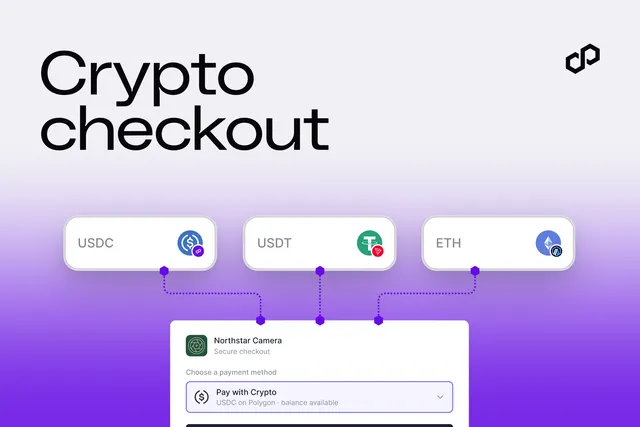
Introducing crypto checkout in Polygon Open Money Stack
Polygon passes $3 trillion in stablecoin transfer volume
Polygon Chain now supports 11 million payments per second
New to Polygon OMS: Recurring Stablecoin Subscriptions With One Customer Approval
Stable.com Adds Polygon for Direct-to-Bank Stablecoin Transfers
One API for Any Payment: Inside Polygon Open Money Stack