
The Polygon Improvement Proposal (PIP) framework is designed to help facilitate and socially coordinate upgrades to the Polygon protocol based on community feedback. Its success, as in every decentralized governance system, relies on the merits of the submitted proposals and ideas. That’s why Polygon Labs is announcing a bounty program to reward outstanding PIP submissions.
Any eligible participant can participate in the program.Polygon Labs is funding the program with $40,000 in awards, which will be distributed over one year to contributors of high-quality PIPs chosen by Polygon Labs. Recipients of the awards will have to adhere to the program’s Terms & Conditions.
The Polygon Labs Governance Team will evaluate PIP submissions and allocate USDC-denominated awardson a quarterly basis, with the biggest bounties going to more complex and impactful PIPs. Submissions should be in one of the following four areas:
- Core – improvements to the core Polygon components such as Heimdall and Bor as well as changes that are not necessarily consensus-critical but may be relevant to the core components;
- Contracts – improvements to the core Polygon contracts that are deployed on Ethereum;
- Interface – improvements of client API/RPC specifications and standards, as well as certain language-level standards like method names and contract ABIs;
- Informational – an Informational PIP describes a Polygon protocol design issue, or provides general guidelines or information to the Polygon community, but does not propose a new feature. It doesn’t require validator consensus, but may be adopted by the wider ecosystem, e.g. a new token standard. Informational PIPs do not necessarily represent Polygon community consensus or a recommendation, so users and implementers are free to follow or ignore Informational PIPs.
A revamped version of the PIP framework (PIP-1 & PIP-8) was announced in February to provide a mechanism for the developer community to inform, propose, and gather technical feedback on new features. As a transparent and versioned repository, it enhances accountability, inclusion and self-governance by creating a historical record of all feature proposals, including their revision history and implementation progress. You can learn more about it here.
Check out the PIP Bounty Program Terms and Conditions to get started. Tune into the Polygon Labs Blog and our social channels to stay up to date on the latest from the Polygon ecosystem.
Together, we can build an equitable future for all through the mass adoption of Web3!
Website | Twitter | Developer Twitter | Telegram | Reddit | Discord | Instagram | Facebook | LinkedIn
Custodial vs. Non-Custodial Wallets: Which One Should Your Platform Build?
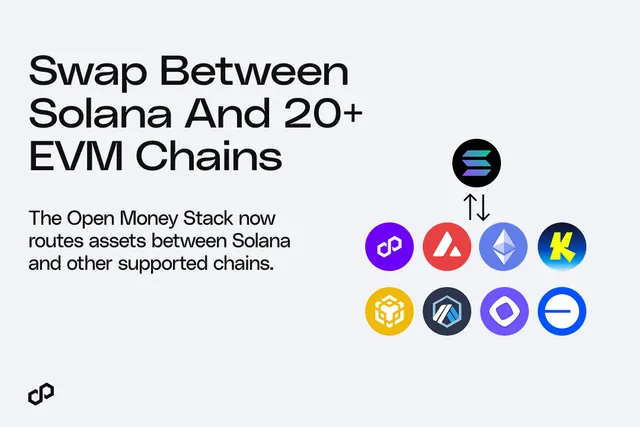
Move Money Between Solana and Polygon, Ethereum, Base + more EVM Chains with Polygon OMS
.CXtdIGFA_Z2ODqj.webp)
Ithaca Upgrade Is Live: Payments on Polygon Chain Are More Reliable Than Ever
Kansai Electric Power's Rewards Arm Turns Loyalty Points Into Real Stablecoin Payments on Polygon Chain
Mento Protocol Launches on Polygon for Local Currency Stablecoin Payments
PayPal USD Lands on Polygon Chain, Enabling Regulated Onchain Dollars to Move Across Borders in One Integration
Credible Races Past $152M Total Payments Volume on Polygon
We Built the Best Blockchain for Payments. Now We’re Bringing the World’s Enterprises Onchain
Uquid Integrates Polygon's Open Money Stack for 1-Click Crypto Checkout Across 178M+ Products
.Cfn0LZ0R_2iwkGz.webp)