.DqTDdwJW.png)
tl;dr
- T-REX Network is launching T-REX Ledger, a compliance-focused blockchain built with Polygon CDK and connected through Agglayer, Polygon’s interoperability protocol
- Apex Group (servicing $3.5T+ in assets) will act as onchain transfer agent and has adopted T-REX Ledger as its default multichain orchestration infrastructure, targeting $100B in tokenized assets by June 2027
- The network serves as a shared compliance reference layer so regulated digital securities can move across blockchains without fragmenting eligibility rules, investor registries, or ownership records
- More than $32 billion in assets have already been tokenized using the ERC-3643 standard, supported by 140+ institutions including DTCC, Deloitte, and Fireblocks
Today, T-REX Network, Apex Group’s Tokeny, and Polygon Labs announce T-REX Ledger, a dedicated compliance blockchain built with Polygon CDK and connected through Agglayer, designed to give regulated tokenized assets a single source of truth for eligibility, ownership, and transfer rules as they move across chains. Apex Group, which services $3.5 trillion in assets globally, is simultaneously committing to $100 billion in tokenized assets by June 2027, adopting T-REX Ledger as its default multi-chain orchestration infrastructure to get there.
Apex Group will also act as an onchain transfer agent at launch.
The network is built with the ERC-3643, the token standard already used to tokenize more than $32 billion in assets. It is supported by the ERC3643 Association with 140+ institutional members, including DTCC, Deloitte, and Fireblocks.
The timing is deliberate. Tokenized securities are moving from pilot to production, with more than $370 billion in asset value now onchain globally. But as assets begin crossing chains, a structural problem has surfaced: eligibility checks, transfer restrictions, and ownership records don’t travel with the asset. They fragment. Records diverge. And when regulators ask who owns what and whether the right rules applied at every step, the answer gets murky.
T-REX Ledger is the infrastructure fix.
Connected blockchains settle transactions independently while pulling from one shared compliance state, so the rules that govern an asset stay attached to it regardless of where it moves.
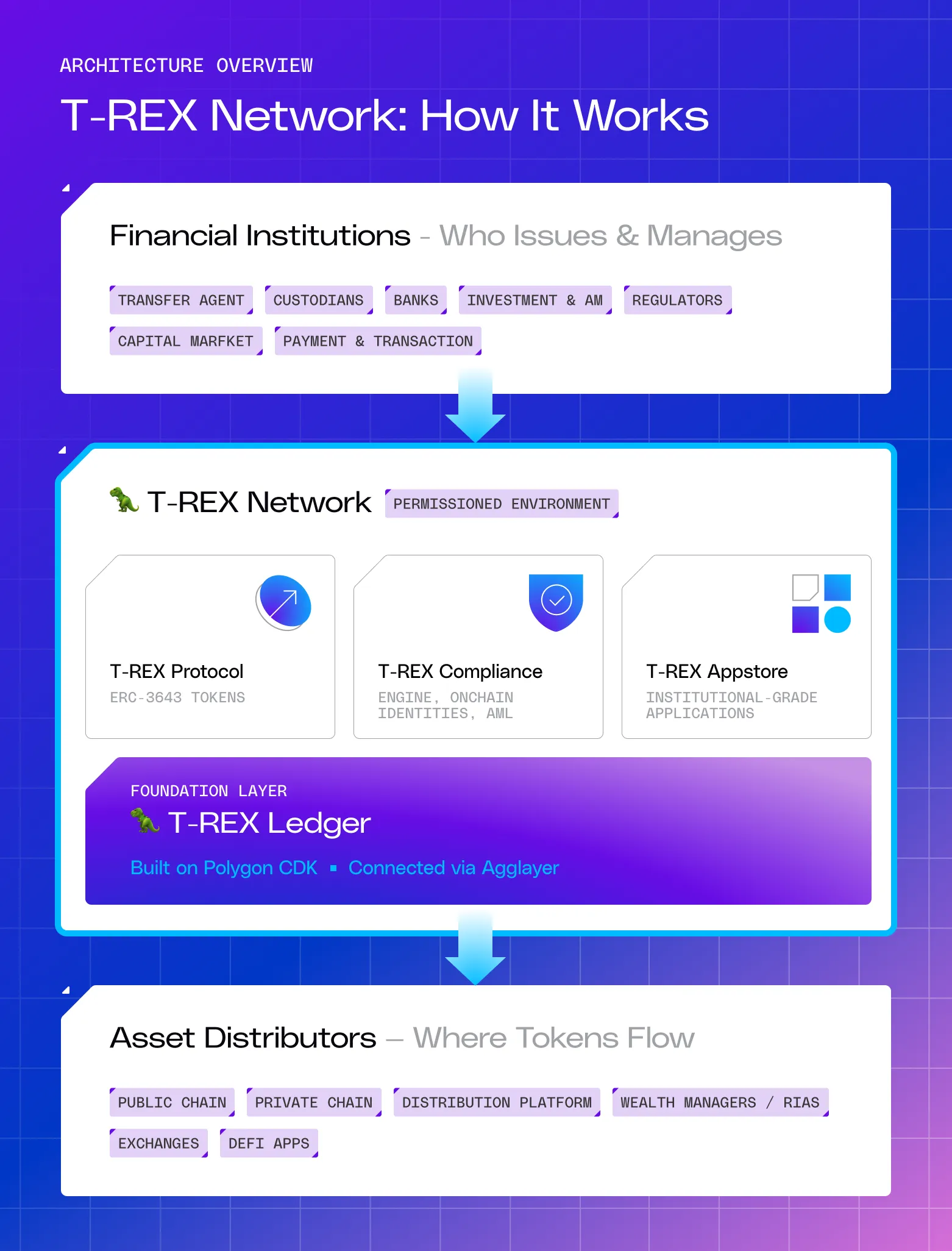
Apex Group adopts T-REX Ledger as its default multi-chain infrastructure
Underscoring the institutional weight behind T-REX Ledger, Apex Group has confirmed it will adopt the platform as its default multi-chain orchestration infrastructure. The commitment is sweeping: Apex Group is targeting $100 billion in tokenized assets by June 2027, using T-REX Ledger as the neutral orchestration layer for ownership records and compliance across multiple blockchain ecosystems.
The move addresses a structural problem that Apex Group has identified at the heart of multi-chain distribution. As tokenized assets proliferate across different chains, each offering access to different investors, platforms, and liquidity venues, ownership records and compliance controls risk fragmenting. Transfer agents, who are responsible for maintaining the official investor registry, face growing complexity and regulatory exposure as a result.
T-REX Ledger resolves this by acting as a shared compliance reference layer: a public, neutral infrastructure that aggregates and synchronizes investor records, compliance checks, and transfer controls across all connected chains and traditional distribution channels.
Any connected network can query it in real time without giving up sovereignty or requiring institutions to rebuild their stacks.
Central to this is OnchainID, an open-source identity framework that ties KYC and AML attestations to the investor, not the wallet. Credentials travel with real people and transfers are automatically blocked if eligibility lapses, credentials expire, or a transaction fails to meet the requirements of a given jurisdiction or fund. Compliance is enforced at the smart contract level, rather than layered on top.
“We built the T-REX Ledger to solve a structural problem in a multi-chain world, not to pick winners among blockchains, but to connect them,” said Joachim Lebrun, Co-founder of T-REX.network. “Our ambition is for the T-REX Ledger to become the standard orchestration layer for regulated tokenized assets across the industry.”
A shared compliance standard for all chains
T-REX Ledger is a dedicated blockchain built using Polygon CDK and connected through Agglayer that functions as a single compliance reference layer for tokenized securities. It’s not trying to replace the chains where settlement happens. Instead, T-REX Ledger acts as the shared source of truth those chains check tokenized assets against.
The system maintains investor registries, eligibility requirements, and transfer restrictions in one place. When a regulated token moves between wallets, applications, or connected blockchains, the compliance parameters stay attached to the instrument itself. The rules travel with the asset.
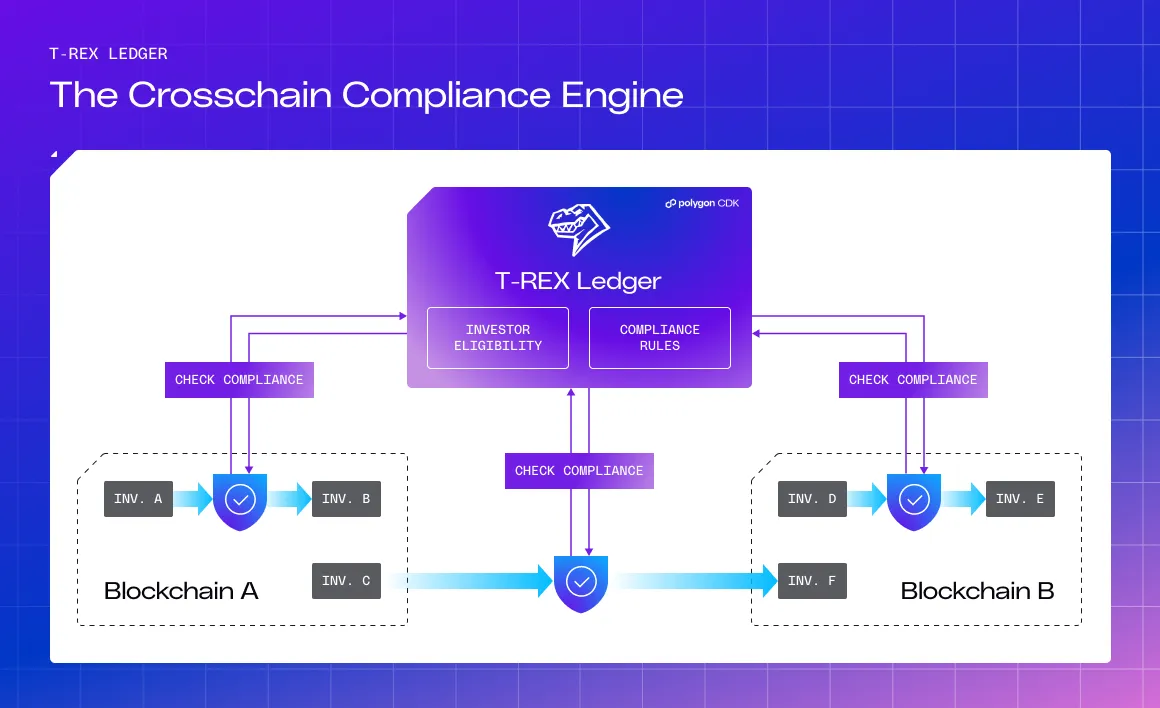
So while individual blockchains handle settlement, T-REX Ledger handles the question of whether that settlement should be allowed to happen in the first place.
This is made possible with Polygon CDK, a toolkit for building bespoke blockchains that are deeply composable and customizable, from privacy controls to gas tokens.
T-REX’s launch comes at a perfect moment. Institutions moving into tokenized bonds, funds, and regulated instruments face a structural problem. Settlement happens onchain, but the compliance layer, e.g. who’s eligible, what restrictions apply, and who actually owns what, often lives in a patchwork of offchain systems and siloed platforms.
IOSCO has already flagged this, warning that opaque structures and unclear accountability introduce real risks for investors.
Why Polygon CDK was selected by T-REX Network
T-REX Network needed an institutional-caliber compliance chain built around compliance standard workloads, without compromising privacy, permissionless, and performance.
That’s what Polygon CDK enabled it to do. CDK is a ZK-secured blockchain toolkit built for institutional deployments. The performance profile matches what regulated markets require: high throughput, low transaction costs, and cryptographic finality rather than optimistic assumptions. No seven-day withdrawal windows. Settlement completes in under an hour.
The compliance architecture matters. Polygon CDK builds in compliance at the infrastructure level, not as a layer applied afterward. That aligns directly with what T-REX Ledger is doing: embedding eligibility rules, transfer restrictions, and identity directly into the tokenized asset itself, so the governing rule set stays attached to the asset regardless of where it moves.
Agglayer is what makes the reference layer concept work at scale. It connects T-REX Ledger to other blockchains without requiring those chains to rebuild their infrastructure, adopt the same execution environment, or give up sovereignty over their own operations. Chains settle independently but query T-REX Ledger’s compliance state for proof.
This is the pattern Polygon CDK was designed for: sovereign chains built for specific institutional workloads, connected to the broader ecosystem through a shared interoperability layer.
Polygon Labs joins as a founding strategic partner, bringing expertise in technical infrastructure, stablecoin liquidity, and go-to-market strategy.
“Tokenization at scale requires compliance infrastructure that works across markets and across chains,” said Sandeep Nailwal, CEO of Polygon Foundation. “T-REX Ledger shows how an industry-led standard can be paired with shared infrastructure to give institutions both regulatory certainty and access to cross-chain liquidity. Agglayer makes that possible without forcing chains to give up sovereignty.”
The token standard that won over institutions
ERC-3643 is already the de facto token standard for permissioned securities. And now it’s the infrastructure Apex Group is building its $100 billion tokenization commitment on. More than 140 institutions back it through the ERC-3643 Association, names like DTCC, Deloitte, ABN AMRO, OpenZeppelin, and Fireblocks.
Over 100 assets have been tokenized and issued under the standard, representing more than $32 billion in cumulative asset value across multiple jurisdictions.
What makes ERC-3643 distinct is that identity, eligibility, and transfer rules are embedded directly into the standard. Compliance isn’t bolted on after the fact.
T-REX Ledger takes that token-level compliance and extends it into a network-level compliance layer. The standard defines the rules. The ledger enforces them consistently, everywhere.
Tokenized assets follow the same rails as money
Polygon’s payments thesis, with the Open Money Stack, and its tokenization story share the same need: moving value onchain, instantly, with the compliance and reliability that institutions require.
Polygon already processes hundreds of millions of stablecoin transactions monthly. The Open Money Stack is being built to make stablecoin payments work end-to-end across borders and currencies.
And with T-REX Ledger, the same infrastructure now extends to regulated securities, like bonds, funds, and equities, with compliance baked in at the protocol level.
Tokenized assets and payments converge on the same set of problems: fast settlement, cross-chain interoperability, regulatory certainty, and a single source of truth for who owns what. Polygon is solving both with the same stack.
Secondary trading of tokenized securities becomes possible at scale. Cross-chain distribution of regulated instruments becomes possible without fragmenting rules or records. And the entire system runs on open, audited infrastructure backed by the industry’s leading token standard.
The compliance infrastructure for tokenized securities is no longer optional. It’s the next thing that needs to work. And now it runs on Polygon.
To learn more about the T-REX Network, visit t-rex.network. For more on Polygon’s role in institutional tokenization, visit polygon.technology.
Polygon Open Money Stack now supports TRON
Meet Polygon at Money20/20 USA
Monerium, Frax and Capa connect euro payments to onchain FX markets on Polygon
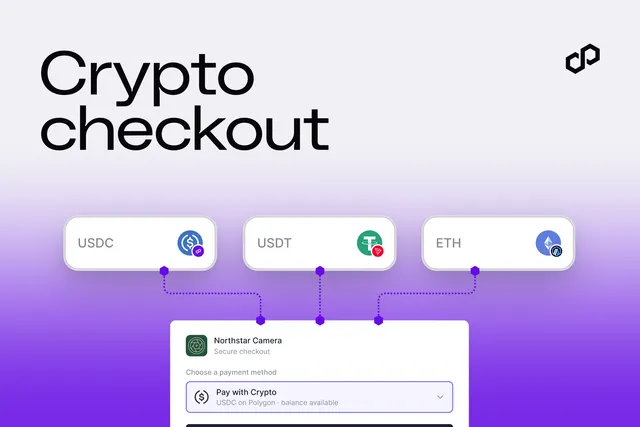
Introducing crypto checkout in Polygon Open Money Stack
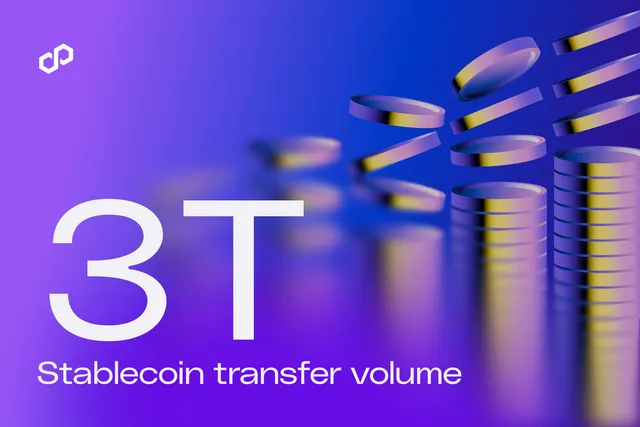
Polygon passes $3 trillion in stablecoin transfer volume
Polygon Chain now supports 11 million payments per second
New to Polygon OMS: Recurring Stablecoin Subscriptions With One Customer Approval
Stable.com Adds Polygon for Direct-to-Bank Stablecoin Transfers
One API for Any Payment: Inside Polygon Open Money Stack