Begin with the right questions
Institutions and enterprises are increasingly turning to blockchain to solve pain points in modern payments and finance. But new technology comes with new questions, decisions, and trade offs that require careful consideration.
Before choosing a wallet solution, institutions must ask what they need a wallet to do, and for whom.
The answer changes depending on an institution’s goals. A wallet for internal treasury has very different requirements than a wallet built for customers or partners. Many teams need internal operational controls and external simple end-user experiences.
Most organizations default to custodial wallets, which feel simpler and safer than non-custodial, or user self-hosted wallets.
This makes intuitive sense: hand the complexity to a third party and the problem goes away.
But when you map the requirements, non-custodial smart contract wallets often deliver the same outcomes with fewer tradeoffs and a cleaner compliance posture than outsourcing complexity and custodianship to third-party software.
Polygon Labs recently acquired Sequence and is acquiring CoinMe, subject to regulatory approval.
- CoinMe provides licensed custodial wallet services;
- Sequence provides non-custodial smart contract wallets with built-in compliance advantages.
Both operate on the same underlying settlement infrastructure and flexibility.
Deciding which approach to choose creates a requirements map that often looks like this:
- Business operations: For easy treasury management, simplified payouts to vendors and partners, low operational overhead (no key or seed phrase handling), multi-user and multi-auth access, and reliable recovery options
- Customer or partner-facing use cases: For seamless onboarding, intuitive UX without blockchain complexity, secure self-service recovery, and compliance across markets
- Both: programmatic controls for the business side plus abstracted simplicity for users, ideally on a shared architecture
In each case, there are infrastructure and outcome requirements—and deciding which type of wallet to build with should follow from core design mechanisms.
Two types of wallets, clearly defined
Custodial and non-custodial wallets represent two fundamentally different trust and operational models.
Understanding this distinction is key to choosing which infrastructure works for your payments use case.
Custodial wallets
A custodial wallet means a regulated third party manages private keys and assumes custody responsibility on behalf of the user. The user does not hold their own keys. The custodian does.
This model is the right fit when regulation specifically requires a licensed third party to hold keys on behalf of users. In certain jurisdictions and for certain financial products, this is a hard requirement. In such cases, a compliant custodial partner is the right path.
Custodial infrastructure can be a strong fit for enterprises managing assets internally. They simplify key management, centralize operational controls, and often make it easier to account for and report assets on balance sheets, including for AUM tracking and treasury oversight. For many institutions, that level of operational clarity and control is necessary. The tradeoff becomes one of structure: Custodial models introduce reliance on a third party. The institution delegates critical infrastructure, which can add operational layers and counterparty exposure that must be managed over time.
Non-custodial smart contract wallets
Modern non-custodial wallets, particularly smart contract wallets, represent a fundamentally different model. The user (whether a business or a consumer) retains control of their own wallet. No third party holds the keys. But critically, “non-custodial” no longer means “complicated.”
This is where the biggest misconception lives. Many enterprise buyers hear “non-custodial” and picture seed phrases, manual gas management, and a steep learning curve. Smart contract wallets have eliminated all of that.
What matters is understanding the two distinct use cases.
Smart Contract Wallets for Enterprise Internal Usage
For treasury, internal fund management, and automated operations, smart contract wallets provide structured control without relying on an external custodian.
Here’s what they deliver for enterprise internal usage:
Flexible authentication. Multiple authorization methods. Businesses can implement multi-approval workflows and role-based permissions without managing private keys.
Programmatic controls. Businesses get the operational grip they need for treasury wallets, automated payouts, and partner settlements, while consumers get a clean, abstracted experience.
Built-in recovery. Secure recovery flows are embedded into the wallet logic itself. Reduces operational risk if credentials are lost or personnel change.
Full account abstraction. No gas management, no blockchain complexity. Internal teams interact with programmable accounts that behave like modern financial software.
For treasury teams, this means control without counterparty exposure and automation without operational fragility.
Smart Contract Wallets for Partners and Consumers
When the wallet is customer-facing, the priorities shift toward simplicity and UX, while preserving user ownership.
Here’s what smart contract wallets deliver externally:
Simple onboarding. Users sign in with email or social login. No seed phrases. No browser extensions. No crypto-native knowledge required.
Secure, user-friendly recovery. Account recovery is built into the wallet itself, not tacked on as an afterthought.
Abstracted blockchain complexity. Gas fees and any cross-chain logic are handled behind the scenes. Transactions feel like any other software.
Compliance advantages. In many jurisdictions, not holding custody of user funds significantly simplifies the regulatory overhead. The business avoids triggering custody-specific licensing requirements, reducing both cost and compliance surface area.
This combination of simplicity, safety, and compliance efficiency is why many organizations that start the conversation asking for custodial infrastructure end up choosing non-custodial smart contract wallets instead.
The assumption gap
The most frequent pattern in enterprise wallet conversations goes something like this: a business comes to the table asking for custodial infrastructure. They’ve done initial research, they associate custodial with “managed” and “simple,” and they want someone else to handle the hard parts.
Then the requirements conversation happens.
- “We need easy treasury management.” Smart contract wallets support that with programmatic controls and multi-auth access.
- “We need simplified payouts.” Account abstraction handles gas and routing automatically, without exposing users to pop-ups or crypto complexity. No manual blockchain interaction required.
- “We need low operational overhead.” No key management, no seed phrase storage, no custodian dependency. The wallet infrastructure handles it.
- “We need multi-user access and recovery.” Built-in. Multiple auth methods, role-based access, and secure recovery flows come standard.
One by one, every item on the requirements list gets checked by the non-custodial path.
And then the conversation shifts to what non-custodial uniquely adds: user sovereignty, reduced regulatory burden across markets, no single point of failure in custody, and programmable policies that give businesses necessary controls.
The story, again and again, is: “We thought we needed to choose a custodial wallet. But non-custodial smart contract wallets delivered every outcome we were after, with a simpler compliance posture and fewer dependencies.”
The Polygon Advantage
Polygon offers both custodial and non-custodial wallet architectures natively, giving enterprises the flexibility to serve partners and users across the full spectrum of regulatory and operational requirements.
On the compliance side, Polygon works through regulated partners with transparent risk frameworks.
- CoinMe provides customers with a custodial option
- Sequence delivers non-custodial smart contract wallets that combine user-controlled custody with embedded compliance-ready infrastructure
On the settlement side, Polygon delivers programmable settlement rails with smart routing, automation, and fast finality. Deep liquidity and FX support across both wallet models.
And because both paths will run on the Open Money Stack infrastructure, enterprises can start with one model and expand as their needs, markets, or user base evolve.
How to Decide
Choosing between custodial and non-custodial comes down to three questions about your regulatory environment, your user experience goals, and your operational model.
Question 1: Does a specific regulation in your operating market require a licensed custodian to hold user keys?
If the answer is yes, custodial is the correct path. Polygon supports through platforms like CoinMe, which is being acquired by Polygon Labs, subject to regulatory approval.
If the answer is no, or if your compliance team confirms that non-custodial wallets satisfy regulatory requirements, continue to the next question.
Question 2: Do you need simple onboarding, recovery, and multi-auth access without exposing seed phrases or blockchain complexity?
If yes, a non-custodial smart contract wallet like Polygon wallet delivers all of this out of the box, with no custody tradeoffs.
Question 3: Do you need programmatic treasury controls, abstracted gas, and the ability to move stablecoins at scale with compliance confidence?
If yes, this is exactly what Polygon smart wallets are built for. Programmatic controls, full account abstraction, and enterprise-grade settlement infrastructure, all without taking custody of user funds.
And if your business needs both models (custodial in some markets, non-custodial in others), Polygon supports the full spectrum from a single infrastructure layer.
What comes next
The right wallet architecture matches your infrastructure to the operational, compliance, and user experience outcomes your business requires.
Polygon gives you the flexibility and the enterprise-grade foundation to do exactly that. Whether you need custodial, non-custodial, or both, the infrastructure is ready.
Talk to our enterprise partnerships team → Get early access to the Open Money Stack today.
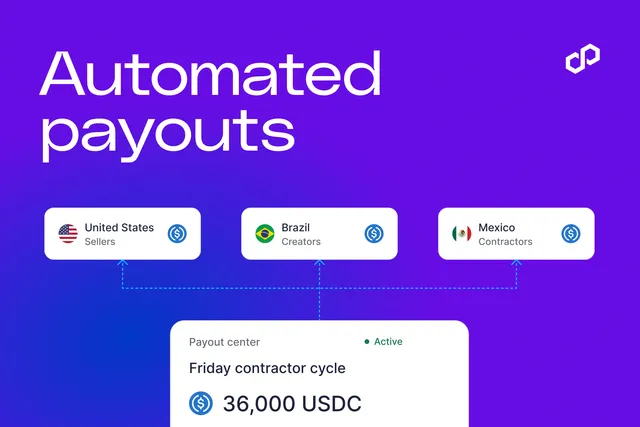
New to Polygon OMS: Automated stablecoin payout runs with rules your team sets
Polygon Open Money Stack now supports TRON
Meet Polygon at Money20/20 USA
Monerium, Frax and Capa connect euro payments to onchain FX markets on Polygon
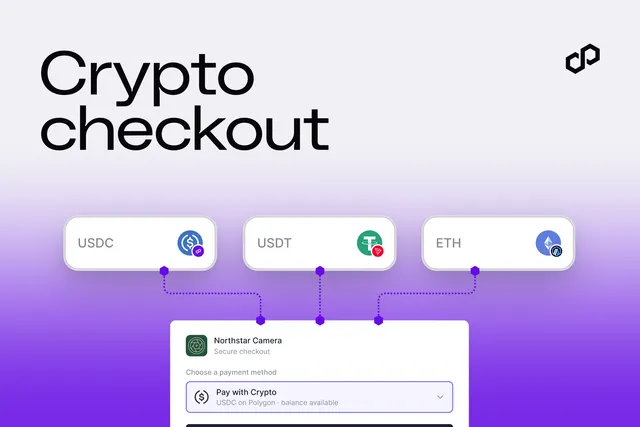
Introducing crypto checkout in Polygon Open Money Stack
Polygon passes $3 trillion in stablecoin transfer volume
Polygon Chain now supports 11 million payments per second
New to Polygon OMS: Recurring Stablecoin Subscriptions With One Customer Approval
Stable.com Adds Polygon for Direct-to-Bank Stablecoin Transfers