.B-cpLzEJ.png)
tl;dr:
- Giugliano ships faster transaction finality, better onchain gas fee transparency, and higher P2P throughput to Polygon Chain
- This is the third mainnet upgrade in four months, and each one pushes Polygon closer to behaving like payment infrastructure: reliable throughput, predictable fees, fast confirmations
The Giugliano hard fork is live on Polygon Chain mainnet, bringing shorter confirmation times for payments apps, easier-to-read gas fees, and a network that’s more resilient under load.
The first major change this upgrade brings is faster confirmation times. Testnet results show confirmation of settlement dropping ~2 seconds below the current mainnet average, speeding up finality that is already near-instant (6-7 seconds).
Faster finality means less time for customers of any payments app to wait for confirmation of settlement finality. For any product where money moves, that matters.
The second change is fee predictability. This upgrade brings parameters that govern the fee market onchain. Fee parameters are written directly into every block header, and a new RPC method lets you query them per block. If you are pricing transactions, quoting fees to users, or building any fee-sensitive product, you can now read the chain’s fee behavior instead of modeling it.
The third change is reliability under load. We increased the network’s capacity to propagate transactions during traffic spikes, so the chain performs consistently when demand is highest, exactly when it matters most.
Three upgrades in four months
Giugliano is the third Polygon Chain mainnet upgrade since January. The Dynamic Gas Target shipped with Lisovo on March 4. The 120MM gas limit expansion followed on March 23. Each one advances the same goal: making the Polygon network behave like payment infrastructure, where throughput is reliable, fees are predictable, and confirmations are fast enough to build settlement products on.
We make sure that each upgrade compounds network improvement: More gas capacity, smarter fee targeting, and now faster finality with onchain fee transparency. We’re continuing to innovate a chain where a fintech team, a payment gateway, or a merchant platform can operate with the same confidence they expect from traditional rails.
Under the hood
For teams that want the technical detail, here is what changed.
Faster finality (PIP-66). Block producers now announce block headers to peers approximately 44 milliseconds earlier in the propagation cycle. This reduces block arrival variance during validator rotations. Tighter propagation means validators build on the latest state more consistently, and confirmation times drop as a result. PIP-66 was originally scoped for the Bhilai hard fork, reverted for further review, and Giugliano ships the validated implementation.
Onchain fee parameters (PIP-83). We embedded the gas target and base fee change denominator (the two values that govern how EIP-1559 adjusts fees block to block) directly into every post-Giugliano block header. A new RPC method, bor_getBlockGasParams, returns these values per block. The existing eth_getBlockByNumber and eth_getBlockByHash methods also accept a borExtra: true parameter that surfaces the same data.
P2P throughput. We raised the transaction announcement queue 4x (from 4,096 to 16,384 entries) and the max transaction packet size 10x (from 100 KB to 1 MB). Both changes reduce propagation delays when the mempool is under heavy load.
Snap sync re-enabled. New nodes can sync to the chain tip faster. We disabled snap sync in prior releases for stability reasons and restored it here. Faster onboarding means a more resilient validator set.
Heimdall failover. Bor nodes now support HTTP, gRPC, and WebSocket failover paths to Heimdall (the consensus layer that coordinates validator checkpoints and state sync on the Polygon network). This improves node resilience during restarts or network disruptions.
What validators and node operators need to do
86 of 100 validators, representing 90% of staked weight, upgraded ahead of activation at block 85,268,500. All validators and node operators must upgrade to bor v2.7.0 (or erigon v3.5.0) before that block. Nodes running earlier versions will fork off the canonical chain.
Two CLI flag renames to note: –log-level is now –verbosity, and –rpc.batchlimit is now –rpc.batch-request-limit.
Polygon Open Money Stack now supports TRON
Meet Polygon at Money20/20 USA
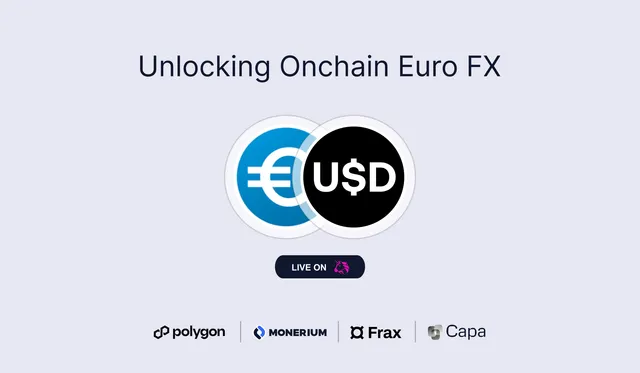
Monerium, Frax and Capa connect euro payments to onchain FX markets on Polygon
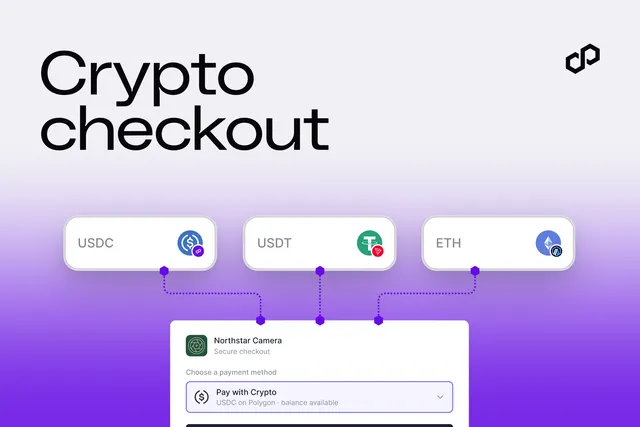
Introducing crypto checkout in Polygon Open Money Stack
Polygon passes $3 trillion in stablecoin transfer volume
Polygon Chain now supports 11 million payments per second
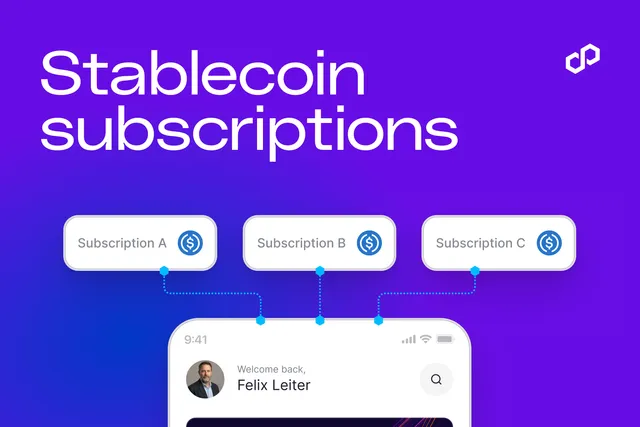
New to Polygon OMS: Recurring Stablecoin Subscriptions With One Customer Approval
Stable.com Adds Polygon for Direct-to-Bank Stablecoin Transfers
One API for Any Payment: Inside Polygon Open Money Stack