.Cfn0LZ0R.png)
A video call connects two continents in real time. A text message reaches anywhere on earth in seconds. A 4K stream plays on a phone in a moving train.
Send $500 across a border, though, and there’s no telling how long it’ll take, hours or days, passing through three intermediaries before it lands.
The global average cost of moving that money sits around 6%.
This is why every payments team is now looking at stablecoins.
Stablecoins move value the way the internet moves information: instantly, globally, around the clock. A cross-border payment that traditional rails route through an originating bank, one or more correspondent banks, a clearing house, and a receiving bank collapses into a single onchain transaction that settles in seconds. Each intermediary that used to hold the money in transit drops out of the path.
The Open Money Stack (OMS) is the one integration that delivers all of it: fiat to stablecoins, across chains, around the globe, settled as spendable money in seconds.
The appeal is obvious. The work behind it is less so.
“Accept crypto” is not the project
When a team first scopes stablecoin payments, the plan often sounds simple: accept crypto. The actual surface area is much larger.
Moving regulated money across borders means securing money transmitter licenses state by state and country by country. It means fiat on and off-ramp access, plus KYC, KYB, and AML checks for every jurisdiction you touch. It means a reconciliation engine that matches fiat and crypto flows, multi-chain routing across networks like Ethereum, Polygon, Solana, and Base, liquidity you either pre-fund or source on demand, real-time FX and netting, and acceptance of the tokens your customers actually hold, from USDC to USDT.
Accepting stablecoins, in other words, is an infrastructure decision, not a product decision.
Most programs get into trouble with vendor complexity.
Stitch four separate vendors together, each with its own rulebook and settlement cycle, and you usually get something that works in the demo and breaks in production: a payout corridor that cannot reconcile with its funding rails, a routing layer that quietly adds days of latency, a compliance gap that only surfaces in an audit. The tissue between the layers tears before the money lands.
That is the gap we set out to close at Polygon Labs with the Open Money Stack (OMS), our end-to-end stack for moving money globally. Before getting to how OMS handles it, here is what each layer actually requires.
The four layers of onchain payments
Every onchain payment runs on four layers, and privacy and compliance run through all of them:
- On and off ramps: fiat in, fiat out.
- Wallet infrastructure: where money lives.
- Crosschain interop: where money finds its path.
- Blockchain rails: where value finalizes.
Any one of these is buildable on its own. Making all four settle, route, and reconcile as a single system is the hard part. Here is what each layer requires, and what to evaluate before you commit.
Layer 1: On and off ramps
Most of the world’s money still sits in bank accounts and physical cash.
The ramps layer is where ACH, wire, SWIFT, and cash become stablecoins, and where stablecoins become spendable fiat again. Integrating the API is the easy part. The regulatory perimeter underneath it is harder.
Operating across jurisdictions means securing licenses, building banking relationships that take years, and standing up reporting and examination cycles, and the longer a team waits, the higher that bar climbs.
Three things matter most when you evaluate a ramp. Corridor coverage comes first: your customers transact globally, and if your provider cannot reach their corridors, you lose them. Fiat-side speed comes next, because customers expect instant, and a fiat leg that takes days makes the whole experience feel broken. Compliance architecture matters most of all: customers should verify once, with a single audit trail that protects them and earns their trust as they scale.
We connect OMS to fiat through Coinme (pending regulatory approval), a licensed money services business operating across 48 US states.
Coinme handles the KYC, AML, and reporting that regulated money movement requires, so the customer record gets established once at the on-ramp and travels with the payment.
That gives you one audit trail by architecture, not one assembled after the fact. A platform with stablecoin acceptance but no licensed fiat connectivity has half an on-ramp and no usable product.
Layer 2: Wallet infrastructure
The wallet is the account layer, where balances sit, users interact, and money becomes programmable.
In legacy stacks, payment logic lives in separate services.
Here, you can program money itself: escrow that releases on delivery, payroll that splits across currencies and time zones, treasury sweeps that move idle balances automatically. The wallet is where your product becomes somewhere money stays, not just somewhere it passes through.
Four questions decide this layer.
- Custody model: different customers need custodial or non-custodial, and your platform should support both.
- Built for movement: pre-authorized payments, virtual accounts, and yield on idle balances separate a payments wallet from one that only holds and sends.
- White-label UX: onboarding should feel like a bank app, through email, social login, or a passkey, with the blockchain never surfacing to the end user.
- Multi-chain support: one address across chains, so customers are not forced to manage a separate wallet per network.
Privacy is the question almost nobody has answered.
Every transfer on a public chain broadcasts three things: who sent it, who received it, and how much. Fine for buying coffee.
A dealbreaker for treasury, payroll, and vendor flows, which is exactly why those flows still sit offchain.
We built OMS wallets with these questions in mind. Passkeys instead of seed phrases, social login instead of browser extensions, scoped permissions instead of blanket approvals, 50+ chains behind one address, keys never exposed. Private payments via Hinkal let institutions send USDC and USDT on Polygon without publishing the sender, receiver, or amount, with zero-knowledge proofs checking every transfer and Know Your Transaction screening running before it clears.
Layer 3: Orchestration, the crosschain interop layer
At scale, payments cross chains.
So every transaction has to answer two questions: which path, and which path right now. Liquidity, fees, and coverage shift constantly. The cheapest route in February can be out of liquidity by June, so a bridge you hardcode this quarter is stale by the next.
Think of orchestration as Google Maps for money.
You enter a destination; you never plot the roads. You declare the outcome, send this amount, to this recipient, settling in this asset on this chain, and the system finds the best way to get it there. Which ramp, which stablecoin, which chain, which bridge, which off-ramp: all of it gets abstracted into one instruction.
The conversions between coins happen at the best available rate, fiat and crypto behave as one balance, and the whole route collapses into a single transaction to commit to.
New chains plug in without touching your integration, and the route only gets cheaper as more solvers compete to fill it.
What to evaluate here is the boundary. Ask whether the system aggregates bridges, decentralized exchanges, and solvers, or locks you into a single path it controls. Polygon’s intent-powered cross-chain payment orchestration layer does the former out of the box: more than $205M in cross-chain intent volume, 110,000+ transactions, and 19+ mainnet chains, free to integrate.
There is no separate approval transaction for USDC or USDT, because the routing layer signs against token permit approvals (permit and Permit2), and the customer record from the on-ramp rides along the whole way. Run KYC at the on-ramp and lose that context three chains later, and you have not solved anything, just moved the problem downstream.
Layer 4: Blockchain rails
Settlement is where a payment actually finalizes.
Traditional settlement passes money through intermediaries over days, with multiple parties holding it along the way. Onchain, settlement is the transaction itself: a single transfer, observable on the network, with no intermediary holding money in between.
No cutoff windows, no banking holidays, no FX market close.
And because settlement is onchain, business logic can run in the same atomic transaction, so settlement and execution become one step instead of two.
But not all chains are built for payments.
Five things separate the ones that are.
- Battle-tested at scale means billions in cumulative settlement and years of production uptime, not testnet demos.
- Enterprise-grade reliability means 99.99% uptime measured over years, with no weekends off and no maintenance windows.
- Deep stablecoin liquidity means native USDC and USDT depth to settle real volume from day one, not just token support.
- Fast and low-cost means sub-cent fees and two-second finality, because every basis point and every second compounds at scale.
- And privacy and permissioning matter for institutions that need a private or permissioned chain that still connects to public liquidity.
Polygon Chain settles in seconds, at an average fee around $0.002, with more than $2.6T settled cumulatively.
It settles the largest share of global USDC transfers of any network, around 54% in April 2026 (Allium).
For institutions that need their own rail, a bank issuing tokenized deposits or an asset manager standing up a stablecoin corridor, Polygon CDK lets them launch a private, permissioned chain that stays connected to global liquidity through Agglayer (the cross-chain aggregation layer that unifies liquidity and state across connected chains). A walled garden with no access to the liquidity and assets outside it is not a real option.
You didn’t build your own card network
No payments company builds its own card network. They connect to one. Stablecoin infrastructure should work the same way. Building all four layers in-house, then maintaining the tissue between them as bridges deprecate and regulations shift, is a multi-year program that competes for engineers with the product you actually sell.
This is why we built OMS as one integration instead of five. Licensed fiat ramps, wallet infrastructure, stablecoin orchestration, and settlement on Polygon Chain or your own private CDK chain, with compliance built in, all behind one API and one contract. The same single call moves money for cross-border payouts, payroll, remittances, and treasury, and it serves neobanks, fintechs, and payment service providers without forcing each one to assemble the stack from scratch.
The adoption is already real. Block added USDC payments to Cash App for its nearly 60 million users, with Polygon among the supported networks. The question is no longer whether onchain rails will run alongside traditional ones. It is whether the four layers you build today hold up as those rails carry more of the volume.
If you are scoping that work now, we would rather help you skip the five-vendor version. See what the Open Money Stack covers, or get early access.
Disclaimer
This post is for general informational purposes only. It is not financial, investment, legal, tax, or accounting advice, and nothing here is an offer or solicitation to buy or sell any asset. Consult your own advisors before making decisions about your business or payment infrastructure.
The Open Money Stack and the capabilities described here, including ramps, wallets, orchestration, and settlement, are under active development. Features, availability, performance, and integrations may change, and availability varies by jurisdiction. The planned acquisition of Coinme is subject to regulatory approval and other conditions and may not close on the terms or timeline described, or at all. References to Coinme reflect that pending arrangement.
Statements about future plans, products, and outcomes are forward-looking and subject to risks and uncertainties. Actual results may differ.
Performance figures, including settlement volume, transaction counts, fees, finality, and uptime, are historical or point-in-time and are not a guarantee of future results. Data attributed to third parties such as Allium reflects those sources as of the dates noted and has not been independently verified by Polygon Labs. Onchain network and fee data can vary by measurement method and time period.
Product and company names, including USDC, USDT, Cash App, Block, Solana, Base, Ethereum, Coinme, and Hinkal, are trademarks of their respective owners. Mention of a third party does not imply endorsement, partnership, or affiliation beyond what is stated.
Introducing Polygon CDK Besu: Launch a Hyperledger Besu chain connected to other chains and their liquidity
Polygon Open Money Stack is now a U.S.-regulated payments platform with completion of Coinme acquisition
New to Polygon OMS: Automated stablecoin payout runs with rules your team sets
Polygon Open Money Stack now supports TRON
Meet Polygon at Money20/20 USA
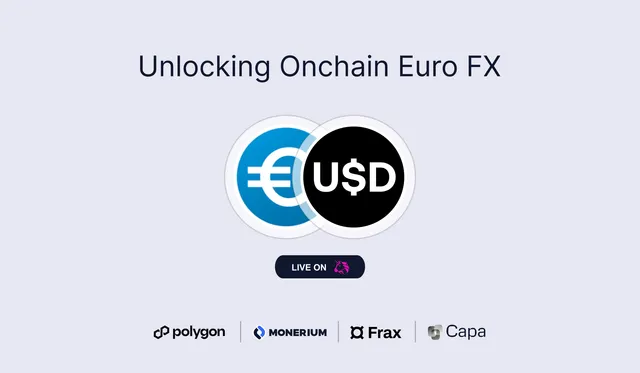
Monerium, Frax and Capa connect euro payments to onchain FX markets on Polygon
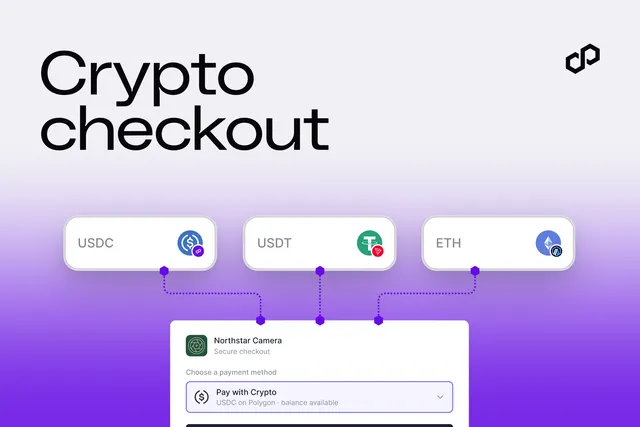
Introducing crypto checkout in Polygon Open Money Stack
Polygon passes $3 trillion in stablecoin transfer volume
Polygon Chain now supports 11 million payments per second