.B2U5j8Gv.png)
tl;dr
- Local stablecoins are being used for real payments to move money, settle invoices, and power remittances
- This activity is concentrating on Polygon, which has processed $11.1B+ in non-USD stablecoin volume
- Over 43% of all non-USD stablecoin transfers happen here
- Global money movement is forming around local currencies
Local-currency stablecoins are starting to behave like real payment instruments: moving money, settling invoices, and bridging economic zones that rarely speak to each other.
And increasingly, this activity is concentrating on Polygon.
Polygon has now surpassed $11.1B in lifetime transfer volume for non-USD stablecoins, representing more than 43% of all non-USD stablecoin transfers across major blockchains.
Scale matters, but an emerging pattern matters more: global liquidity is forming around local currencies. Polygon is where these markets are finding each other. This is what it looks like when blockchain rails start powering everyday payments across borders and currencies.
A global rail for local non-USD currencies
USD stablecoins still dominate the global crypto market. In many places, they serve essential purposes for protecting savings and navigating inflation.
But beneath that dominance, a different trend is emerging: people and businesses alike are increasingly using currency-specific stablecoins to move value within and across markets without being routed through USD stables.
On Polygon, this shift is visible in real corridors with real traction:
- AUDF (AUD-backed): $2.46B+ lifetime volume
- XSGD (SGD-backed): $2.24B+
- COPM (COP-backed): $1.45B+
- BRZ (BRL-backed): $1.31B+
- BRLA (BRL-backed): $779M
- BRL1 (BRL-backed): $501M
- EURS, EURe (EU-backed): $840M+ combined
- MXNB by Bitso, MXNe by Etherfuse (MXN-backed): $14M+ and growing in one of the world’s busiest remittance corridors
These volumes show payments, remittances, merchant settlement, and intra-regional commerce happening near-instaneously on the same public infrastructure.
Polygon is rapidly becoming the go-to global Local Payment Method (LPM): a network where local currencies are liquid, discoverable, and interoperable with the rest of the world.
A quiet change reshaping global payments
For fintechs, banks, and payment companies, the emergence of local-currency liquidity onchain solves long-standing pain points that legacy rails can’t easily address.
1. Global access to local liquidity
Startups and regional financial institutions can tap into global demand without building bespoke integrations for each market. If liquidity exists in BRL, SGD, MXN, or EUR on Polygon, builders can reach it instantly, and users can transact in a currency they already use.
2. Local markets gain exposure to global networks
Instead of routing everything through USD rails, value can move between local currencies directly. A supplier in São Paulo can receive BRL from an international buyer without conversion. A worker in Singapore can send SGD abroad without watching fees eat into earnings.
3. FX becomes programmable
Moving between currencies becomes a matter of smart contract execution, rather than correspondent banking timelines. The spreads, delays, and reconciliation collapses into near-instant settlement.
4. A more resilient global system
Institutions like the IMF have raised the risk of rapid digital dollarization. Local-currency stablecoins offer an alternative path: digital money that respects monetary sovereignty while still participating in global commerce.
Polygon’s growing share of regional stablecoin activity shows this model is starting to take shape.
None of this requires diminishing USD stablecoins. Instead, it expands the universe of what’s possible alongside them.
The new geographies of onchain liquidity
Liquidity follows usability.
On Polygon, stablecoin transactions cost around a cent and settle in seconds. That alone would make it attractive. But the behavior seen in-market points to something broader: a preference for predictability and performance.
Non-USD issuers and users choose Polygon because:
- fees stay negligible even at scale
- block production is stable and finality is fast
- the ecosystem is already full of payments-driven applications
- liquidity tends to attract more liquidity
Regional corridors that were historically siloed, like LATAM, Southeast Asia, Europe, Australia, and others, now operate on shared infrastructure without needing shared intermediaries.
This is how a global payment network emerges: organically, from the behavior of users who need better options.
Laying the technical foundation for the future of money movement
The rise of local-currency payments on Polygon didn’t happen in a vacuum.
It sits atop a series of upgrades that made the network faster, more reliable, and more aligned with the needs of the payments industry.
Recent architecture improvements have:
- increased throughput by 33%
- eliminated reorg risk for stable, predictable settlement
- reduced finality to near-instant
- raised gas limits for higher-volume activity
- introduced adjustable blocktimes, enabling future speed increases without hardforks
The result is infrastructure designed for high-frequency, high-reliability financial flows, from consumer payments to B2B settlement.
Momentum brings what’s up next
The momentum is real: deepening liquidity in major corridors, new issuers entering the ecosystem, and fintechs building or integrating directly on Polygon to serve users in their native currencies.
What this points to is bigger than any single milestone.
Polygon is building the vanguard of a global, onchain money movement network, one where local currencies move seamlessly across borders, liquidity is open rather than locked inside regional silos, and enterprises and institutions get served up global audiences without stitching together dozens of payment integrations.
Every upcoming innovation and upgrade brings Polygon a step closer to enabling the next wave of payments and open finance. For everyone.
Introducing Polygon CDK Besu: Launch a Hyperledger Besu chain connected to other chains and their liquidity
Polygon Open Money Stack is now a U.S.-regulated payments platform with completion of Coinme acquisition
New to Polygon OMS: Automated stablecoin payout runs with rules your team sets
Polygon Open Money Stack now supports TRON
Meet Polygon at Money20/20 USA
Monerium, Frax and Capa connect euro payments to onchain FX markets on Polygon
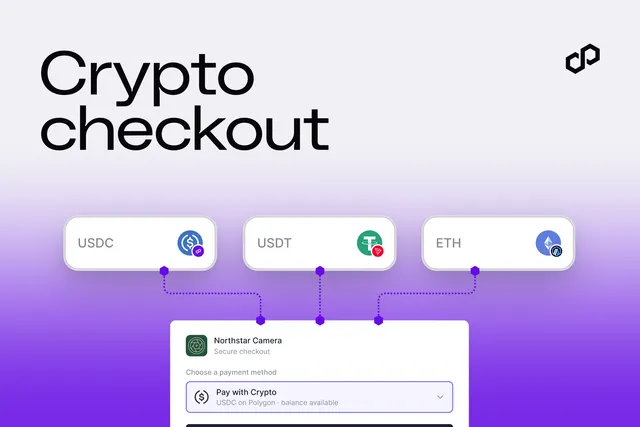
Introducing crypto checkout in Polygon Open Money Stack
Polygon passes $3 trillion in stablecoin transfer volume
Polygon Chain now supports 11 million payments per second