
DeCard’s approach to turning stablecoins into something people can actually use at point of sale is straightforward: change nothing about the consumer or merchant workflow, but use blockchain wherever it adds leverage.
In this case, that’s as a settlement layer in the background.
The reality is stablecoins execute on the hard part by moving value quickly and predictably. But friction comes in the last mile: how do you turn an onchain dollar into something people that’s actually usable in the real world?
This is a case study in how stablecoins become real, tangible digital money, and why Polygon is a practical rail for making that transition work at scale.
The problem
Global money movement was built for a different century. Right now, payments merchants face a number of barriers:
- Users want 24/7 portability, especially across borders and banking hours
- Merchants want reliability and familiar settlement without breaking systems
- Platforms and PSPs want margin and control, rather than corridor-by-corridor integrations and complex fees
Stablecoins solve a major piece of this equation: they move dollars on open rails without correspondent banking delays.
But for most customers, this remains clunky. Users can get stablecoins, but spending them on a hot meal at a restaurant or a local convenience store down the street is next to impossible.
The challenge becomes: how do you make stablecoin spending feel as familiar as a normal payment, while benefiting from faster, cheaper settlement under the hood?
The DeCard solution
DeCard is a card product designed around a simple premise: let people spend stablecoins in the real world, without forcing merchants or consumers to behave differently. DeCard helps make Polygon a settlement layer for retail-scale stablecoin payments, so users can pay with stablecoins like USDC and USDT at everyday merchant point-of-sale locations.
With DeCard, users and merchants can tap into account features designed for day-to-day control and operational clarity: an account layer (D‑Vault) intended to streamline reconciliation, payment tracking, and repayments, all in a single system.
On the infrastructure side, Polygon provides the settlement foundation that makes this usable in practice: with enterprise-grade throughput and low-fees, built to support payments and stablecoin flows.
How it works in practice
From an implementation perspective, the hard parts of payments are ironed out:
- Consumers pay using stablecoins like USDC and USDT in a flow that is designed to feel like traditional card or digital wallet transactions.
- Merchants do not manage wallets, private keys, or onchain operations. The system is designed to integrate with existing point-of-sale workflows so merchants can accept payments without learning blockchain.
- Polygon operates as the settlement layer in the background, helping enable a payment flow that is faster and more efficient than legacy models, while preserving a familiar merchant experience.
Stablecoins work when the experience of spending them feels like something merchants and customers already know.
Results
DeCard’s integration targets a measurable outcome that matters to any payments leader: distribution. DeCard payments are accepted at more than 150 million merchants globally, positioning stablecoins as a practical payment method for real-world commerce at scale.
That merchant reach reframes stablecoins from a niche balance type into something closer to a universal settlement instrument:
- For fintech product teams: it reduces the gap between holding stablecoins and using them day to day.
- For merchants and marketplaces: it avoids asking them to adopt new rails or take on blockchain operations.
- For PSPs and platform operators: it shows a model where stablecoins can improve settlement economics without rewriting merchant acceptance.
Keep acceptance familiar, keep the value layer modern.
DeCard’s Lunar New Year campaign: Building new customer loyalty
DeCard’s Lunar New Year campaign, which wrapped up at the end of February, onboarded new users with a better way to pay. But the real push was promoting an onchain loyalty points for payments usage that can be studied by other payments teams.
The campaign data show an increase in adoption:
- DeCard saw 10% increase of users leveraging DeCard on Polygon during the campaign
- More than 74500 DePoints, an ongoing rewards layer tied to usage, were distributed to new users
DeCard’s DePoints is a masterclass in turning onchain activity into loyalty points that can be redeemed for cash credit, travel rewards, and more.
Combining blockchain verifiability with loyalty points, DeCard is pioneering a new approach to making payments easy and convenient, with lower costs and faster settlement than traditional rails.
What payment teams can take from this case study
If you are building stablecoin-enabled payments, the DeCard pattern is worth studying as a way to abstract the friction generally associated with digital asset payments and turn the power of stablecoins over to users and merchants alike. Their loyalty program and targeted campaign show real-world numbers that actually lead to adoption.
Key takeaways:
- Loyalty program can drive conversion. With a campaign that distributed over 74.5k loyalty points, and saw a 10% leap in adoption, DeCard demonstrates how to marry blockchain and loyalty
- Make merchant acceptance invisible. Merchants should not be asked to run blockchain infrastructure to accept value
- Use stablecoins as settlement, not as UX. Customers want a familiar experience with better economics and faster movement behind the scenes
- Treat activation as a product problem. Incentives work best when they drive one simple onchain action that maps to long-term retention
Polygon’s role in this stack is simple: provide settlement infrastructure that is reliable enough for payment-scale flows, so products like DeCard can focus on distribution, user experience, and compliance-grade operations.
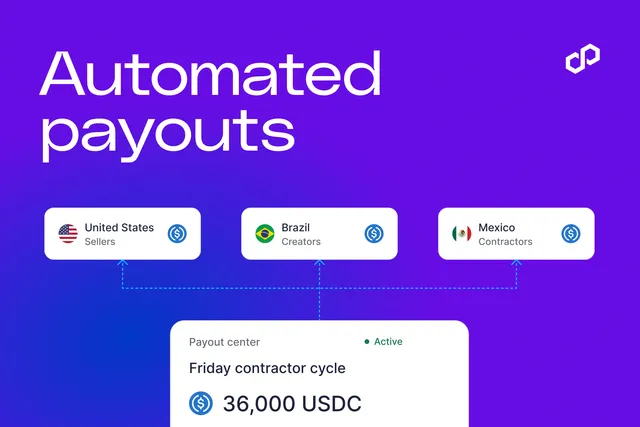
New to Polygon OMS: Automated stablecoin payout runs with rules your team sets

Polygon Open Money Stack now supports TRON

Meet Polygon at Money20/20 USA

Monerium, Frax and Capa connect euro payments to onchain FX markets on Polygon
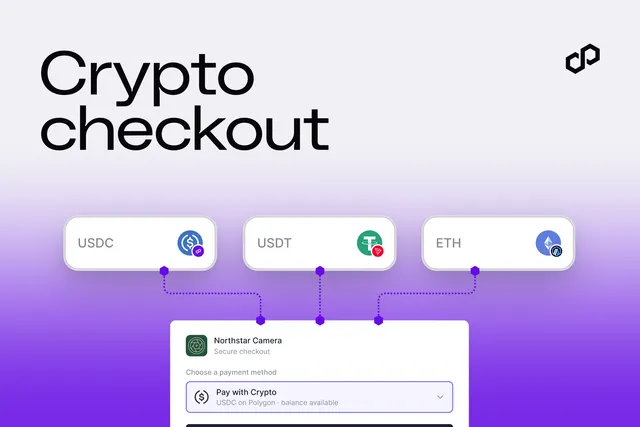
Introducing crypto checkout in Polygon Open Money Stack
Polygon passes $3 trillion in stablecoin transfer volume
Polygon Chain now supports 11 million payments per second
New to Polygon OMS: Recurring Stablecoin Subscriptions With One Customer Approval
Stable.com Adds Polygon for Direct-to-Bank Stablecoin Transfers