tl;dr
- The Open Money Stack is a vertically integrated system that connects fiat access, wallets, orchestration, and onchain settlement, all in a single API
- Each layer solves a structural failure in global payments that forces institutions to assemble fragile vendor stacks
- Integrate once at the top
- Move money from bank account to blockchain settlement and back, with predictable cost and reliability
Everyone agrees on the destination.
Money should move reliably, at low cost. That requires predictable settlement without surprise deductions or delays.
But the architecture to make this possible remains a place of wide-open design.
Most institutions building stablecoin payment flows today take the same path: choose a compliance vendor, a wallet provider, a bridge, an off-ramp, and a chain. When they have what they like, they stitch these solutions together. Each integration requires independent maintenance.
In practice, this works, right up to the moment that volume grows or something goes wrong.
Then teams must debug an outage that lives somewhere between three vendors and a dozen systems.
The Open Money Stack approaches the problem from a different architectural angle. It is vertically integrated by design, a system where each layer is built to hand off cleanly to the next. And it’s composable. If an institution only wants to utilize one aspect of the Open Money Stack (say, Polygon Chain), they can pick and choose.
Easy integration and maximum choice: that’s the point.
Unrolling the stack
The OMS will make integrating stablecoin payments into any existing financial flow easy and convenient: Everything in a single API.
But behind the scenes, there’s a software stack that makes integration possible. While other companies have built the top-of-the-stack first, starting with wallet infrastructure, APIs, orchestration and on/off-ramps, Polygon began with the bottom (and arguably the most difficult) aspect of the stack, first: building a performant blockchain.
Everything in the OMS is built on the foundation of Polygon Chain, which has already processed more than $2.3T in stablecoin volume, with major integrations by Revolut, Stripe, Flutterwave, and more.
Below, we unroll each major component of the stack.
Wallet Infrastructure
Polygon’s Open Money Stack provides enterprise-grade smart contract wallets that remove blockchain friction while preserving control. This means:
- Passkeys instead of seed phrases
- Social login instead of browser extensions
- Smart Sessions with scoped permissions instead of blanket approvals
For enterprises, this means role-based access, policy controls, recovery mechanisms, and auditability without defaulting to custodial risk.
For consumers, it means onboarding that feels familiar. A single wallet address per user. Consistent across applications and chains.
Embedded wallets demonstrate materially higher transaction conversion rates than traditional self-custody flows.
Institutions and enterprises can also decide whether they want to go with a custodial or non-custodial wallet option, both of which are supported in Polygon’s OMS.
How wallets are architected helps determine what a payments flow looks like.
Regulated Fiat Access
Money starts offchain.
Coinme, which is being acquired by Polygon Labs (subject to regulatory approval), provides the licensed on- and off-ramp infrastructure connecting bank accounts, debit cards, and physical cash to stablecoins. It operates as a licensed money services business across 48 U.S. states, with embedded KYC, AML, and reporting.
This is the layer many payment teams underestimate.
Getting money into stablecoins takes more than API calls. It requires bank relationships, licensing, compliance infrastructure, and distribution. Coinme has spent nearly a decade building its business, including more than 50,000 physical retail locations and over $1 billion processed.
Without regulated fiat access, stablecoin payments remain a closed loop. Fast onchain. Disconnected from the real financial system.
Cross-Chain Orchestration
Liquidity does not live on a single chain. Neither should businesses.
The OMS will manage interoperability across hundreds of chains, with routing, bridging, and execution happening behind the scenes.
This will be through Agglayer, unifying all of crypto’s liquidity, and Trails, a 1-click cross-chain intents protocol.
From the perspective of a payments team, it really doesn’t matter. What matters is execution. A transaction goes in. Funds arrive where they need to go.
As stablecoin usage grows, the number of networks involved increases. A production system cannot require manual corridor configuration for every counterparty.
Trails abstracts that complexity. And it’s already live.
Settlement Infrastructure
All of this depends on reliable settlement: Polygon Chain.
Polygon settles transactions in less than two seconds, with fees that average $0.002, even under high demand. The network has processed over $2.3 trillion in stablecoin volume.
Recent upgrades materially increased throughput by 83% and reduced finality time, bringing the network to 2600 tps with near-instant settlement, and only improving.
Settlement infrastructure should be boring.
Why Integration Changes the Economics
Historically, of these layers exists independently:
- Fiat access from one vendor
- Wallet infrastructure from another
- A bridge from a third
- Settlement from whichever chain you prefer
But every seam adds operational surface area. The Open Money Stack reduces that surface area.
With the Open Money Stack:
- Funds enter through regulated fiat rails
- They settle into a smart contract wallet instantly
- Orchestration across borders and networks
- Polygon finalizes the transfer in seconds
- The recipient off-ramps into local currency through compliant infrastructure
Importantly, integration does not eliminate flexibility. Institutions can still extend, customize, and interoperate. That means picking and choosing what they need for their payments flows. But they are not required to assemble foundational plumbing themselves.
Integrate once. Move money end to end. Adapt over time.
Get early access
The shift from correspondent banking to always-on settlement networks is structural. The Open Money Stack is designed to make stablecoins production-grade for enterprises that care about reliability, compliance, and economics.
Early access is now open.
If you are evaluating stablecoin payment infrastructure for real-world deployment, reach out to our enterprise team → Get early access
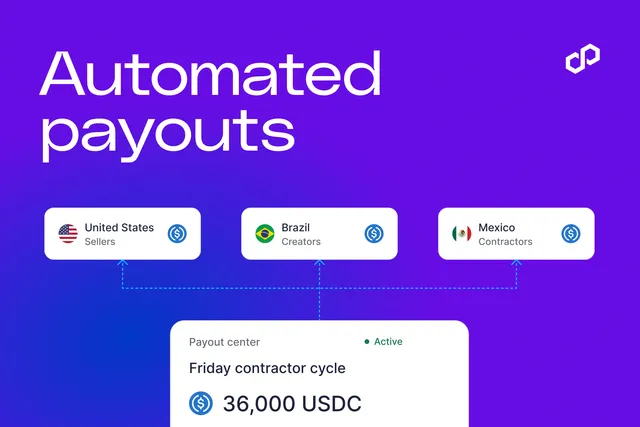
New to Polygon OMS: Automated stablecoin payout runs with rules your team sets
Polygon Open Money Stack now supports TRON
Meet Polygon at Money20/20 USA
Monerium, Frax and Capa connect euro payments to onchain FX markets on Polygon
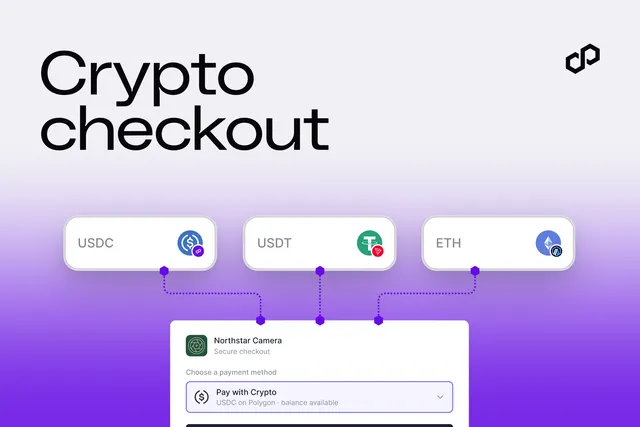
Introducing crypto checkout in Polygon Open Money Stack
Polygon passes $3 trillion in stablecoin transfer volume
Polygon Chain now supports 11 million payments per second
New to Polygon OMS: Recurring Stablecoin Subscriptions With One Customer Approval
Stable.com Adds Polygon for Direct-to-Bank Stablecoin Transfers