Digital assets are no longer an experiment.
Stablecoins settled over $33 trillion in volume in 2025. Tokenized treasuries are approaching multi-billion dollar AUM. And the infrastructure connecting onchain rails to everyday commerce is finally catching up.
Today, Mastercard is launching the Mastercard Crypto Partner Program, a new global initiative bringing together more than 85 companies across crypto-native builders, payments providers, and financial institutions to collaborate as onchain payments move from experimentation to real-world deployment.
Polygon is part of this ecosystem.
Institutions want onchain speed with offchain trust
Every institution evaluating stablecoins runs into the same problem.
Onchain settlement is near-instant, low-cost, and global. But connecting stablecoin rails to the trust infrastructure that the world already relies on is where things break down. Acceptance networks, compliance frameworks, and global distribution don’t materialize overnight.
The Mastercard Crypto Partner Program is designed to close that gap.
The program connects digital asset companies to Mastercard’s payments, settlement, and money-movement infrastructure through a structured partner framework. The focus is on responsible real-world deployment. Not replacing existing systems, but connecting them.
For Polygon, this aligns with the thesis behind the Open Money Stack: a vertically integrated framework for stablecoin-based payments and global money movement.
Unveiled earlier this year, the Open Money Stack is Polygon’s framework for end-to-end stablecoin payments. It starts at the settlement layer: Polygon Chain, where more than $2.4 trillion in stablecoin volume has settled. With enterprise-grade wallets, cross-chain orchestration, and regulated fiat on/off-ramps, money can enter and exit onchain rails without friction.
Polygon already processes more than $7 billion in stablecoin volume in a single month and is the #1 chain for USDC transfer volume. Being part of an ecosystem that connects that onchain volume to Mastercard’s global network is a natural extension of the Open Money Stack’s purpose: money should move as freely as information does on the internet.
Build once, reach everywhere
The Crypto Partner Program is built around collaboration.
Program participants engage with Mastercard teams on the design and direction of future products and services. Together, they’re working to integrate the speed and programmability of digital assets with established card rails and global commerce flows.
The focus is practical: translating technical innovation into scalable, compliant use cases that work across markets.
For blockchain networks like Polygon Chain, the program creates a direct path to collaborate on real-world payment and settlement use cases within Mastercard’s global infrastructure.
From production metrics to global rails
Polygon’s role in global payments is no longer theoretical.
Revolut, Europe’s largest neobank with 65 million users, selected Polygon as its go-to stack for stablecoin transfers and payments. Stripe runs massive crypto volume through Polygon. Calastone, the world’s largest global funds network processing £250 billion in monthly transactions, launched its tokenized distribution platform on Polygon. Shift4, a global payments processor handling billions of transactions annually, launched stablecoin settlement on Polygon for hundreds of thousands of merchants worldwide.
These production deployments process real money for real institutions, demonstrating product market fit.
The Mastercard Crypto Partner Program adds another dimension to all of this. It creates a structured path for the kind of collaboration that turns onchain infrastructure into globally accepted payment rails.
The all-in-one Open Money Stack is coming together
The program is designed as an ongoing collaboration. As digital payments evolve, the partners in this ecosystem will work together on new capabilities, new use cases, and new market models.
For Polygon, the Mastercard Crypto Partner Program is one piece of a larger picture that’s been assembling quickly.
Polygon Labs acquired Sequence and Coinme to build regulated middleware for stablecoin payments and launched the Open Money Stack, bringing together an all-in-one solution for every layer of the payments journey.
Money should move as freely as information does on the internet. Getting there means onchain infrastructure and global payment networks stop operating in parallel and start operating together.
We’re pleased to be part of the ecosystem supporting Mastercard’s Crypto Partner Program, focused on connecting digital asset innovation with trusted global payments infrastructure.
Introducing Polygon CDK Besu: Launch a Hyperledger Besu chain connected to other chains and their liquidity
Polygon Open Money Stack is now a U.S.-regulated payments platform with completion of Coinme acquisition
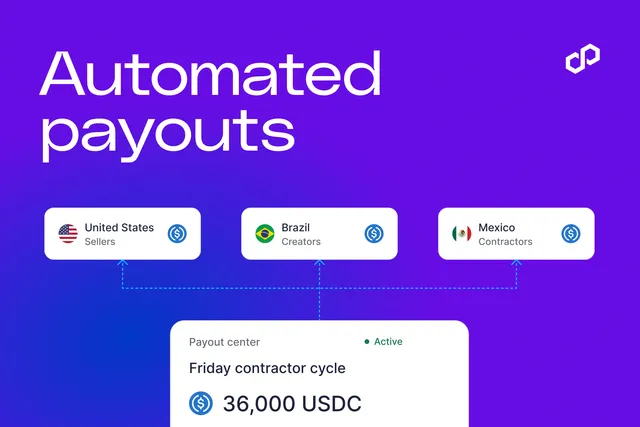
New to Polygon OMS: Automated stablecoin payout runs with rules your team sets
Polygon Open Money Stack now supports TRON
Meet Polygon at Money20/20 USA
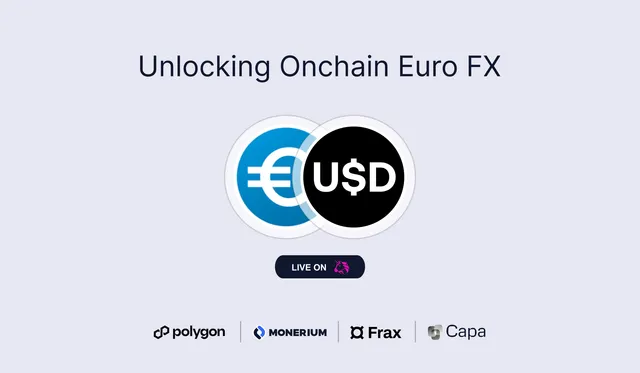
Monerium, Frax and Capa connect euro payments to onchain FX markets on Polygon
Introducing crypto checkout in Polygon Open Money Stack
Polygon passes $3 trillion in stablecoin transfer volume
Polygon Chain now supports 11 million payments per second