Every app building on a blockchain eventually runs into the same problem: A user submits a transaction, but before it confirms, a bot sees it in the public mempool, jumps in front of it, and extracts value.
The user gets a worse price, a failed transaction, or an unexpected revert. The app gets a support ticket.
This is called MEV (maximal extractable value) and many treat this as an unavoidable cost of doing business on public blockchains.
Today, Polygon is launching Private Mempool: a private transaction submission endpoint that protects every transaction from frontrunning and sandwich attacks.
To tap into this benefit, all you have to do is swap in one RPC URL. That’s it.
The problem is structural
Public mempools were designed for a world where block production was distributed across thousands of validators. Broadcasting transactions widely made sense for decentralization. But it also meant that every pending transaction was visible to anyone watching, including sophisticated bots built specifically to exploit that visibility.
Flashbots Protect processes roughly 3 million transactions per month on Ethereum, or about seven percent of total volume. So the demand for protection is already huge.
Builders on every major chain have responded: Flashbots on Ethereum, Jito on Solana, Timeboost on Arbitrum, Shutter on Gnosis.
MEV protection is now table stakes.
Polygon’s approach is structurally cleaner than most of them.
How private mempool works
Most MEV protection solutions make a tradeoff: accept some centralization to gain routing control, or preserve decentralization and live with the exposure. Polygon’s architecture avoids that tradeoff by design.
Under VeBloP, which makes the network light and payments-ready, block production is handled by a known set of Polygon-operated producers. But the validator set governs who holds that role. Validators can vote to replace any producer at any time. Private mempool routing is built on top of that structure: transactions submitted through the Private Mempool endpoint go directly to elected producers, bypassing the public mempool entirely. Arbitrage bots have no visibility into pending transactions and therefore no opportunity to act on them. Transactions arrive exactly as submitted and are included in a block without interference.
This is an architectural property with a decentralization guarantee, enforced by the validator set.
For enterprise teams, consider straightforward operational considerations: The endpoint handles transaction submission only, all read operations continue through existing RPC providers. No infrastructure change, no new dependency to manage, and no exposure to unknown MEV vectors.
With a single RPC URL replacement, you can integrate today. For teams already operating on Polygon, that means protection in minutes.
What this means for existing Polygon apps
For apps already building on Polygon, this is a direct solution to an active problem.
Polymarket users have been subject to frontrunning on authorization revocations. Private Mempool protects transaction ordering so that submitted transactions can’t be intercepted and reordered before confirmation. Courtyard, which needs reliable transaction inclusion, benefits from the direct-to-producer path, which reduces confirmation delays.
The broader benefit applies to any app where transaction ordering matters: trading, payments, auctions, any interaction where a predictable outcome is the point. Protected transactions don’t get front-run into failure or trigger unexpected reverts. Execution integrity means the transaction that gets included is the transaction that was submitted.
What this means for enterprises evaluating Polygon
If you’re evaluating blockchain infrastructure for payments, settlement, or tokenized asset operations, MEV protection is a line item on the checklist. It belongs there alongside finality guarantees, throughput, and fee stability.
An enterprise handling cross-border remittances, payroll, or treasury operations needs to know that submitted transactions arrive as submitted. Any extraction layer between submission and finality introduces unpredictability. That’s not acceptable at scale.
Polygon’s payments chain spec has been building toward this:
- Instant finality: Live
- Lightweight nodes: Live
- 2560+ transactions per second: Live
- $3.7B+ stablecoin liquidity: Live
- Plus: Major integrations by Stripe, Revolut, Apollo, Flutterwave, and Reliance Jio, among others.
Private Mempool provides MEV protection, now also live. Confidential payments, dedicated blockspace, and stable fees come next.
When a chain builds to spec rather than announces one, you get Polygon.
Access and pricing
Private Mempool launches with a free tier, open to all Polygon apps. Paid enterprise tiers are available with higher throughput, rate limits, SLAs, and redundancy for production workloads. API key access gates the paid tiers. Payment options include stablecoin and POL.
The free baseline is intentional. The goal is broad adoption first, with enterprise-grade reliability available for teams that need it.
Getting started
Swap your transaction submission RPC endpoint to Polygon’s Private Mempool. Read operations continue through your existing providers. No other changes required.
Private Mempool is live now.
If you’re an enterprise or fintech evaluating Polygon as a payments chain, reach out to learn more about private mempool today.
Introducing Polygon CDK Besu: Launch a Hyperledger Besu chain connected to other chains and their liquidity

Polygon Open Money Stack is now a U.S.-regulated payments platform with completion of Coinme acquisition
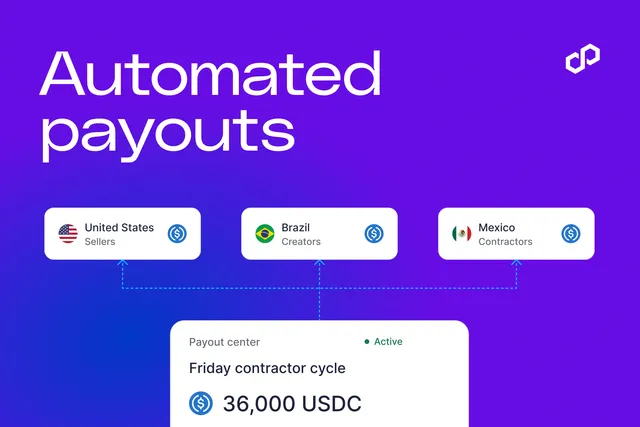
New to Polygon OMS: Automated stablecoin payout runs with rules your team sets
Polygon Open Money Stack now supports TRON
Meet Polygon at Money20/20 USA
Monerium, Frax and Capa connect euro payments to onchain FX markets on Polygon
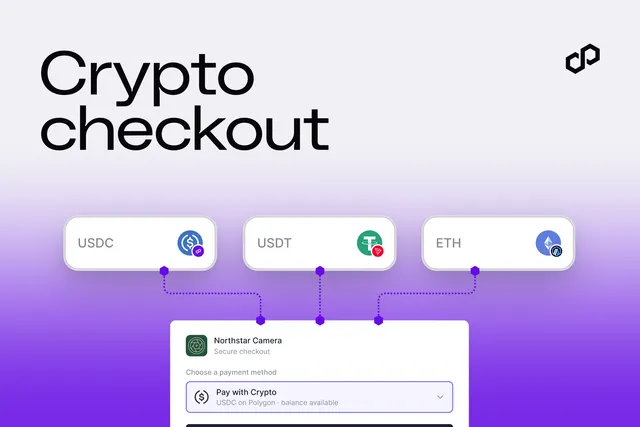
Introducing crypto checkout in Polygon Open Money Stack
Polygon passes $3 trillion in stablecoin transfer volume
Polygon Chain now supports 11 million payments per second