
This series brings the views of top DeFi applications integrated on Polygon. We had time to sit down with the DFYN team to learn more.
Please tell us more about your project and your team.
Dfyn is a fully decentralized multi-chain protocol that relies on automated market makers (AMMs) to enable token swaps. You can think of it as a multi-chain version of Uniswap. On low-gas networks like Polygon, Dfyn eliminates gas fees altogether by integrating meta transactions. Currently available on Polygon and OKExChain, Dfyn will eventually deploy AMM nodes on multiple layer 1 and layer 2 blockchains. However, what makes us truly multichain is the fact that these nodes will be able to communicate with one another via the cross-chain bridging infrastructure being built out by Router Protocol. This will allow users will to use the Dfyn node deployed on a specific chain to trade on Dfyn nodes deployed on other blockchains.
Our team has been continuously building in crypto for the better part of the last decade now. We initially started off with building a bitcoin side chain for trading tokenized pre-IPO securities. We then moved onto building a stablecoin DEX, way back in 2018, subsequently, we built a leading crypto derivatives platform and a low latency algorithmic trading platform.
Where are we in the hype cycle for DeFi?
We are just getting started. The innovators are here already but the mass users are yet to start using DeFi for fund management or earning yields. Just look around and see how many people you know are actually leveraging DeFi protocols who are not full-time in crypto? Very few. We are just getting started and it feels like the 1990s of the software industry. Programmable money is one of the biggest innovations of this century and most just don’t realize the power of it yet. To summarise: We are just getting started.
Who are some thought leaders you follow in the space?
Few of the names from the top of the mind are Vitalik Buterin, Andreas Antonopoulos, Camila Russo, Balaji Srinivasan, and of course our very own Sandeep Nailwal.
What are some best ways for newbies to get up to speed in the space?
As fascinating as this space is, there is no doubt that learning about the crypto space is still complicated. It is very important to understand the basics first. Start with Bitcoin, the first mover. Satoshi’s original whitepaper is a good starting point. To keep yourself up-to-date, you can read news articles on sites like CoinDesk or TheBlockCrypto. You can also check out YouTube videos on various blockchain concepts. Once you get familiar with the concepts, Crypto Twitter is a fascinating place to keep yourself updated.
What is one thing that most people don’t know about your project?
Most people don’t know that we were actually the first DEX on Polygon. Also, to the best of our knowledge, we were the first DEX in the world to offer gasless transactions.
Why did you choose to build on Polygon?
In the past year, we have witnessed a massive rise in gas costs and network congestion in blockchains like Ethereum. Such issues have made the Ethereum network unattractive for everyday users. Layer 2 blockchains offer a much needed reprieve from the high gas costs and transaction processing times placing them in a much better position when it comes to the long term future of the DeFi section. Therefore, it was always our aim to start our journey with a Layer 2 blockchain. Now, the reason we chose Polygon in particular is that its gas fees are a fraction of what users face on Ethereum or even BSC. Additionally, Polygon’s developer ecosystem is growing rapidly, which is a huge plus for us when starting a multi-chain project like Dfyn. We also received the first grant from Polygon and the Polygon team offered us immense support throughout our journey.
About Polygon
Polygon is the first well-structured, easy-to-use platform for Ethereum scaling and infrastructure development. Its core component is Polygon SDK, a modular, flexible framework that supports building and connecting Secured Chains like Plasma, Optimistic Rollups, zkRollups, Validium, etc, and Standalone Chains like Polygon POS, designed for flexibility and independence. Polygon’s scaling solutions have seen widespread adoption with 500+ Dapps, ~567M+ txns, and ~6M+ daily txns.
If you’re an Ethereum Developer, you’re already a Polygon developer! Leverage Polygon’s fast and secure txns for your Dapp, get started here.
Website | Twitter | Ecosystem Twitter | Studios Twitter | Reddit | Discord | Telegram | Instagram
Custodial vs. Non-Custodial Wallets: Which One Should Your Platform Build?
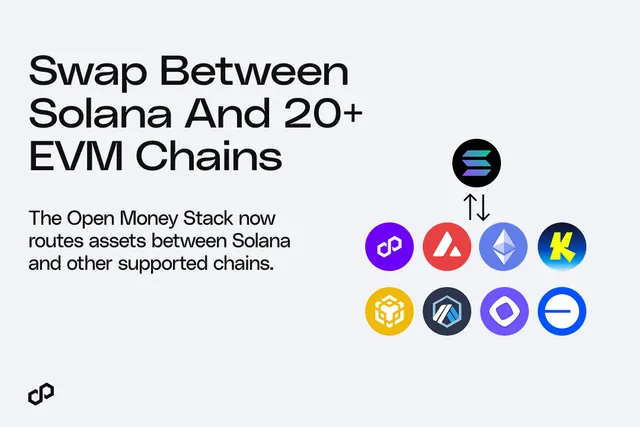
Move Money Between Solana and Polygon, Ethereum, Base + more EVM Chains with Polygon OMS
.CXtdIGFA_Z2ODqj.webp)
Ithaca Upgrade Is Live: Payments on Polygon Chain Are More Reliable Than Ever

Kansai Electric Power's Rewards Arm Turns Loyalty Points Into Real Stablecoin Payments on Polygon Chain
Mento Protocol Launches on Polygon for Local Currency Stablecoin Payments
PayPal USD Lands on Polygon Chain, Enabling Regulated Onchain Dollars to Move Across Borders in One Integration
Credible Races Past $152M Total Payments Volume on Polygon
We Built the Best Blockchain for Payments. Now We’re Bringing the World’s Enterprises Onchain
Uquid Integrates Polygon's Open Money Stack for 1-Click Crypto Checkout Across 178M+ Products
.Cfn0LZ0R_2iwkGz.webp)