.da2Uagca.png)
💼 Enterprise takeaway: For business development and sales teams evaluating stablecoin payment infrastructure, the data stand out in Paxos’s integration on Polygon:
- Scale: 50x volume growth in 12 months
- Cost: Less than $700 in total gas fees on $1.3B in volume, compared to an estimated $32.5M in card interchange (with 1.5–3.5% transaction fee on card networks), a 99.998% cost reduction.
- Speed: Near real-time settlement, 24/7, with no settlement windows or float risk
- High volume, everyday transactions: With more than 82k transactions across $1.3B in volume, the average transaction on Polygon is ~$15,900, with between 40–70% of monthly transactions under $100
Paxos, an enterprise blockchain payments platform that issues regulated stablecoins, is opening the world of onchain finance to everyday people. Last year, the market cap of assets issued by Paxos increased from $1B to $7.6B. These include their innovative stable, USD Global (USDG), which passes yield from assets backing it to platforms that adopt it.
Volume from the Paxos stablecoin payment platform crossed $1.3 billion on Polygon. Launched across three leading blockchains, the Paxos payments platform has thrived on Polygon, where low fees (under $0.01 per transaction) and stable, high throughput make its payments economics work at scale. Below, we look at why Polygon has become central to an ambitious real-world payments platform.
.CBM9kJQ5_1k0bqx.webp)
Challenge: Stablecoins are good in theory, but get stuck onchain
Accepting a stablecoin payment has too often come with too much complexity. Managing managing wallet addresses, monitoring blockchain confirmations, handling refunds onchain, and reconciling transactions against internal ledgers. Add the conundrum of converting from digital assets to fiat, what you have is fragmented infrastructure to build a payment rail that most finance teams have never used.
At the same time, the case for stablecoins payments is real. Card networks charge merchants 1.5% to 3.5% per transaction. Cross-border wire transfers take days and carry unpredictable FX costs. Settlement windows create float problems for cash-constrained businesses. Even modest improvements in cost and speed translate into material gains. Still, most companies lack the resources to integrate stablecoins on their own.
💼 Enterprise takeaway: For CFOs and treasury teams, the math is straightforward.
- At $1.3B in processed volume, card interchange at a conservative 2.5% would have cost merchants an estimated $32.5M in fees
- Transactions on Polygon were less than $700 in total gas fees to process that same $1.3B, roughly $0.01 per transaction versus $395 on card rails
- That is a 99.998% reduction in transaction costs
Solution: Make stablecoins work for real people in an innovative platform
Paxos built its stablecoin payment platform for widespread, real-world adoption. The platform gives merchants and payment processors a turnkey API layer for accepting and sending stablecoins, without requiring them to manage the underlying blockchain complexity themselves.
The core workflow is straightforward. Sellers use the Paxos API to generate a deposit address tied to their account. That address is shared at checkout, where buyers send stablecoin directly from their wallets. Paxos detects the incoming payment, confirms it onchain, and credits the seller’s account. Sellers can choose to hold the balance in stablecoin or convert it instantly to USD and settle to a bank account. Refunds work in reverse: USD funds are converted to stablecoin and sent directly to the buyer’s original wallet address.
The platform currently supports USDG, PYUSD, USDC, and USDP across Solana, Ethereum, and Polygon. It handles monitoring, reconciliation, and status tracking through a single API, so merchants do not need to build separate infrastructure to track payment state across blockchains.
Paxos designed the onboarding experience to reduce friction. Businesses can leverage existing onboarding flows and data for merchant setup, which matters a great deal when rolling out a new payment method at scale. For refunds, the platform handles the stablecoin conversion automatically. A merchant initiates a refund in USD, and Paxos converts and sends the equivalent stablecoin to the buyer’s wallet. The entire flow is programmable and auditable.
💼 Enterprise takeaway: For payment operations and engineering teams, a single API that handles acceptance, conversion, reconciliation, and refunds across multiple blockchains and stablecoins means consolidating what would otherwise be multiple vendor relationships and custom integrations into one platform. That reduces operational complexity and eliminates the need to build and maintain bespoke blockchain infrastructure, lowering both time-to-launch and ongoing engineering overhead.
Results: $1.3B real-world payments on Polygon through the Paxos payments platform
The Paxos payments platform has processed over $1.3 billion in volume on Polygon. Polygon brings low-fees (less than $0.01), saving retailers millions in dollars that would otherwise have gone to card processes. At the volumes Paxos processes, even small per-transaction fees compound quickly. Polygon provides the consistent capacity to handle demand without degrading the buyer experience at checkout, recently upgrading network capacity by 83% to meet growing demand.
The scale and trajectory of this growth is significant.
- Monthly volume on Polygon grew from under $5M in early 2025 to over $269M by December 2025: a 50x increase in under 12 months
- This was processed across more than 82,000 transactions without service disruption
- Peak months saw nearly 20,000 transactions in a single month, all settling in near real-time, 24/7
With an average transaction size of approximately $15,900 and 40–70% of monthly transactions under $100, the Paxos platform serves the full spectrum of business payments. From everyday consumer checkout and micro-payments to merchant disbursements, platform payouts, and cross-border settlements, Paxos supports it all, with the same sub-cent fee structure.
The broader picture is notable. Paxos-issued assets grew from a $1B to a $7.6B market cap in a single year. USDG, which passes yield back to holders, gives businesses an economic incentive to integrate and hold stablecoins rather than immediately converting to fiat. That changes the calculus for treasury teams weighing whether stablecoin adoption makes financial sense.
For payment processors, platforms, and merchants evaluating stablecoin payment infrastructure, the Paxos and Polygon combination offers a concrete answer to the practical questions: What does it cost per transaction? How fast does settlement happen? What happens when a buyer needs a refund? The answers, with $1.3B in verified volume, are becoming increasingly clear.
The Paxos payments platform is exactly the kind of real-world use case the Polygon Open Money Stack is built to support and expand. The Open Money Stack is Polygon’s vertically integrated stack for moving money instantly, anywhere, at any scale: combining blockchain rails, onchain and offchain orchestration, compliance tooling, wallet infrastructure, and stablecoin interoperability into a single system. Where Paxos has demonstrated what is possible on Polygon today, the Open Money Stack is the foundation for what comes next: a world where merchants, platforms, and financial institutions can plug into regulated, programmable money movement without building the plumbing themselves.
Ready to build on the Open Money Stack? Get early access to new components as they roll out, work directly with the Polygon team, and help shape the future of global money movement. Apply for early access.
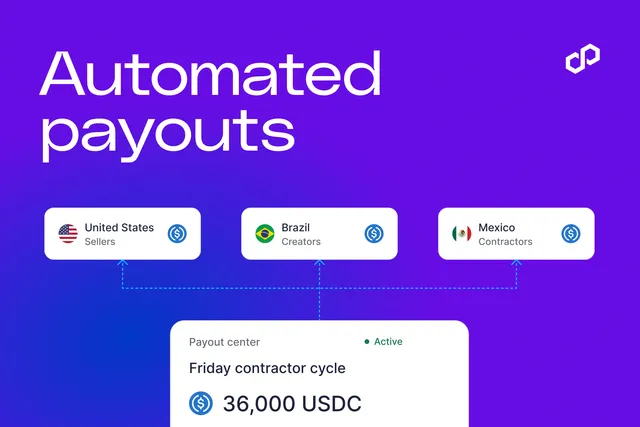
New to Polygon OMS: Automated stablecoin payout runs with rules your team sets

Polygon Open Money Stack now supports TRON

Meet Polygon at Money20/20 USA
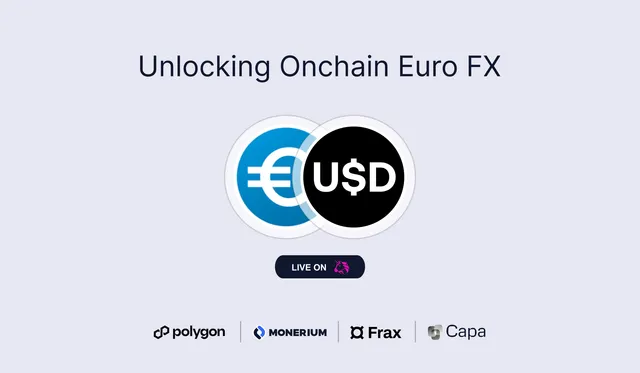
Monerium, Frax and Capa connect euro payments to onchain FX markets on Polygon
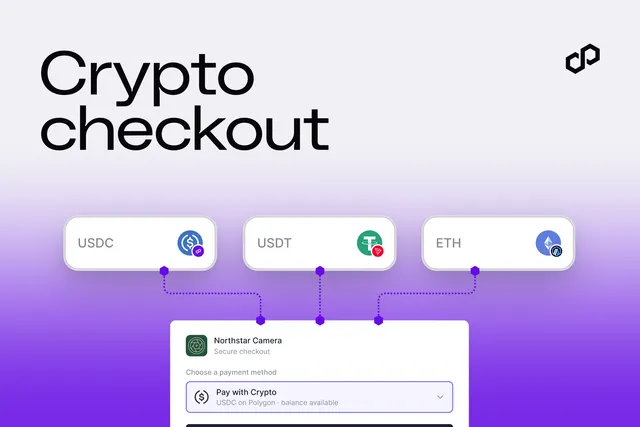
Introducing crypto checkout in Polygon Open Money Stack
Polygon passes $3 trillion in stablecoin transfer volume

Polygon Chain now supports 11 million payments per second
New to Polygon OMS: Recurring Stablecoin Subscriptions With One Customer Approval
Stable.com Adds Polygon for Direct-to-Bank Stablecoin Transfers