Stablecoins on the Polygon network process billions in monthly volume. Most of that capital sits idle between transactions. SurfLiquid is changing that with an AI-run, non-custodial savings account that puts stablecoins to work across onchain lending markets, starting on Polygon.
Stablecoins on Polygon Chain process billions in monthly volume. Most of that capital sits idle between transactions.
We want to change that, and Surf shares the goal: turn passive balances into sticky, yield-generating deposits.
What Surf does
Users deposit USDC into their own vault contract. It is not a shared pool and not a custodial account. Each depositor has a dedicated, user-owned smart contract vault.
Surf’s AI automation then handles allocation, monitoring, and rebalancing across approved onchain venues, starting with Morpho (a permissionless lending protocol) on the Polygon network. Funds remain withdrawable at any time, and only the vault owner can move capital to an external address.
Surf is built on zkCross Network’s execution infrastructure, proven in production with $105.8M+ processed across 193,835 transactions and 26,260 unique wallets. Surf is the consumer product on top of those rails, already running live automation with $10M+ in onchain volume and thousands of executed actions.
Two questions matter most to anyone considering a deposit: Are my funds safe? Can I get them back when I want them? Surf’s architecture is built around both.
How the control layer works
Surf is not a strategy wrapper on top of third party protocols. It is built on zkCross Network’s execution infrastructure, which has been shipped and operated in production across multiple ecosystems. That foundation matters because Surf controls the full execution stack behind the product: user vault contracts, execution rails, risk controls, and the automation layer.
At the core is Guardian, a deterministic control layer that governs how Surf’s automation can interact with user capital. The agent can propose actions, but Guardian decides what is allowed, and MPC authorisation constrains what can be signed and executed.
If anything falls outside policy, execution does not proceed. The system is designed to fail closed on uncertainty. Every action is on chain and verifiable.
Cross-chain capability is part of Surf’s architecture, but the Polygon launch starts with USDC lending vaults. When cross-chain routing is enabled, it uses LI.FI and deBridge under the same custody boundary: funds move from a user’s vault to the same user’s vault on the destination chain, not to an external wallet.
This is enforced through onchain recipient validation. Bridge calldata is decoded and the destination recipient must match the user’s vault contract. Vault addresses are deterministic across supported chains, so the same user maps to the same vault address on each network.
Surf is built on zkCross Network’s execution infrastructure, audited by Halborn. The zkCross rails have been operated in production and have processed $105M+ in onchain volume across 193,000+ transactions and 26,000+ unique wallets, generating $382K in fees revenue.
Why we are working with Surf
We are focused on deepening the Polygon network’s existing stablecoin activity. Every stablecoin dollar that earns yield on the network is a dollar less likely to leave. That retained capital drives more onchain transactions, deeper liquidity, and longer user retention across the ecosystem. Those dynamics are good for every builder and protocol here.
The Polygon network offers the combination Surf needs: low transaction costs for frequent rebalancing, fast finality so users are not waiting on their capital, deep stablecoin liquidity to deploy into, and a growing base of DeFi-native users who want a simpler way to earn. Surf’s product matches those strengths directly.
“Surf represents exactly the kind of builder we want on the Polygon network,” said Marc Boiron, CEO of Polygon Labs. “They are not asking users to learn DeFi. They are giving them a savings product with clear custody boundaries, real-time withdrawals, and AI automation that stays inside hard guardrails. That is how stablecoin adoption scales.”
What’s launching
Day one is focused. USDC stablecoin lending vaults on the Polygon network, deployed through Morpho. Users connect a wallet, select USDC, deposit (minimum $10), and earn. No onboarding wizard. No complicated configuration.
Cross-chain deposits are supported immediately, so users on other networks can move capital into their Polygon vault without a separate bridging step.
ETH and BTC vaults, liquidity vaults, and concentrated liquidity range management are on the roadmap but explicitly not part of this initial launch. Surf is starting narrow and expanding as the intelligence layer proves itself.
The integration path
The vault product is the starting point, but the long-term distribution path is ecosystem embedding. Surf is built to plug into Polygon-native surfaces where stablecoins already sit and move.
Over time, that can look like:
- DEX integrations: an “Automated Liquidity Vaults” module inside the DEX UI that helps users deploy liquidity without learning range management, improving in-range depth and fee capture.
- Wallet integrations: a native “Earn Vaults” tab that lets users deposit stablecoins into user-owned vaults and earn through lending, with withdraw-anytime behaviour.
- Payments and fintech: an idle-balance yield layer that can turn stablecoin float into productive deposits without introducing custody risk.
- Treasuries and DAOs: controlled yield deployment with clear policy boundaries and transparent execution logs.
- Market makers and liquidity desks: treasury yield on idle stablecoins and, later, automated liquidity management for specific pairs.
Across all of these, the product stays consistent: user-owned vault custody, deterministic control via Guardian, and the same execution framework underneath.
Traction behind the product
Beyond the onchain metrics from zkCross Network, the Surf team has secured $752K in ecosystem grants from Stellar, Arbitrum, Internet Computer, and Partisia. The project was incubated by Cointelegraph, Brinc, and Blockchain Founders Fund, and is already deployed across multiple blockchain ecosystems. Annual recurring revenue sits at $565K with $1.24M in total revenue to date.
We see Surf as a clear example of what we want more of on the Polygon network: products that make stablecoin capital productive without asking users to become DeFi experts. The infrastructure is live. The guardrails are in place.
Polygon Open Money Stack now supports TRON
Meet Polygon at Money20/20 USA
Monerium, Frax and Capa connect euro payments to onchain FX markets on Polygon
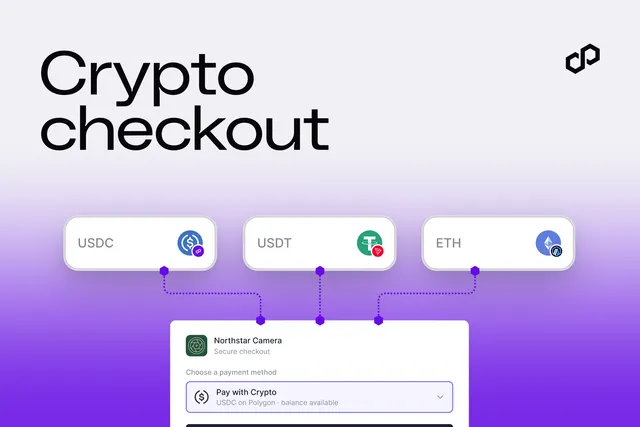
Introducing crypto checkout in Polygon Open Money Stack
Polygon passes $3 trillion in stablecoin transfer volume
Polygon Chain now supports 11 million payments per second

New to Polygon OMS: Recurring Stablecoin Subscriptions With One Customer Approval
Stable.com Adds Polygon for Direct-to-Bank Stablecoin Transfers

One API for Any Payment: Inside Polygon Open Money Stack