tl;dr
- Polygon is building the Open Money Stack to make stablecoin payments work end to end
- The stack is vertically integrated, an all-in-one solution for institutions, fintechs, enterprises, and marketplaces to reliably access wallets, on- and off-ramps, orchestration, and settlement
- The stack is open and interoperable across chains, providers, and regions, avoiding vendor lock-in
- Institutions and fintechs will be able to move money onchain through a single integration, without rebuilding their infrastructure
Money already moves digitally, but it doesn’t move well.
When money crosses borders, it gets stuck in queues. Settlement is slow, fees are opaque, and reliability depends on closed intermediaries that were never designed for a global, real-time economy.
Stablecoins changed what money can be. Value can be digital and programmable. But on their own, stablecoins are not a payments system. Without easy integration that works for any institution or enterprise, money still doesn’t behave the way it should.
Polygon Labs is closing this gap.
With the acquisitions of Coinme and Sequence, Polygon accelerates the Open Money Stack: an open, vertically integrated stack of services and technologies designed to move money reliably from offchain systems to onchain settlement, and back again.
Vertical integration is how the system works end to end. Openness is how it scales across regions, ecosystems, and institutions.
The result is money that behaves like money, not infrastructure. Here’s what puts the open in the Open Money Stack.
Open systems need to work end to end
Open systems win because every component can be chosen without lock in: Routes, rails, and customer-facing UX. Openness preserves competition and keeps money interoperable across ecosystems.
But an open system alone doesn’t reduce complexity.
Historically, institutions were able to assemble a blockchain payments stack – though not one that was integrated. Multiple partners were required to address multiple needs. Compliant on- and off-ramps, wallet infrastructure, interoperability, and settlement for reliable, 24/7 money movement.
Every integration adds time, operational overhead, and long-term maintenance costs
The Open Money Stack is designed to solve this problem without closing the system.
It remains open to multiple chains, routes, and providers in a single vertically integrated solution. Integrate once, move money end to end, and still retain the freedom to choose components, add partners, or extend across ecosystems.
The Open Money Stack makes openness usable at scale.
What “open” means in practice
In the Open Money Stack, open is modularity by default.
Institutions, fintechs, enterprises, and marketplaces are not locked into a single vendor, chain, or execution path. They can adopt the parts of the stack they need and ignore what they don’t. Components can be swapped out over time. It will be easy to integrate with existing financial infrastructure without rewriting an entire system.
The Open Money Stack is designed to reduce integration, but not constrain architectural choice.
In practice, here’s what that looks like:
- Coinme connects regulated fiat rails to multiple blockchains, operating across 48 U.S. states and supporting institutions regardless of where onchain settlement occurs.
- Sequence supports more than 50 chains, enabling wallets and payments flows to work across ecosystems without forcing applications onto a single network.
- Trails routes payments across hundreds of chains, handling interoperability and execution so money can move where it needs to go, regardless of origin or destination.
- Agglayer, built by Polygon, provides a native interoperability layer that connects more than 10 chains today, but it is optional, not required.
Settlement does not depend on a single chain or framework. The Polygon Chain is optimized for payments, which will make it the most desirable chain for settlement in many cases, but any chain can be used for settlement, whether or not it is connected via Agglayer. Agglayer improves coordination and interoperability where it is used, but the Open Money Stack remains compatible with the broader multi-chain world as it exists today.
This is a system built for a world where liquidity, users, and applications span regions and networks, patchworked by different local payments methods, institutional standards, and on- and off-ramp.
Why integration matters
The Open Money Stack will provide a coherent path from simple API access at the top of the stack to reliable blockchain settlement at the bottom.
That means integrating once and moving money end to end without building bespoke infrastructure or managing fragile dependencies between third parties.
Importantly, this does not require avoiding partners.
Open payments systems don’t eliminate third parties, but help ensure these are interchangeable.
The difference is that the system still works if one component changes.
Open sesame
Public blockchains succeeded because they were open.
But chains like Polygon Chain scaled due to the concerted effort of a group of people devoted to developing technology that made the chain succeed.
The Polygon Open Money Stack works by the same logic:
- building a vertically integrated system where it matters
- keeping it open where it counts
- making money movement reliable and fast
That’s what it takes to move all money onchain.
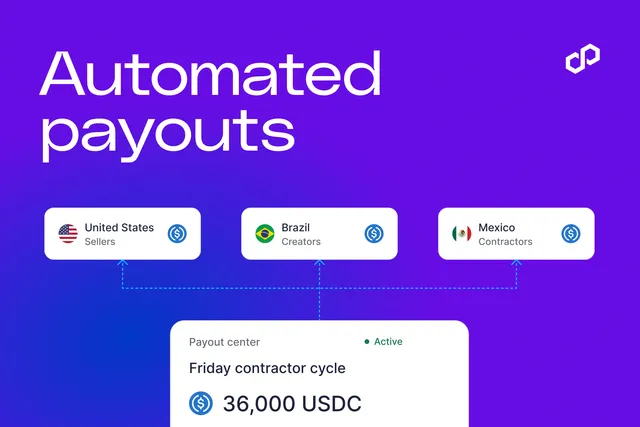
New to Polygon OMS: Automated stablecoin payout runs with rules your team sets
Polygon Open Money Stack now supports TRON
Meet Polygon at Money20/20 USA
Monerium, Frax and Capa connect euro payments to onchain FX markets on Polygon
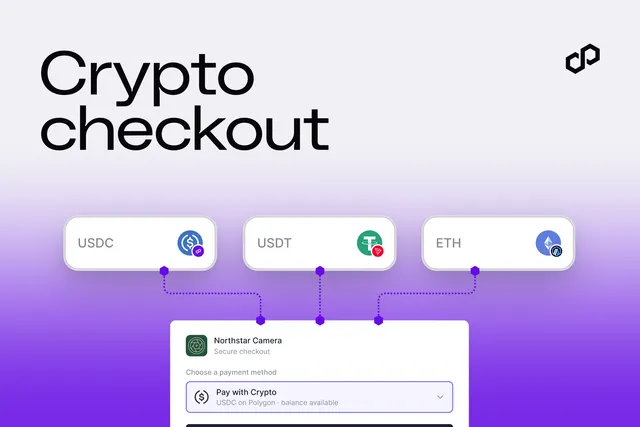
Introducing crypto checkout in Polygon Open Money Stack
Polygon passes $3 trillion in stablecoin transfer volume
Polygon Chain now supports 11 million payments per second
New to Polygon OMS: Recurring Stablecoin Subscriptions With One Customer Approval
Stable.com Adds Polygon for Direct-to-Bank Stablecoin Transfers