Today, we’re launching a liquid staking token, sPOL, on Polygon.
This is Polygon’s native liquid staking token. The unlock is enormous: more than 3.6B POL are staked, but only ~4-5% of that is liquid. That means idle capital that’s not earning in DeFi.
sPOL changes this dynamic. As the native liquid staking token, sPOL gives stakers the ability to unlock staked POL and earn a share of priority fees.
We designed sPOL to boost the amount of liquid staking on the network. This is the first and only LST built by Polygon Labs, audited by ChainSecurity and Certora, and backed by 10M in day one of sPOL from the treasury to seed liquidity, with 90M to be progressively added for a total of 100M. Uniswap V4 AMM pools are live at launch. No waiting for the market to bootstrap itself. No third-party smart contract trust required.
The launch of sPOL comes in a wider push to bring more value to POL stakers: we recently proposed changing how priority fees are distributed to POL stakers. As priority fees surge on Polygon, our goal with the proposal is to ensure that stakers capture more of this value as it flows over the network; introducing a native sPOL token coincides with this border push to up the rewards for stakers doing the work to keep the network running smoothly.
Learn about sPOL below and make sure you tap into the benefits of staked POL today.
How sPOL works
If you’re already staking with a validator, you can migrate your existing position into sPOL through the Polygon staking portal. No waiting period, no gap in rewards. All new POL staking will automatically receive sPOL in return.
The exchange rate starts at 1:1 and increases over time as staking rewards accumulate. That means your sPOL balance stays the same, but each token is worth more POL the longer you hold it.
From there, your sPOL is yours to use. Provide liquidity, deploy it as collateral, stack yield on top of staking rewards through DeFi strategies. Whenever you want, you can redeem sPOL for POL plus accumulated rewards through the staking portal.
Your stake, your fees
Most priority fees generated by network activity don’t flow to stakers.
We built sPOL to fix this. Validators in the sPOL program agree to return a portion of priority fees to delegators. That means the economic value produced by the network flows back to the people who secure it. This is what staking alignment looks like.
For POL holders who haven’t started staking yet, this matters too. When you do start, sPOL ensures you’re staking with validators who share fees with you from day one.
Why we built this
The liquid staking landscape on Polygon has been fragmented.
Existing third-party LSTs collectively have fees that range from 5% to 16%. On Ethereum, roughly 30% of staked ETH sits in liquid staking tokens. On Polygon, it’s 4-5%. That gap exists because the options haven’t been good enough.
The goal is straightforward: make sPOL the most composable staking primitive on the Polygon Chain. Staking yield becomes the floor, not the ceiling. What you do with sPOL in DeFi is where the real opportunity starts.
Get Started
- Go to the Polygon staking portal
- Deposit POL
- Receive sPOL (1:1 at launch, accrues value over time)
- Use sPOL in DeFi or simply hold and earn
Already staking? You can migrate your existing validator stake into sPOL.
Stake POL. Stay liquid.
sPOL is a staking product and carries inherent risks including smart contract risk, slashing risk from validator behavior, and exchange rate fluctuations based on market conditions. Staking rewards are approximate and depend on validator performance and network conditions. Contracts have been audited by ChainSecurity and Certora, but no audit eliminates all risk. Full disclosures are available on the staking portal.

Polygon Open Money Stack is now a U.S.-regulated payments platform with completion of Coinme acquisition
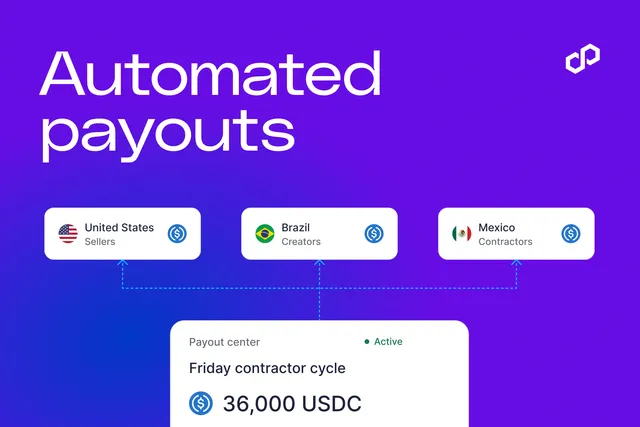
New to Polygon OMS: Automated stablecoin payout runs with rules your team sets
Polygon Open Money Stack now supports TRON
Meet Polygon at Money20/20 USA
Monerium, Frax and Capa connect euro payments to onchain FX markets on Polygon
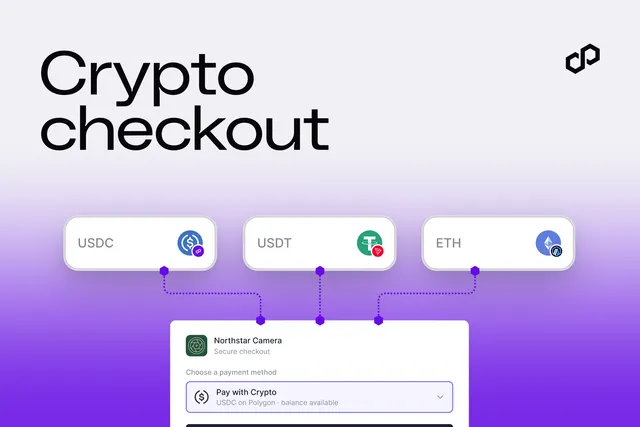
Introducing crypto checkout in Polygon Open Money Stack
Polygon passes $3 trillion in stablecoin transfer volume

Polygon Chain now supports 11 million payments per second
New to Polygon OMS: Recurring Stablecoin Subscriptions With One Customer Approval