Cross-border payments are entering their most consequential year since SWIFT went live in 1977.
Stablecoin transaction volume hit $33 trillion in 2025. The GENIUS Act gave stablecoins a federal legal framework in the U.S. for the first time. Brazil classified stablecoin transfers as foreign exchange.
And 90% of institutional players surveyed by Fireblocks are now using or actively exploring stablecoins for settlement.
The question is no longer about infrastructure, but operations: who moves the money, on what rails, and at what cost?
The market has made up its mind
The data from 2025 leaves little room or debate.
Latin America received over $730 billion in crypto transaction volume, a 60% year-over-year surge, with over 90% of Brazilian flows stablecoin-related. Bitso Business hit $82 billion in annualized total payment volume. Avenia, the Brazilian cross-border paytech behind the BRLA stablecoin, has processed over $3.5 billion in stablecoin payment volume on Polygon. BlindPay, the Y Combinator-backed stablecoin API, crossed $580 million on Polygon by connecting directly to Pix, SPEI, and PSE across Brazil, Mexico, and Colombia. Minteo’s Colombian peso stablecoin COPM crossed $200 million in monthly transfer volume.
These corridor-by-corridor examples show that stablecoin rails have moved from parallel infrastructure to primary infrastructure.
Over $14 billion in stablecoin payment volume has now settled on the Polygon network across 41 entities, with $6.31 million in total fees. Paxos alone processed $1.47 billion for less than $1,000 in gas.
Why the infrastructure we choose now defines the next decade
Cost parity is becoming table stakes. Sub-cent settlement exists on multiple chains. The next competitive frontier is liquidity depth, settlement speed, and full-stack integration: the ability to move money from a bank account in São Paulo to a merchant wallet in Mexico City without the sender or receiver thinking about blockchain at all.
That is why we built the Open Money Stack.
We announced the OMS in January 2026 as a vertically integrated framework for regulated stablecoin payments. It is not a single product. It is a stack, and every layer is either live or closing fast. Settlement runs on the Polygon network, which now processes 2,600+ transactions per second with sub-five-second finality after five hard forks shipped in nine months. Sequence, acquired in Q1 2026 as part of a $250 million investment, provides non-custodial smart wallets with passkey authentication and no seed phrases. Polygon Trails (ex. Trails), Sequence’s intent-based orchestration layer, handles cross-chain routing across 16+ EVM chains and processed 10 million+ in transaction volume within its first two months. Coinme, pending regulatory approval for Q2 2026, will connect the stack to fiat through 50,000+ U.S. retail locations and money transmitter licenses across 48 states.
The result is a system where a fintech building cross-border payments does not need to assemble five vendors for settlement, wallets, compliance, fiat ramps, and cross-chain routing. We provide that as a single integration.
Three signals that define what comes next
From cost to liquidity control. The Polygon network has processed over $11.1 billion in lifetime transfer volume for non-USD stablecoins, representing more than 43% of all non-USD stablecoin transfers across major blockchains. Multiple BRL-pegged stablecoins (BRL1, BRLA, BBRL from Grupo Braza), COPM, JPYC, and 30+ other local-currency stablecoins are live on the network. The question for institutions entering LATAM, Africa, or Southeast Asia is no longer which chain is cheapest. It is where the liquidity already sits.
From corridors to unified infrastructure. Stripe, Revolut, Flutterwave, and Mastercard have each chosen Polygon as core infrastructure for stablecoin settlement, payments, or credential verification. Flutterwave alone covers 30+ African countries. Revolut has processed over $800 million through Polygon. The fragmentation problem that has made cross-border payments expensive for decades is being solved at the infrastructure layer, not the application layer.
From crypto-native to institutional-grade. Paxos holds conditional OCC national trust charter approval. The GENIUS Act requires 1:1 reserve backing and federal oversight. Brazil’s central bank now regulates stablecoin transfers as FX operations. Every major compliance framework that institutions demanded before entering stablecoin settlement either exists today or takes effect within twelve months. We built the Open Money Stack for exactly this moment.
What this means for you
For banks: Bitso handling 10% of US-Mexico remittances is not a crypto story. It is a competitive advantage with auditable data behind it. The correspondent banking model is being disintermediated corridor by corridor, and the infrastructure to respond is available now.
For corporates: Treasury teams that understand stablecoin settlement today will have a liquidity and cost-structure advantage over those that learn it in 2027. The Paxos data shows what this looks like at scale: $1.47 billion moved for what a single wire transfer costs at most banks.
For fintechs: The network effects of the leading settlement layer compound. The corridor you want to win likely already has a local-currency stablecoin on Polygon, and the Open Money Stack means you can build on that liquidity with a single integration rather than assembling five different vendors.
The infrastructure decision is a market position decision
Choosing settlement infrastructure in 2026 is not a technical decision. It is a strategic one. The regulatory clarity exists. The throughput exists. The institutional partnerships exist. The fintechs, banks, neobanks, and corporates that recognize this will have a structural advantage in the corridors that matter most.
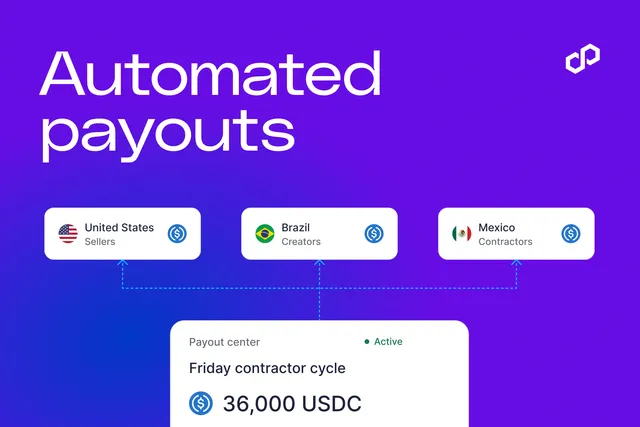
New to Polygon OMS: Automated stablecoin payout runs with rules your team sets
Polygon Open Money Stack now supports TRON
Meet Polygon at Money20/20 USA
Monerium, Frax and Capa connect euro payments to onchain FX markets on Polygon
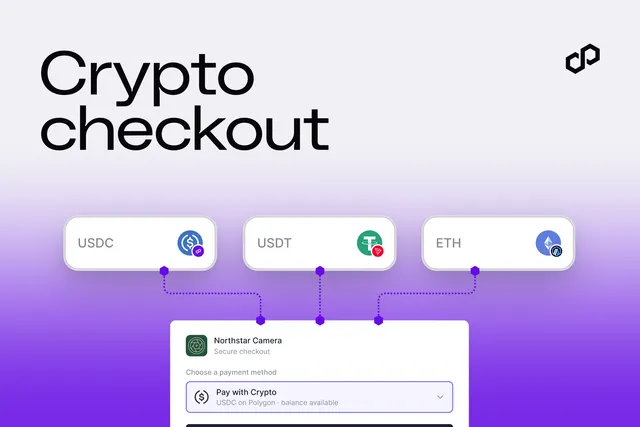
Introducing crypto checkout in Polygon Open Money Stack
Polygon passes $3 trillion in stablecoin transfer volume
Polygon Chain now supports 11 million payments per second
New to Polygon OMS: Recurring Stablecoin Subscriptions With One Customer Approval
Stable.com Adds Polygon for Direct-to-Bank Stablecoin Transfers