Today, we’re excited to announce that Polygon Labs has completed its acquisition of Coinme. This is a huge step for Polygon. We’ve spent years building infrastructure that moves money onchain. Now Polygon has more of what it takes to support the whole payment: from the moment dollars enter the system to the moment someone receives money they can use.
Moving money onchain is only useful at scale when it connects to the accounts and payment systems already around us. Polygon is building that connection into Polygon Open Money Stack (OMS): dollars coming in through banks, cards, or cash deposits, value moving onchain, and funds reaching people where they can use them.
More of the payment, under one roof
Through its U.S. payments business, Polygon now has coverage across 48 states, with 37 state money transmitter licenses and 11 applicable exemptions. The business is also registered with FinCEN as a money services business.
That regulated access joins the rest of Polygon Open Money Stack: accounts and wallets to hold funds, infrastructure to route payments across chains, and settlement rails that move value around the clock. Polygon connects those capabilities with banking and payout infrastructure so a payments team can build a complete flow through one integration, instead of managing every handoff itself.
A business might come to Polygon because it needs to pay someone across a border. Once the money arrives, another set of questions begins: where does it live, who can use it, and where might it need to go next? That is the larger opportunity for Polygon OMS: connecting money in motion with money at rest. A team can begin with a transfer and build the accounts, balances, and payout experiences its customers need next.
Now the strategy has customers behind it. Tazapay, Mesh, Toku and Kira are among the first to adopt Polygon OMS for cross-border business payments, account funding, global payroll and U.S. dollar access. Their products show the range of what businesses can build when money movement and the accounts around it work together.
Tazapay is simplifying cross-border business payments
Tazapay builds cross-border payments infrastructure for businesses that buy, sell and pay across markets, giving enterprises, marketplaces and fintechs one way to collect and pay out money around the world. The company serves more than 1,000 enterprises and fintechs across more than 30 countries.
Tazapay uses on- and off-ramp and wallet infrastructure from Polygon OMS to shorten the path between stablecoins and local currency. Its customers can receive, hold and pay out funds across markets with fewer intermediaries involved in each transaction, alongside the local and SWIFT rails Tazapay already uses.
“For our customers, cross-border payments come down to two questions: when will the money arrive, and what will it cost? Open Money Stack gives us a more direct route between stablecoins and local currency, which means fewer handoffs in the corridors where our customers need it most.” — Rahul Shinghal, Co-founder and CEO, Tazapay
Disclaimer: Stablecoin-related services are provided exclusively by Tazapay Canada Corp., which is registered with the Financial Transactions and Reports Analysis Centre of Canada as a money services business. Tazapay Pte. Ltd. (Singapore) does not provide Digital Payment Token services under the Payment Services Act 2019.
Mesh is expanding how users fund digital asset payments
Mesh is adding Polygon Open Money Stack’s on-ramps to its network, expanding the ways fintechs, payment platforms and crypto-native businesses can let users move between fiat and digital assets. Through Mesh’s crypto payments network, users can fund accounts directly from the wallets and exchanges they already use, without businesses building separate integrations across a fragmented ecosystem.
Mesh’s network brings together more than 300 wallets, exchanges and financial services, with Polygon Open Money Stack now providing an additional on-ramp path within it.
“The bottleneck in stablecoin payments is access. Mesh connects the accounts where assets already live into one network, and Open Money Stack adds a strong on-ramp within it. Every path we add makes the network more valuable for everyone on it.” — Bam Azizi, CEO and Co-founder of Mesh
Toku is connecting stablecoin treasuries to compliant global payroll
Toku is a global payroll and employer-of-record platform. It hires and pays employees and contractors around the world, in local currency. Toku operates in more than 100 countries, handling employment contracts, tax withholding, benefits and local filings in each jurisdiction.
Toku uses wallet and payout capabilities from Polygon’s Open Money Stack to extend that infrastructure through the last mile. Workers paid in stablecoins can hold their earnings in a wallet and convert them to local currency as part of the same compliant payroll flow. The integration builds on Toku’s launch of stablecoin payroll in January.
“Companies with stablecoin treasuries don’t have a problem moving money. They have a problem employing people compliantly in the countries where they live. Toku handles the employment, tax withholding, and local filings, while also giving workers a compliant path from stablecoins to local currency.” — Ken O’Friel, CEO, Toku
Kira is connecting dollar-based financial products to U.S. banking
Kira uses AI agents to give fintechs, OTC desks and import brokers U.S. banking and stablecoins in one place. The agents open accounts, clear KYBs, answer RFIs and track payments, and humans sign off on every decision. Businesses open USD accounts at more than one U.S. bank, receive and send on ACH, Fedwire and FedNow, pay suppliers abroad by SWIFT, and move between stablecoins and U.S. dollars. Accounts open within 72 hours of Kira receiving a client’s documents, and 9 of 10 payments are approved on first review.
Kira is utilizing Polygon Open Money Stack to expand the stablecoin options available to its clients.
“Stablecoins made moving money fast. What still slows a business down is everything on the other end: the U.S. bank account, the compliance review and the deadline. That’s the work Kira does. Together with Polygon, we’re making sure stablecoins land as dollars in our clients’ accounts, on time.” — Edrizio De La Cruz, CEO and co-founder, Kira
The next chapter for Polygon
Money is already moving onchain. The next step is making it work inside the products people use to get paid, hold a balance, and run a business. Coinme brings regulated U.S. access into Polygon OMS, and these first customers are showing what those connections can make possible.
Polygon OMS is live today. If you’re building a product that moves money, talk to the Polygon team.
Disclaimer
This post is for general informational purposes only and does not constitute legal, financial, tax, regulatory, or investment advice. Nothing contained herein should be construed as a solicitation, offer, or recommendation to buy, sell, or engage with any product or service, nor should it be relied upon as the basis for any decision.
Users and institutions are solely responsible for ensuring that their access to and use of any Polygon product or service complies with all applicable laws, rules, and regulations in their respective jurisdictions. Polygon Labs makes no representation or warranty that any particular program configuration, feature, or use case will satisfy the legal or regulatory requirements of any specific jurisdiction. Users and institutions are strongly encouraged to seek independent legal counsel regarding their specific compliance obligations before engaging with any Polygon product or service.
The features, use cases, and illustrative examples described in this post are subject to applicable law and may not be available in all jurisdictions. All statements regarding future products, features, functionalities, or capabilities are forward-looking in nature and subject to change without notice. Such statements should not be relied upon as representations of future performance or availability.
Polygon Labs reserves the right, in its sole discretion and without prior notice, to modify, suspend, limit, restrict, or discontinue the program or any component of the Open Money Stack (“OMS”), in whole or in part, at any time. Use of OMS is subject to OMS terms and conditions. Polygon Labs further reserves the right to restrict or terminate access to any code, feature, or support for any user or in any jurisdiction where required by applicable legal or regulatory obligations.
Blockchain technology, smart contracts, and decentralized protocols involve inherent and significant risks, including but not limited to technical vulnerabilities, regulatory uncertainty, and potential loss of funds. To the fullest extent permitted by applicable law, Polygon Labs shall not be liable for any damage of any kind arising from or in connection with the use of, or reliance upon, the program, the Open Money Stack, or any information contained in this post.
Polygon Open Money Stack is now a U.S.-regulated payments platform with completion of Coinme acquisition
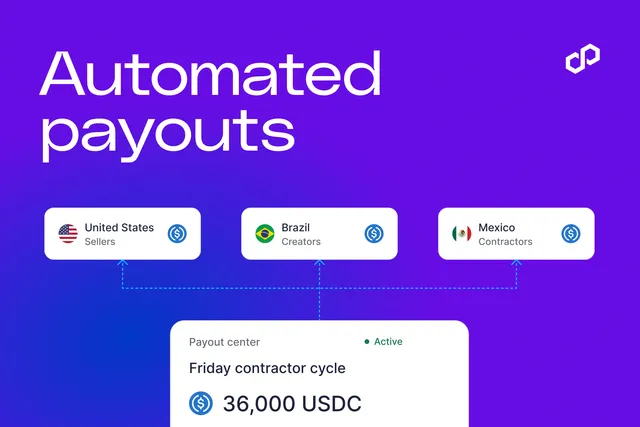
New to Polygon OMS: Automated stablecoin payout runs with rules your team sets
Polygon Open Money Stack now supports TRON
Meet Polygon at Money20/20 USA
Monerium, Frax and Capa connect euro payments to onchain FX markets on Polygon
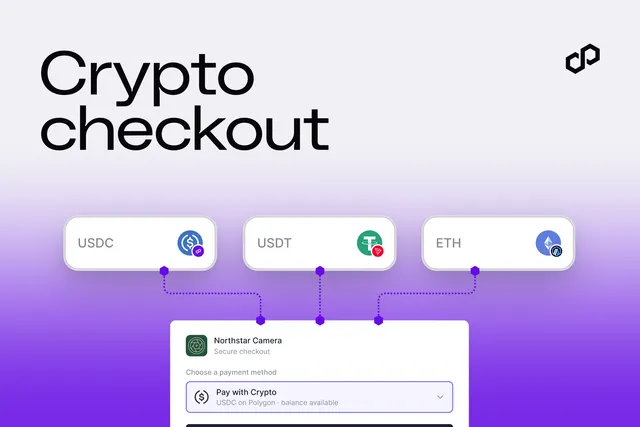
Introducing crypto checkout in Polygon Open Money Stack
Polygon passes $3 trillion in stablecoin transfer volume
Polygon Chain now supports 11 million payments per second
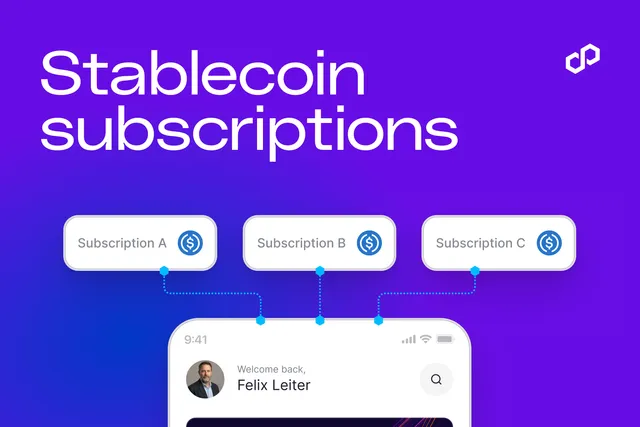
New to Polygon OMS: Recurring Stablecoin Subscriptions With One Customer Approval