Polygon Chain has now carried more than $3 trillion in stablecoin transfers. Revolut, Paxos, Polymarket, Cash App, Deel and Tazapay are among the companies that have used the network to move payments. This year, the list of ways people can use money on Polygon has grown alongside the volume.
The $3 trillion total counts stablecoin value transferred since September 2020. For a payments team choosing where to build, it offers something concrete to examine: years of money moving on the rail they would use themselves.
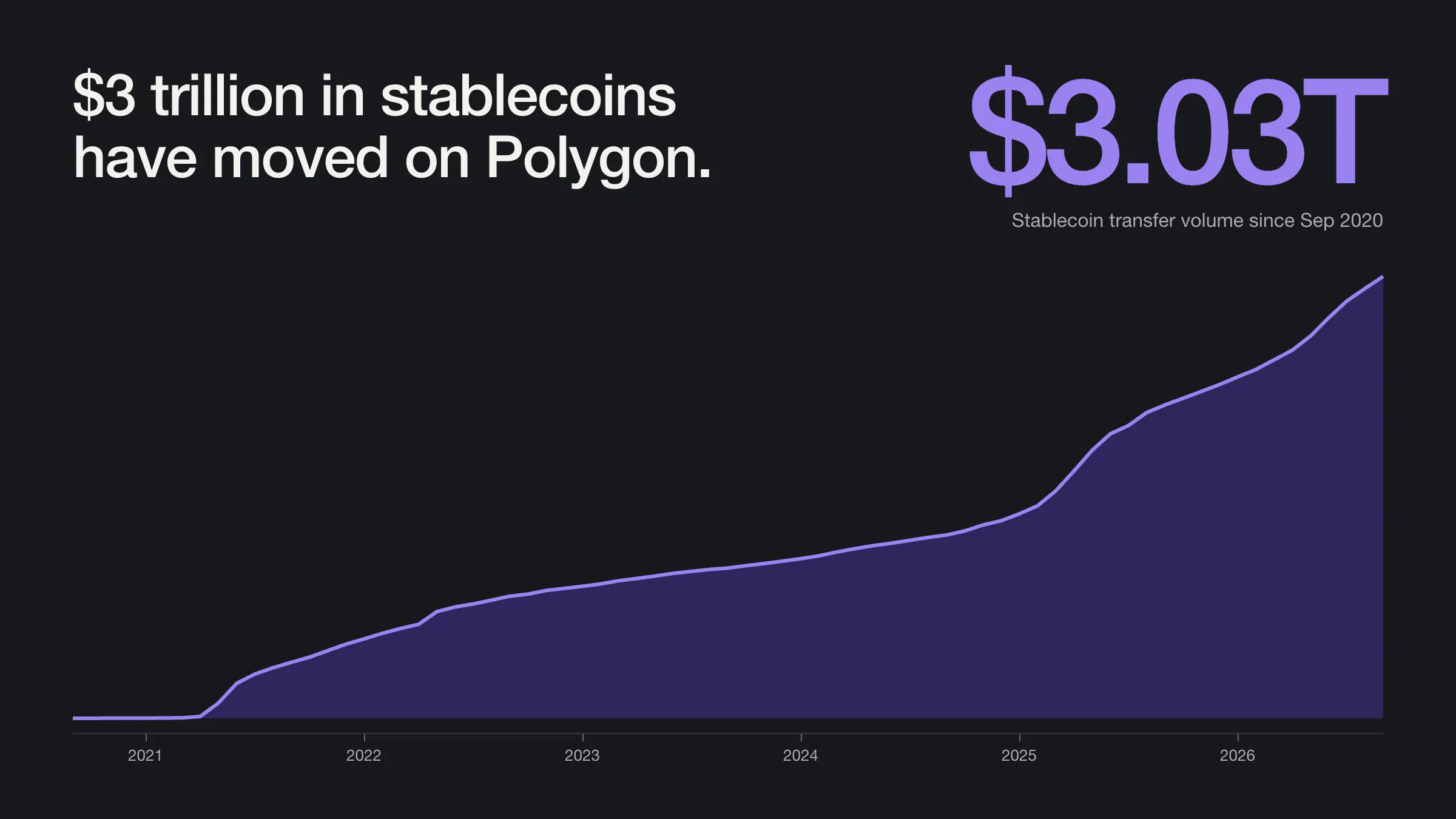
Stablecoin transfer volume on Polygon since September 2020
The volume is showing up in payment products
Polygon saw $933 billion in stablecoin transfer volume in 2025, up from $276 billion in 2024. Another $741 billion has been moved in 2026 so far. More than half of Polygon’s lifetime total has moved since January 2025.
There are familiar names within that broader activity. Revolut moved $810 million on Polygon in 2025. In August, it began rolling out EURR, its first euro stablecoin, on Polygon and Ethereum. PayPal USD also began issuing natively on Polygon this summer.
And the money has more places to go. Mastercard selected Polygon as one of the networks for expanded settlement options that include nights, weekends, and holidays. More recently, Stable.com added support for Polygon Open Money Stack, letting USDT and PYUSD holders initiate a bank transfer from their own wallet.
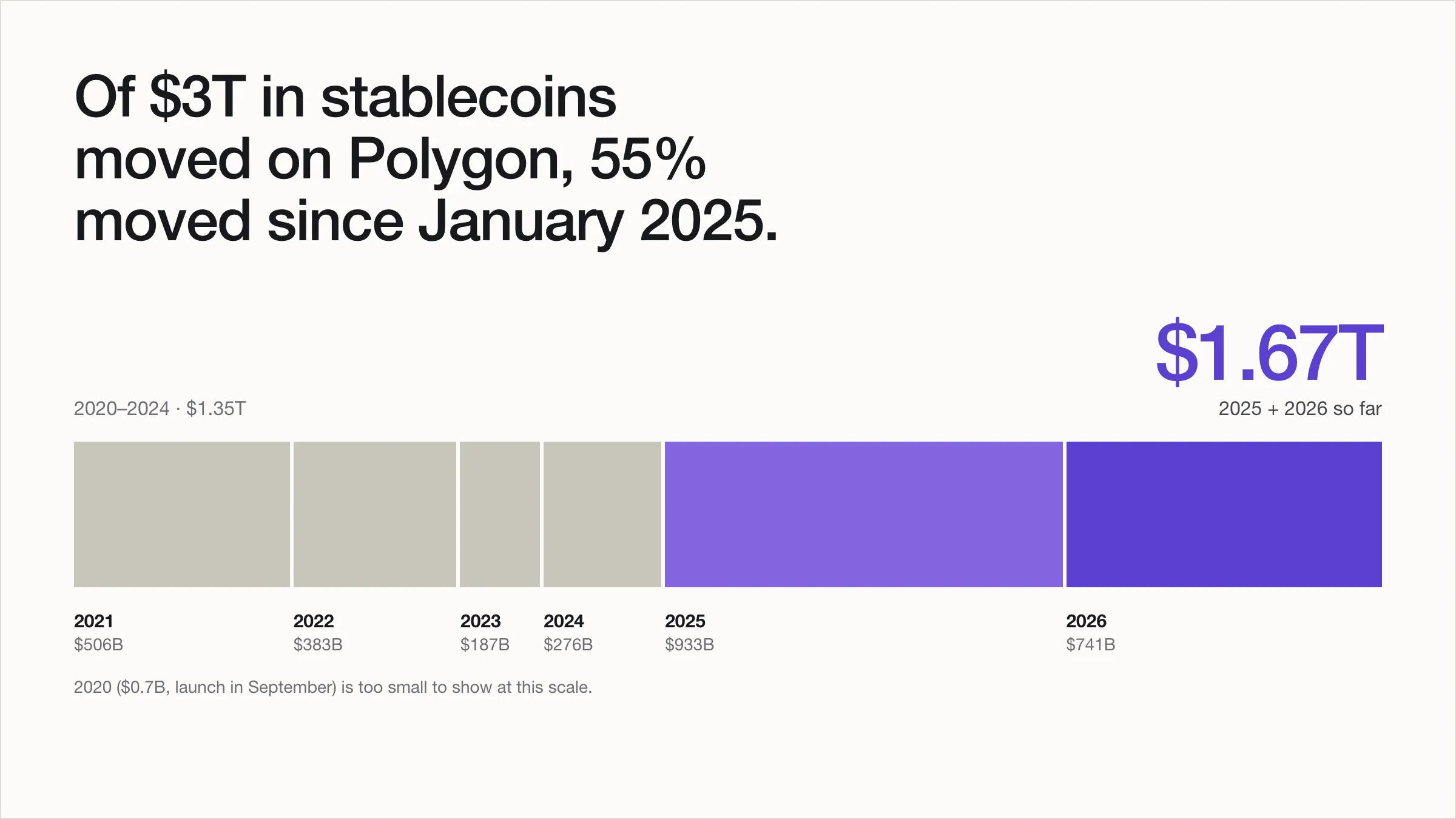
More than half of Polygon’s lifetime stablecoin transfer volume has moved since January 2025
We’ve been building for the volume that keeps growing
A payment company cares about what happens on an ordinary busy day: whether transactions clear, what they cost, and how quickly the team knows they’re final. We’ve spent this year working on those details.
In February, Polygon increased the chain’s capacity. A further upgrade in June raised it to up to 5,000 payments per second, while changes to the fee mechanism made costs more predictable as demand rises. Then July’s Ithaca upgrade added automatic recovery if a block producer stalls and safeguards against transactions that could slow the network. Most recently, we kept pushing the limits in testing and found a way to process more than 11 million verified payments per second through agent pay channels, with the payments settling on Polygon in batches.
A stalled block producer can delay a payout. Ithaca is designed to keep transactions moving when that happens, while the capacity and fee changes help payment teams handle more volume with fewer cost surprises.
Network use has shown up in fees as well. In September, the community completed a 100 million POL burn from previously collected base fees.
Open Money Stack connects the rest of the payment
A stablecoin transfer settles on Polygon Chain. A payment product also needs a way for money to enter, an account or wallet to hold it, and a route to wherever it goes next. Those pieces have to work together for the person sending or receiving money.
That’s the job of Polygon Open Money Stack. In January, we announced the Coinme and Sequence acquisitions, bringing licensed U.S. fiat access, wallet infrastructure, and cross-chain routing into the work already underway on settlement. OMS has since entered technical preview, and in September, its API and dashboard completed a SOC 2 Type 1 examination. That report gives payment teams something specific to bring into a vendor security review.
Through OMS, a business can connect a bank payin to a stablecoin balance, move funds onchain, then route a payout to the recipient. It can use the full flow or bring individual parts into systems it already runs. The customer gets to send money or use a balance without needing to know which provider handled each step.
We’re proud of the $3 trillion milestone. It reflects years of people moving stablecoins on Polygon, and the recent pace shows how much that use has grown. Our focus now is on making the whole journey useful for payment teams and their customers, from the moment money comes in to the moment it reaches its destination.
Talk to the Polygon team about what you’re building.
Introducing Polygon CDK Besu: Launch a Hyperledger Besu chain connected to other chains and their liquidity

Polygon Open Money Stack is now a U.S.-regulated payments platform with completion of Coinme acquisition
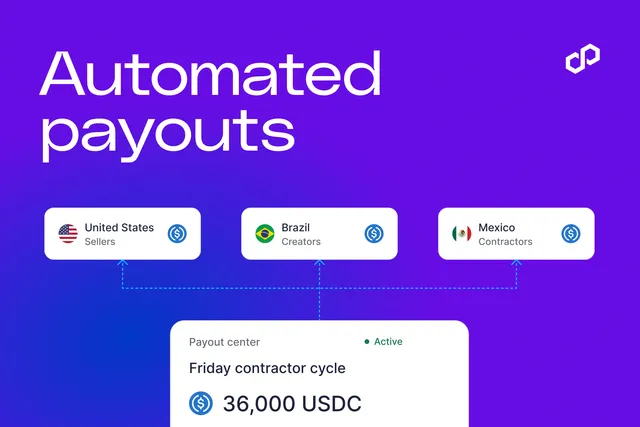
New to Polygon OMS: Automated stablecoin payout runs with rules your team sets

Polygon Open Money Stack now supports TRON
Meet Polygon at Money20/20 USA

Monerium, Frax and Capa connect euro payments to onchain FX markets on Polygon
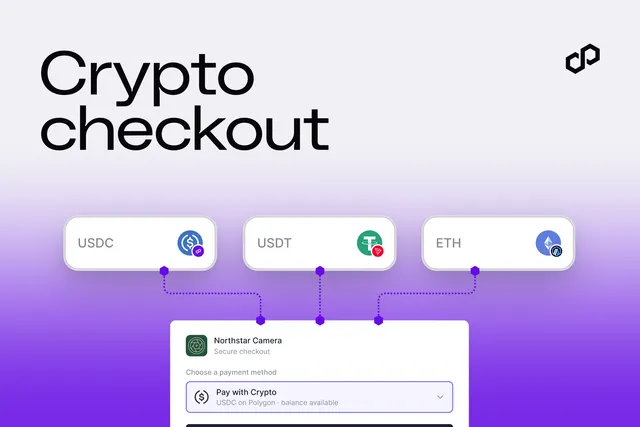
Introducing crypto checkout in Polygon Open Money Stack
Polygon passes $3 trillion in stablecoin transfer volume

Polygon Chain now supports 11 million payments per second