.DuDSNNpd.png)
Trust Wallet now lets users convert cash to crypto at more than 15,000 retail locations nationwide, powered by Coinme.
Deposit cash, receive crypto, no bank account required.
Coinme, which is being acquired by Polygon Labs, operates under money transmitter licenses across 48 U.S. states and supports more than one million users. Its infrastructure connects physical cash, debit rails, and digital assets under established regulatory frameworks.
Coinme is joining Polygon Labs, subject to regulatory approval, as a core part of the Open Money Stack, which brings regulated fiat access to a vertically integrated stack, alongside wallet infrastructure and onchain settlement.
For payment processors and fintech infrastructure teams, the Open Money Stack closes a long-standing operational gap between traditional money and onchain money.
Trust Wallet Cash Deposit fills that gap with the help of Coinme, enabling easy access to digital assets.
Bringing Cash Directly Onchain
For millions of Americans, cash is still the primary way to earn and store value. Yet participating in digital finance has traditionally required a bank account, a debit card, or a custodial intermediary.
Trust Wallet’s Cash Deposits feature changes that dynamic.
Users can now:
- Walk into a nearby supported retail location
- Deposit physical cash
- Receive supported digital assets directly into their self-custody wallet
- Access funds within minutes
No bank account required. No custodial balance held on their behalf. No multi-day settlement.
That combination of speed, retail access, and self-custody at national scale has not previously existed inside a mainstream wallet.
From an infrastructure perspective, this is a meaningful distribution milestone for the Open Money Stack. Coinme provides the licensed fiat boundary. Trust Wallet provides the user distribution.
Together, they turn everyday retail stores into compliant onramps to digital assets.
Why this is a big moment of adoption
This move expands stablecoin and digital asset access beyond crypto-native users.
It reaches:
- Cash earners
- Underbanked individuals
- Gig workers
- Cross-border senders
- Communities relying on physical currency
The practical impact is simple: Cash can now move onto digital rails quickly and predictably.
Once onchain, that value can be:
- Stored
- Sent across borders
- Used inside digital applications
- Held in stablecoins
For payment processors and fintech teams watching crypto and stablecoin adoption, this is the missing distribution layer.
Stablecoin infrastructure has matured on the settlement side. What accelerates adoption is accessible, compliant entry points.
Trust Wallet + Coinme provides one of the largest retail entry points in the U.S.
And as Coinme joins Polygon Labs, that retail access becomes embedded inside the Open Money Stack, strengthening its vertically integrated approach to regulated stablecoin payments.
The Open Money Stack: Context for the integration
Polygon Labs has signed definitive agreements to acquire Coinme in order to complete the Open Money Stack.
The Open Money Stack is designed as a vertically integrated infrastructure layer combining:
- High-performance blockchain settlement (Polygon Chain)
- Licensed fiat on- and off-ramps (Coinme)
- Enterprise wallet infrastructure and cross-chain orchestration
The goal is to provide institutions, fintechs, merchants, and payout providers with a single integration surface for regulated stablecoin payments.
Trust Wallet’s integration with Coinme is an example of how that architecture functions in practice.
From Cash to Global Settlement
Consider a simple payment flow.
A sender converts cash to USDC through a licensed retail location. The funds are delivered into a self-custody wallet. Settlement occurs in seconds.
If required, the recipient converts stablecoins to local fiat through regulated off-ramp infrastructure.
Compared to traditional correspondent flows, this architecture:
- Removes intermediary banking chains
- Eliminates cutoff windows
- Reduces opaque FX deductions
- Provides transparent transaction status
For treasury teams, faster settlement improves capital efficiency.
For payout platforms, predictable fees improve margin modeling.
For recipients, funds arrive with clarity and finality.
Why This Moment Is Different
Stablecoins have transitioned from speculative instruments to settlement infrastructure.
Major platforms including Stripe, Revolut, and Flutterwave already use Polygon for onchain money movement.
Enterprise adoption is driven by settlement speed, cost efficiency, and programmable capital flows.
The missing piece has been regulated access that connects traditional financial systems to onchain rails without fragmentation.
Trust Wallet + Coinme marks a visible step in that direction, and as part of the Open Money Stack, that convergence is being formalized into infrastructure.
If your organization moves money at scale, the evaluation window for onchain settlement is no longer theoretical.
Polygon Open Money Stack now supports TRON
Meet Polygon at Money20/20 USA
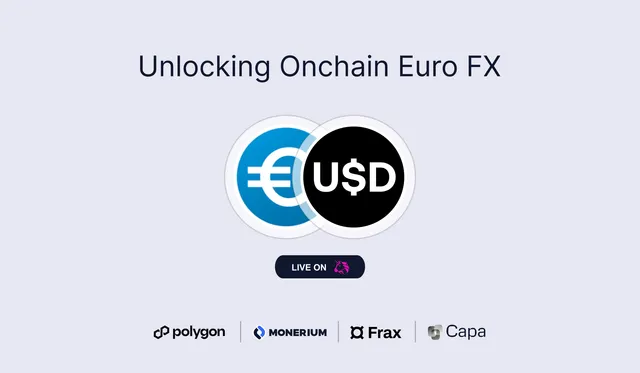
Monerium, Frax and Capa connect euro payments to onchain FX markets on Polygon
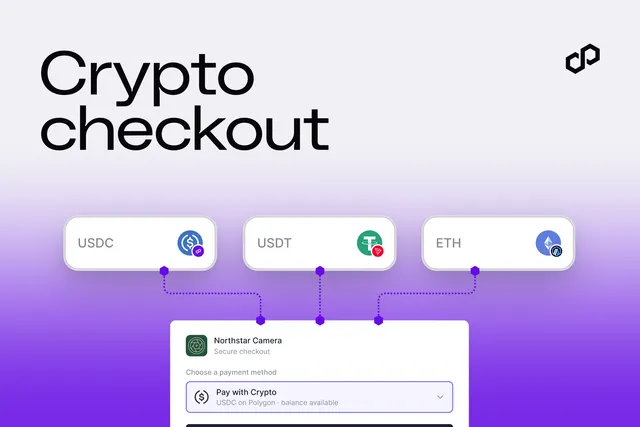
Introducing crypto checkout in Polygon Open Money Stack
Polygon passes $3 trillion in stablecoin transfer volume
Polygon Chain now supports 11 million payments per second
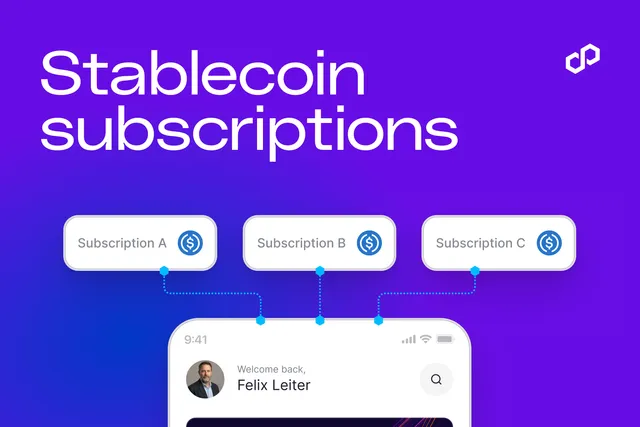
New to Polygon OMS: Recurring Stablecoin Subscriptions With One Customer Approval
Stable.com Adds Polygon for Direct-to-Bank Stablecoin Transfers
One API for Any Payment: Inside Polygon Open Money Stack