Privacy Is Not a Toggle
Most enterprise blockchain toolkits treat privacy as a binary. The chain is either public or private. On or off. That framing misses how regulated institutions actually operate.
A bank running a tokenized fund needs transaction-level confidentiality from competitors, but regulators need to audit every position. A supply chain consortium needs counterparties to verify deliveries without exposing pricing to the full network. A payments provider operating across jurisdictions needs data residency in Europe and different disclosure rules in Singapore.
These are not the same privacy requirements and should not be handled by the same privacy mode.
We built Polygon CDK, our modular chain development kit for launching sovereign, ZK-secured blockchains, around a different assumption: privacy is a spectrum, and the institution, not the toolkit, should decide where on that spectrum to operate.
One toolkit, many privacy layers
A CDK chain does not ship with a single privacy posture that the operator accepts or rejects.
We built privacy layers that institutions combine based on what their compliance teams, counterparties, and regulators demand.
Private data availability through Conduit and Gateway keeps transactional data off public ledgers entirely. The institution’s own infrastructure stores the data. Ethereum still anchors the chain’s security through ZK validity proofs: cryptographic proofs that verify the chain’s state is correct without revealing the underlying transactions. The institution gets Ethereum’s settlement guarantees without broadcasting its business to the world.
Fully homomorphic encryption through Zama goes further. FHE, a cryptographic method that allows computation on encrypted data without ever decrypting it, means a smart contract can execute logic on confidential inputs and return a result, and neither the contract operator nor the node running it ever sees the unencrypted data. For use cases like dark pool matching or multi-party settlement, this is the difference between a theoretical privacy claim and a mathematical one.
Private RPCs control who can read chain state and submit transactions. Granular access control integrates with identity systems institutions already run like Microsoft Entra and AWS IAM. We did not build a separate permissioning layer that sits alongside the enterprise directory.
The appetite for cryptographic privacy at this level is not theoretical. A forthcoming integration with Miden, the programmable privacy network for the future of finance, incubated by Polygon Labs, will add another composable layer to CDK: private, verifiable computation at the application layer, built on the same ZK foundations as the infrastructure beneath it.
These are composable layers. An institution can run private data availability with enterprise access control and public ZK validity proofs, creating a chain where transactions are confidential, access is permissioned, and the chain’s integrity is still publicly verifiable on Ethereum.
A different institution can run with FHE-encrypted smart contracts and role-based disclosure that gives regulators a read-only audit view. A third can begin more open and tighten privacy posture as its compliance requirements evolve.
The point is: we do not make the choice for you. Toolkits that offer “private by default” have made an architectural decision that every institution on the platform inherits.
It can work until one counterparty needs selective disclosure, or a regulator needs real-time audit access, or the business model requires confidential computation rather than just confidential storage. Then the institution is stuck patching around the privacy model instead of configuring it.
Compliance as architecture, not as aftermarket
Privacy without compliance is a dead end for regulated institutions. We designed CDK so that compliance is structural, not bolted on after the chain ships.
The regulatory environment has moved from exploration to directive. MiCA, the EU’s Markets in Crypto-Assets regulation, sets live requirements for stablecoin issuers and crypto-asset service providers across Europe, covering reserves, disclosures, and operational continuity. In the US, SEC frameworks for broker-dealers and alternative trading systems apply to tokenized securities today, and the Clarity for Payment Stablecoins Act is working toward a federal definition of compliant stablecoin issuance at the bank level. Institutions are not waiting for final guidance. They are building infrastructure that can demonstrate regulatory alignment now.
The Monetary Authority of Singapore’s Project Guardian made the compliance appetite concrete: a live cross-industry sandbox where DBS, JPMorgan, and SBI Digital Asset Holdings tested tokenized assets and institutional DeFi under direct regulatory oversight. MAS was testing how privacy, access control, and compliance interact when real counterparties and real settlement obligations are involved.
CDK answers these questions, forcefully and by design.
For tokenized assets specifically, we backed the T-REX Ledger, along with Apex Group (committing $100B to tokenized assets on the ledger, Tokeny, and T-REX Network, using CDK to bring regulated securities to the first standardized reference chain. ERC-3643 (the permissioned token standard built for regulated securities) embeds identity verification and transfer restrictions directly into the token contract. Tokens align with both MiCA’s permissioned token requirements and SEC transfer restriction frameworks for security tokens.
Tokens can only be held and transferred by verified participants. This is compliance at the token level, enforced by the chain itself.
KYC is native through Billions identity, with over 2.2 million verified users. Role-based access gives regulators and auditors read-only views without exposing the full dataset. An immutable audit trail records every permission change.
Regional node hosting through Gateway takes this further. Institutions operating under EU data residency requirements, or under APAC frameworks shaped by the MAS model, can configure nodes in specific jurisdictions. The data does not leave the region. The chain’s integrity remains globally verifiable. Infrastructure that cannot be regionally contained is infrastructure that many institutions simply cannot deploy.
Custom native gas tokens for custom privacy toggles
CDK supports custom native gas tokens. A CDK chain can denominate transaction fees in its own token or in any ERC-20, giving the institution control over its own fee market, its own pricing, its own network economics.
Connected from day one
Every component we described, the privacy spectrum, the compliance architecture, the custom gas token, operates on a sovereign chain with institutional controls, connected to broader unified liquidity via Agglayer from day one.
Every CDK chain gets native cross-chain connection across crypto with Agglayer, which makes a better bridge and can enable 1-click cross-chain transactions. No protocol tax, no seven-day withdrawal window, no ecosystem lock-in.
Most cross-chain interoperability is optimistic. It assumes connected chains are honest, then holds withdrawals in a challenge window, typically seven days, pending fraud proof resolution. No capital markets workflow runs on a seven-day settlement window.
Agglayer’s design is different. Every cross-chain transaction settles with a ZK validity proof: a cryptographic guarantee generated at execution, not a probabilistic assumption that holds unless challenged. There is no challenge period. Settlement is mathematically final the moment it completes, the same category of guarantee ZK-secured CDK chains provide within a single chain, now extended across every connected chain. OP Stack and Arbitrum Orbit cannot offer this. For institutions evaluating infrastructure on five- and ten-year horizons, the distinction between probabilistic finality and cryptographic finality is a risk committee question.
An institution can have the most private, most compliant chain in the market, but if it cannot connect to liquidity, to counterparties, to the broader financial ecosystem, it becomes a faster version of the same walled garden that enterprises have been stuck in for years.
Palm Network migrated from Hyperledger Besu to CDK with zero downtime: 7 million NFTs, 1.7 million wallets, full transaction history preserved. Gateway and Conduit manage production deployments with enterprise SLAs. This is production infrastructure operating at institutional scale.
Build your chain
Ready to get started? Reach out today:
Introducing Polygon CDK Besu: Launch a Hyperledger Besu chain connected to other chains and their liquidity
Polygon Open Money Stack is now a U.S.-regulated payments platform with completion of Coinme acquisition
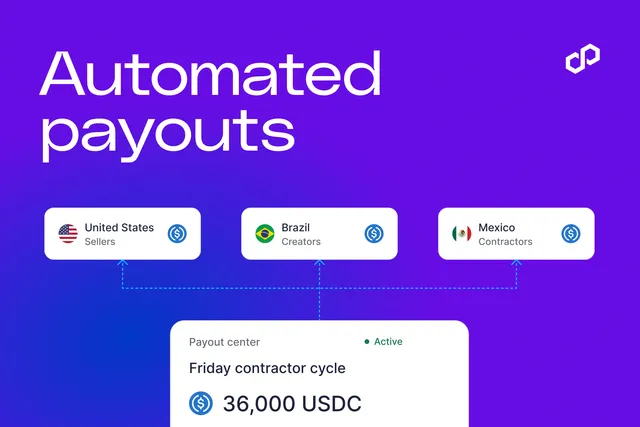
New to Polygon OMS: Automated stablecoin payout runs with rules your team sets
Polygon Open Money Stack now supports TRON
Meet Polygon at Money20/20 USA
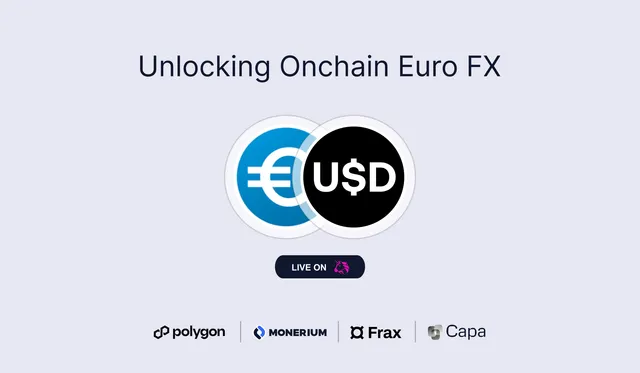
Monerium, Frax and Capa connect euro payments to onchain FX markets on Polygon
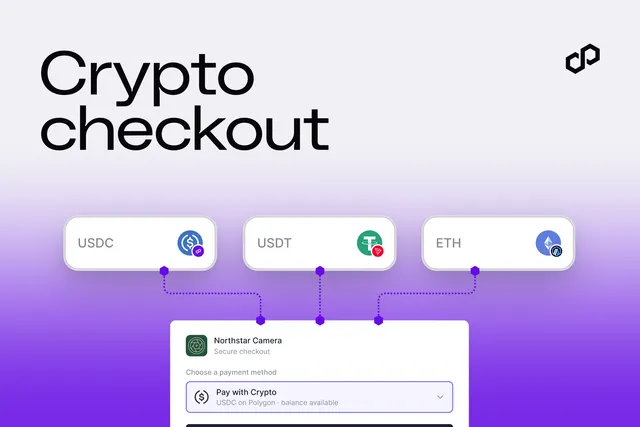
Introducing crypto checkout in Polygon Open Money Stack
Polygon passes $3 trillion in stablecoin transfer volume
Polygon Chain now supports 11 million payments per second