Honda Autobol, Honda’s official representative in Bolivia, and Takenos, the country’s leading digital wallet integrated on Polygon, have launched the campaign in Santa Cruz to showcase real-world use-cases of onchain payments. In their “200 x 200” plan, for the first 200 customers who pay through Takenos on preventive vehicle maintenance, customers get Bs. 200 (roughly $29 USD) off in a limited-time push to show that low-cost, blockchain-powered payment rails can deliver real savings in services people use every day.
The offer applies to vehicles of any brand, not just Honda. Once the 200 slots fill, the campaign closes. First come, first serve.
Who’s Involved
Honda Autobol is one of Bolivia’s most established automotive service providers, with the backing and quality certifications that come with being Honda’s official representative. Takenos is the country’s leading digital wallet, focused on financial inclusion through fast, low-friction payments. The two hadn’t worked together before. This campaign is their first joint effort, and it sits at an interesting intersection: legacy automotive servicing meets fintech meets public blockchain infrastructure.
Why This Matters Beyond a Discount
A Bs. 200 discount on an oil change is not, by itself, a headline. What’s worth paying attention to is the infrastructure underneath it.
Takenos processes payments on Polygon, which means the transaction costs are a fraction of what traditional payment processors charge. Those savings flow back to the consumer as a discount rather than disappearing into interchange fees.
This is the pattern we expect to see more of. When payment infrastructure gets cheaper and faster, businesses can pass real value to customers. Vehicle maintenance is a high-frequency, high-trust service category. If digital payments can reduce friction there, the same model extends to healthcare, utilities, insurance, and dozens of other sectors where consumers in emerging markets still rely on cash or expensive card networks.

Where Polygon Labs Fits
We built Polygon to be infrastructure that disappears into the background. The driver paying for an oil change through Takenos doesn’t need to know they’re using a blockchain. They just need the payment to work, the discount to apply, and the experience to feel normal. That’s the bar.
Polygon’s low transaction fees and high throughput make it viable for Takenos to process everyday consumer payments without eating into margins. This is the kind of use case we’re actively supporting: not speculative, not experimental, but practical digital payment infrastructure deployed in a real market with real consumers.
What Comes Next
Bolivia is one of several Latin American markets where digital wallets are growing quickly, driven by large unbanked populations and increasing smartphone penetration. Takenos is already the country’s leading digital wallet. This partnership with Honda Autobol extends its reach into a sector, automotive services, where cash has historically dominated.
We see campaigns like “200 x 200” as proof points. Each one demonstrates that blockchain-based payment infrastructure can operate in real commercial environments, not just in financial products designed for crypto-native users. The value proposition is not just the technology itself. It’s the lower cost, faster settlement, and broader access that the technology enables.
This campaign is the beginning of a longer collaboration. Honda Autobol, Takenos, and Polygon are aligned on a shared direction: embedding better financial infrastructure into the everyday services people already use. More is coming.
Introducing Polygon CDK Besu: Launch a Hyperledger Besu chain connected to other chains and their liquidity
Polygon Open Money Stack is now a U.S.-regulated payments platform with completion of Coinme acquisition
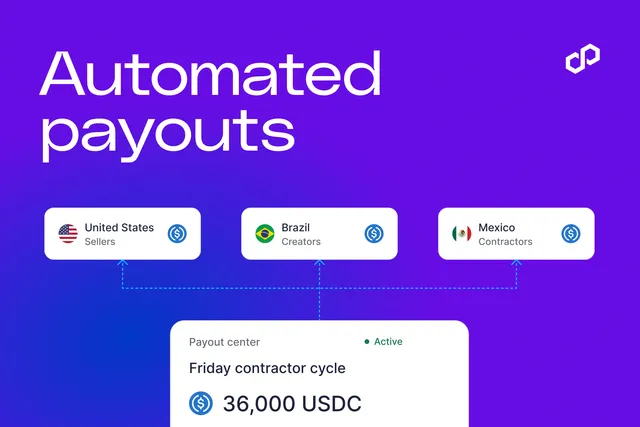
New to Polygon OMS: Automated stablecoin payout runs with rules your team sets
Polygon Open Money Stack now supports TRON
Meet Polygon at Money20/20 USA
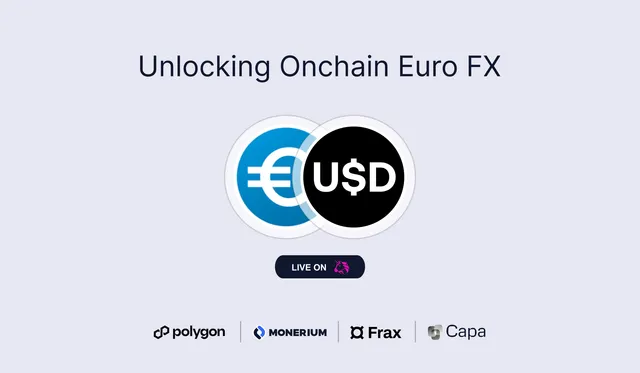
Monerium, Frax and Capa connect euro payments to onchain FX markets on Polygon
Introducing crypto checkout in Polygon Open Money Stack
Polygon passes $3 trillion in stablecoin transfer volume
Polygon Chain now supports 11 million payments per second