
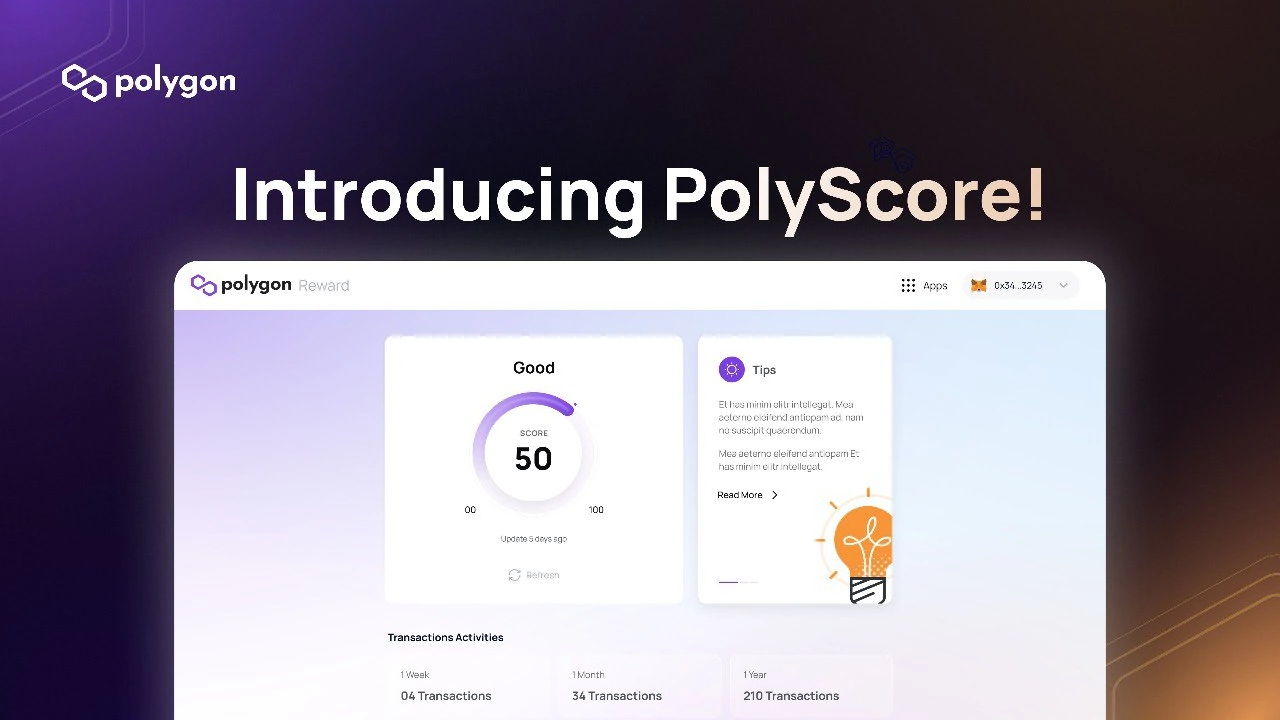
Today, we introduce Polygon Score - a new building block dApps can use to better attract and retain members.
How does it work?
PolyScore is a percentile rank between 1 and 100, where 90 means you scored higher than 90% of all active members on Polygon. It is calculated using a combination of short-term and long-term metrics:
- Two-week engagement: How active has a member been in the last two weeks.
- Ten-week retention: How many weeks in the last 10 has the member engaged with Polygon.
Benefits for dApps
PolyScore lets dApps identify highly engaged members within the Polygon ecosystem and incentivize them accordingly. For example:
- Whitelisting for premium features
- Whitelisting for beta testing
- Airdrops and bootstrapping liquidity
- Protocol specific awards or incentives
- New member acquisition
- Member retention and loyalty programs
Benefits for members
We envision a multitude of reward programs that can be built with PolyScore at their core. A high number means you are a desirable member for any protocol. We are developing a site where you will not only be able to see your rank, but also discover reward programs you currently qualify for.
Benefits for the ecosystem
Historically, network rewards in Web 3.0 have been tied to liquidity provided. We’ve witnessed, both in our own programs as well as in others, that these rewards have some drawbacks:
- They disproportionately benefit a few ultra-wealthy individuals.
- They are do not generalize well beyond DeFi dApps.
- They incentivize short-term profit taking and mercenary capital, often to the detriment of the protocols’ native tokens.
- They are not sustainable.
PolyScore allows for a host of new approaches. Rewards can be based on engagement with the network, representing active demand for many use cases ranging from gaming and NFTs to marketplaces and DeFi.
FAQs for Protocols
Q: Can we get more granular targeting?
A: Yes! We are actively developing a number of additional filters for more specific targeting:
- Contract interactions: Restrict addresses based on interactions with a given address.
- Member affinity: Filter addresses based on their interactions with a particular type of dApp on the network, starting with DeFi, gaming, and NFTs.
- Member Bridge Volume: Filter addresses by bridge volume.
Q: Do I need PolyScore to get matching rewards from Polygon?
A: At the moment, no. However, we are looking to align existing and future rewards from Polygon to PolyScore. We believe this is the best way to ensure our ecosystem is robust.
Q: What about bots?
A: In addition to our own anti-bot parameters, we are partnering with third-party ecosystem players to verify reputation sources. Each protocol will be able to select which, if any, reputation/identity scores are needed to qualify.
Q: Will Polygon partner with protocols on PolyScore?
A: Yes! Polygon will actively promote programs incorporating PolyScore. In addition to being featured on our dedicated website, we envision co-marketing campaigns that help bring our most engaged members to active dApps.
Q: How can I access TK?
A: There are a number of ways. We recommend going through our distribution partners, to take advantage of additional capabilities like further reputation or alternative assessments. You can also use PolyScore directly through our open API. Documentation and roadmap can be found here.
Q: How soon can we use it?
A: The top level score is available now! However we are still building the various filters.
FAQs for Members
Q: How can I improve my score?
A: Be an active member of the Polygon ecosystem! Use it often and do it continuously.
Q: What is a good score?
A: The score is your ranking relative to all the rest of the active addresses. With a score above 20, you are doing good. Clock 50 or more and you are on your way to greatness. Above 75 we are no longer dealing with mere mortals.
Q: How high of a score do I need to qualify for rewards?
A: That will be up to each protocol. While the dApps have complete autonomy, we suggest 30 and 50 score thresholds.
So let’s get started! Head over here to see how you rank. Keep up with the latest news on our blog, follow Polygon’s official twitter channel, or say hi on Discord.
Be a part of our social ecosystem!
Website | Twitter | Ecosystem Twitter| Developer Twitter | Enterprise Twitter | Studios Twitter | Telegram | Reddit | Discord| Instagram | Facebook | LinkedIn
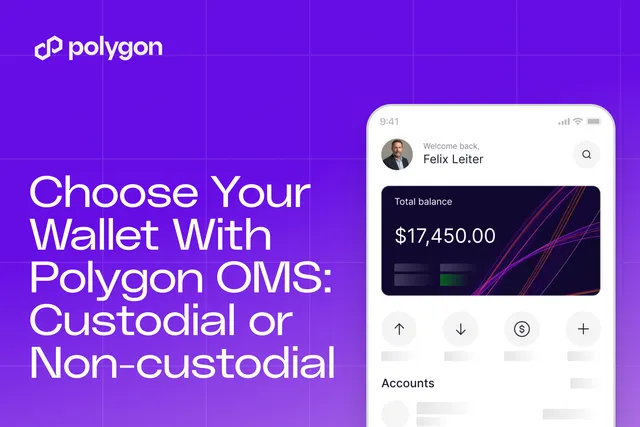
Custodial vs. Non-Custodial Wallets: Which One Should Your Platform Build?
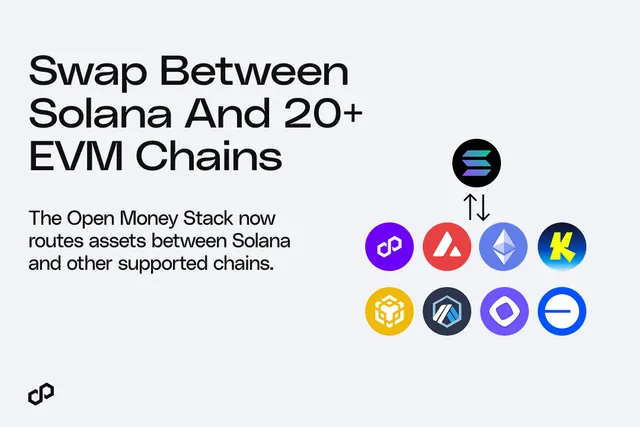
Move Money Between Solana and Polygon, Ethereum, Base + more EVM Chains with Polygon OMS
.CXtdIGFA_Z2ODqj.webp)
Ithaca Upgrade Is Live: Payments on Polygon Chain Are More Reliable Than Ever
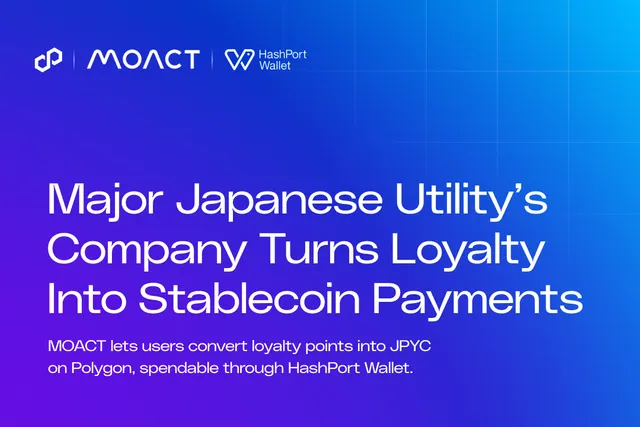
Kansai Electric Power's Rewards Arm Turns Loyalty Points Into Real Stablecoin Payments on Polygon Chain
Mento Protocol Launches on Polygon for Local Currency Stablecoin Payments
PayPal USD Lands on Polygon Chain, Enabling Regulated Onchain Dollars to Move Across Borders in One Integration
Credible Races Past $152M Total Payments Volume on Polygon
We Built the Best Blockchain for Payments. Now We’re Bringing the World’s Enterprises Onchain
Uquid Integrates Polygon's Open Money Stack for 1-Click Crypto Checkout Across 178M+ Products
.Cfn0LZ0R_2iwkGz.webp)