tl;dr
- DeFi protocols, marketplaces, and stablecoin issuers all face the same structural problem: liquidity is split across chains.
- Aave is deployed on 23 networks, yet Ethereum holds about 84% of the TVL in its main version. Stablecoin supply is about $285 billion over more than 200 chains, and nearly 80% of it sits on two (DefiLlama, 16 Nov 2026).
- In July 2025, J.P. Morgan estimated that only about 6% of stablecoin demand, roughly $15 billion, was tied to payments.
- Shared rails underneath remove the duplicated work: Agglayer connects chains at the protocol level, Polygon Trails routes payments across them in the app, and one API covers payins, payouts, and settlement.
Crypto has the ecosystem, the liquidity, and the attention. It still has not broken into true mass adoption.
Billions flow across chains every day in DeFi, marketplaces, and stablecoin transfers, yet the industry remains siloed. The barriers are structural, and the platforms themselves face them: DeFi protocols, marketplaces, and stablecoin issuers. (The user-side version of this problem is in Crypto payments: what’s stopping mass adoption?) Figures below come from DefiLlama on 16 November 2026 unless noted.
Here is how the structural barriers break down.
1. The multi-chain strain on DeFi platforms
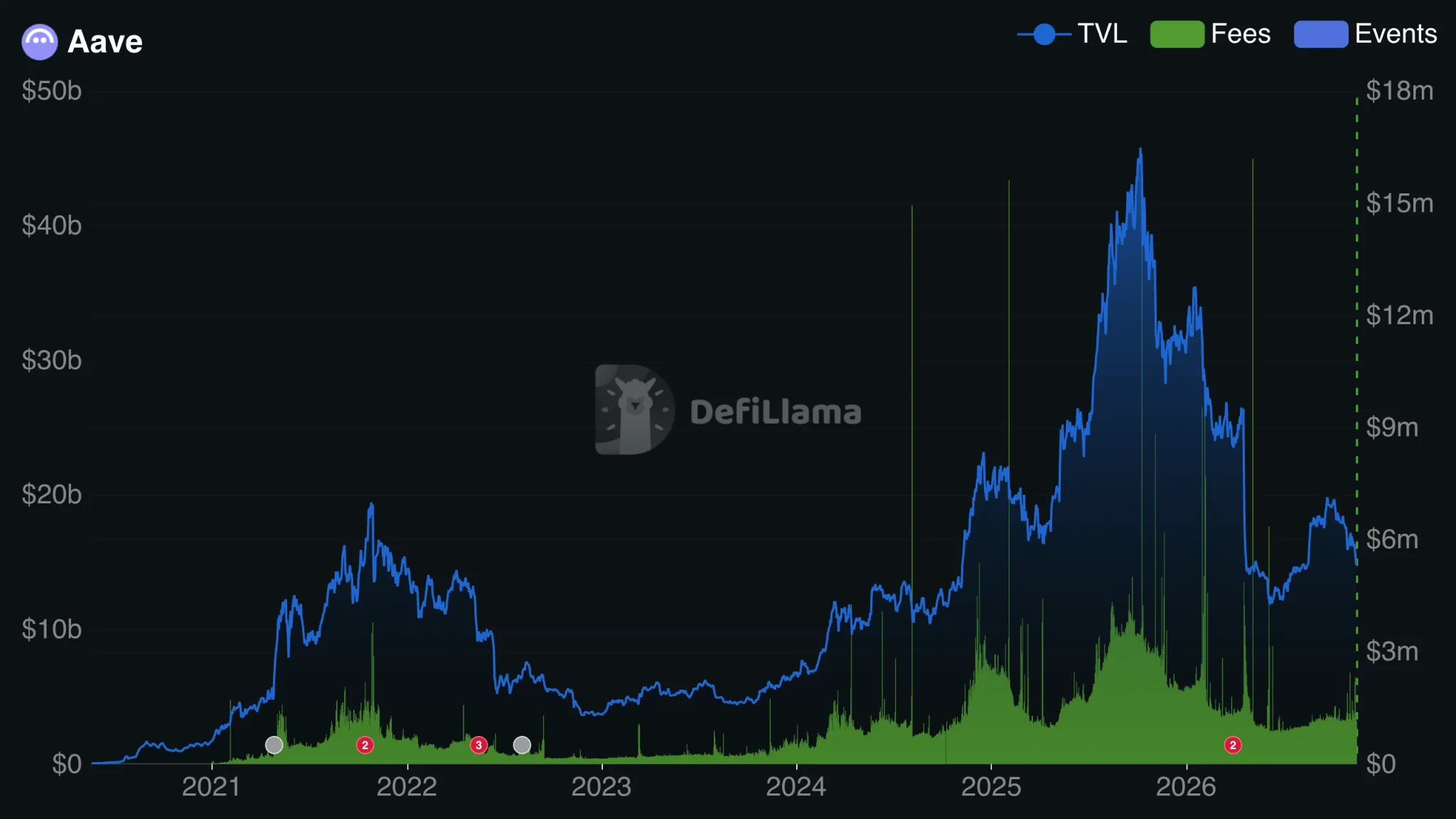
Source: DefiLlama, Aave, all networks combined. Per-network figures in the text are from DefiLlama on 16 November 2026.
DeFi protocols are built for innovation but trapped by fragmentation. Each chain brings its own quirks: fee mechanics, liquidity pools, contract deployments.
Aave shows what that looks like at scale. It is deployed on 23 networks and holds about $15 billion in total value locked (TVL), the value of assets held in its smart contracts. Ethereum holds about $11.7 billion of the $13.9 billion in its main version, Aave V3. The other 20 deployments of V3 share the remaining $2.3 billion, with Base and Arbitrum each under $0.5 billion.
Protocols stretch across chains, but liquidity does not. Developers maintain multiple instances of the same product, which drains resources and dilutes depth on every deployment. Every new integration is another silo. Instead of one unified onchain system, DeFi lives in a scattered, multi-chain maze.
2. Marketplaces fragmented by liquidity
From digital collectibles to real-world assets (RWAs), marketplaces struggle with liquidity silos. Assets stay on the chain they launched on, and cross-chain discovery is underdeveloped. Each marketplace has to attract supply and demand inside its own walls, and without unified liquidity rails the network effects stay small. What should be one global bazaar becomes dozens of isolated storefronts with shallow liquidity.
3. Stablecoin issuers locked in silos
Stablecoins should be the backbone of onchain payments. DefiLlama counts about $285 billion in stablecoin supply, spread over more than 200 chains. Ethereum holds about 46% of it and Tron about 33%, so two networks carry nearly 80%. USDT and USDC make up about 85% of the total.
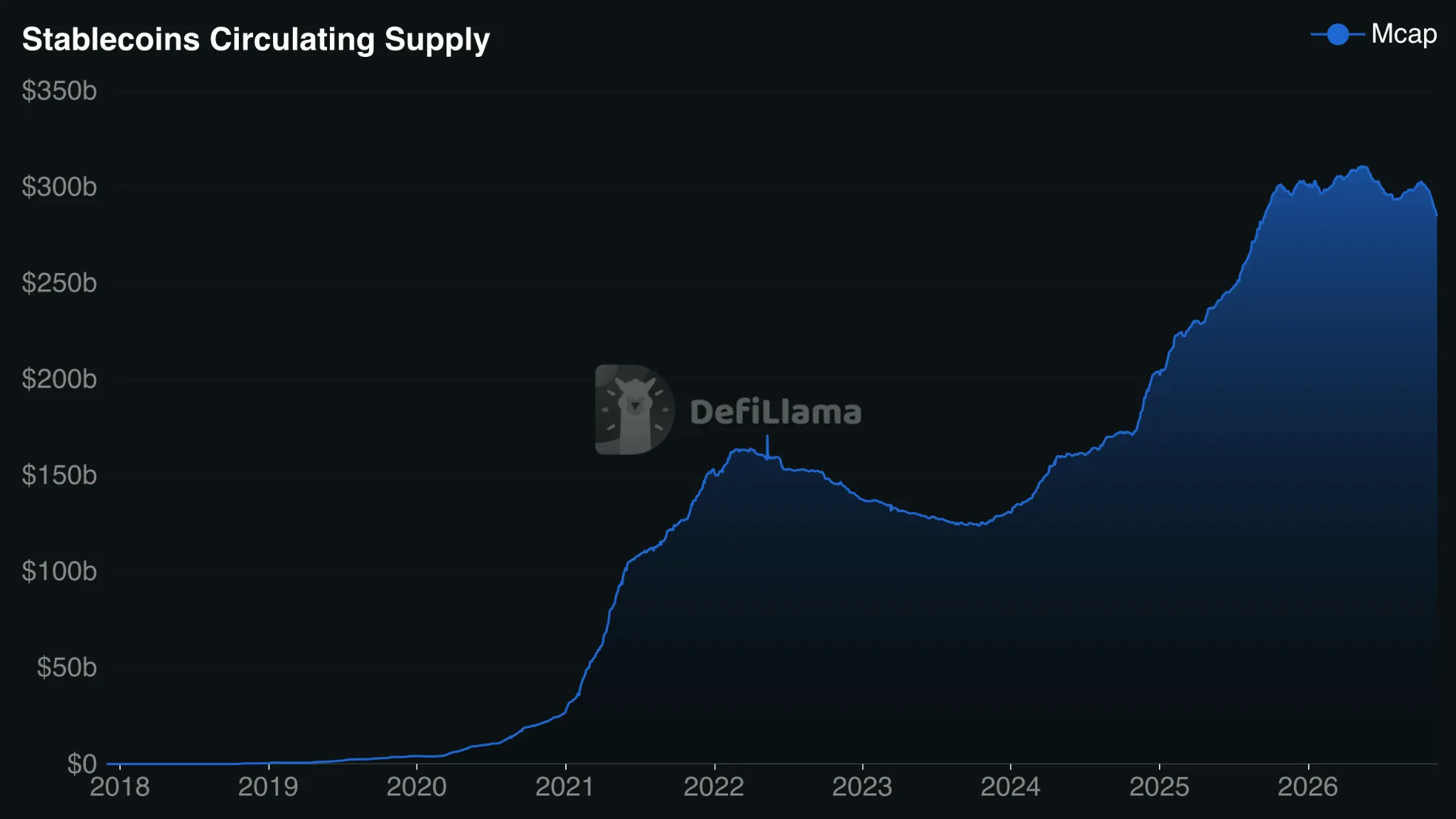
Source: DefiLlama, total stablecoin supply. The per-chain shares in the text are from DefiLlama’s stablecoins-by-chain data, 16 November 2026.
Despite that scale, stablecoins remain fragmented, and liquidity is locked by design. A token on Ethereum does not automatically work on Polygon. USDC and USDT do not move freely across ecosystems, and local-currency stablecoins add more tokens to route (Polygon alone has seen $11.1B in non-USD stablecoin volume). Yield protocols lock liquidity further by competing for TVL, prioritizing capital capture over interoperable payment rails.
Volume has not turned into payments. In July 2025, J.P. Morgan estimated that only about 6% of stablecoin demand, roughly $15 billion, was tied to everyday payments.
Issuers face structural hurdles that compound the fragmentation: regulatory oversight, collateral management, compliance frameworks, and liquidity provisioning across incompatible networks. Scaling means solving all of them at once. Today, stablecoins grow in volume while staying siloed, which limits their reach as universal money.
These gaps spill straight into the user experience. Merchants and consumers face a high-friction environment where payments do not just work. A buyer holding USDC on one chain cannot simply pay a seller on another without bridging delays, fees, or security risk. The security part is a design question of its own: how the Open Money Stack secures cross-chain value with Agglayer covers it.
Until stablecoins behave like true internet money, interoperable and frictionless and widely accepted, they stay constrained by the rails they depend on.
Removing the structure that blocks it
These barriers get fixed by shared rails underneath: a layer that moves value across chains and tokens so platforms stop rebuilding the same plumbing and issuers stop deploying into silos. Two pieces of Polygon infrastructure tackle fragmented liquidity in different ways: Agglayer connects chains at the protocol level, and Polygon Trails routes payments across them at the app level. Both sit inside the Polygon Open Money Stack, which is what we built for this. Move money across any blockchain with the Open Money Stack shows how the routing works.
- Agglayer works at the chain level. It is a cross-chain protocol that unifies liquidity and state across connected chains, with pessimistic proofs checking the bridge accounting before value moves. Every Polygon CDK chain ships with Agglayer connectivity by default, so a new chain can connect to shared liquidity instead of starting as another silo.
- Polygon Trails works at the app level. It routes any supported token on any supported chain to the destination a platform needs in one confirmation, so a DeFi protocol or marketplace can serve users from every chain without running an instance on each.
- Payins, payouts, routing, and settlement run through one API with native USDC support, so a stablecoin on one network is usable on another instead of stranded.
- On- and off-ramps and virtual accounts let a stablecoin flow start and end in a bank account.
- Embedded, non-custodial wallets with sponsored fees take care of the user side, which is the friction described in Crypto payments: what’s stopping mass adoption?
If you are an issuer or a payments platform working out where stablecoins fit, read How to integrate stablecoins into your payment product and, for local-currency settlement, what enterprise payment teams should know about non-USD stablecoins.
Explore the Open Money Stack, or talk to a payments specialist about the rails your platform needs.

Nuvera is live on Polygon Open Money Stack for cross-border stablecoin settlement

Web3 user onboarding: how to simplify it for your app
SoFiUSD lands on Polygon Chain, bringing America's first bank-issued stablecoin to everyday use

Polygon Trails partners with Foresight to bring 1-click fund flows to prediction markets

Scalable payment infrastructure: scaling payment apps without sacrificing UX
MPC wallets: what they protect, and what a payments product still needs

Polygon Trails partners with Katana to solve DeFi fragmentation with 1-click liquidity and real yield
Stablecoin infrastructure is fragmented: the structural barriers to scaling crypto payments
What is an embedded wallet? How embedded wallets work